
Introduction
The world of rock climbing has seen its fair share of daredevils, but few have captured the imagination of the masses like Alex Honnold. The American climber has made a name for himself by scaling some of the most daunting peaks and structures without any protective gear, earning him both admiration and criticism. Recently, Honnold made headlines by climbing the Taipei 101, one of the tallest buildings in the world, and his comments about the experience have sparked a heated debate. In a surprising revelation, Honnold stated that Netflix paid an "embarrassingly small amount" for the documentary featuring his climb, and he would have done it for free. This article will delve into the details of Honnold's climb, his comments on the payment, and the implications of this revelation on the world of adventure sports.
The Climb: A Feat of Human Endurance
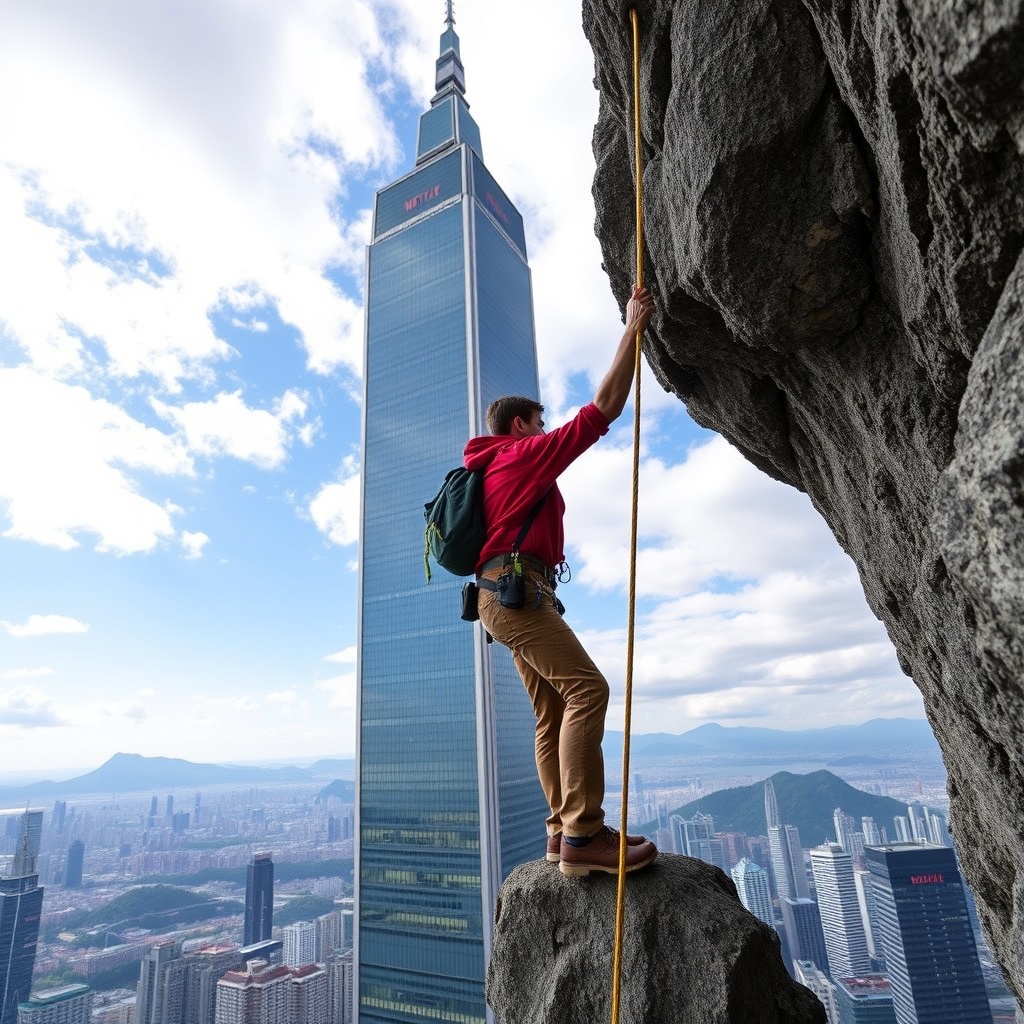
The Taipei 101, formerly known as the Taipei World Financial Center, is a 101-floor skyscraper located in the Xinyi District of Taipei, Taiwan. Completed in 2004, it held the title of the world's tallest building until 2010. The structure stands at an impressive 508 meters (1,667 feet) and is a marvel of modern engineering. Climbing such a massive structure without any protective gear is a daunting task, requiring immense physical and mental strength. Honnold, known for his previous feats like climbing El Capitan in Yosemite National Park, took on the challenge and successfully scaled the Taipei 101.
The climb was documented by Netflix, and the footage is expected to be part of a future documentary. While the exact details of the climb are not publicly available, it is clear that Honnold's achievement is a testament to human endurance and the boundaries of what is possible. The climb has sparked widespread interest, with many people marveling at Honnold's bravery and skill. However, the controversy surrounding the payment for the documentary has raised questions about the value placed on adventure sports and the athletes who participate in them.
The Payment Controversy: A Reflection of the Industry
Honnold's comments about the payment for the documentary have sparked a heated debate about the value of adventure sports and the athletes who participate in them. According to Honnold, Netflix paid an "embarrassingly small amount" for the documentary featuring his climb. The exact amount is not publicly available, but Honnold's statement suggests that it was significantly lower than what he had expected. This revelation has raised questions about the financial realities of adventure sports and the compensation of athletes who participate in them.
The controversy surrounding the payment is not unique to Honnold or Netflix. The adventure sports industry has long struggled with issues of compensation and valuation. Many athletes struggle to make a living from their sport, relying on sponsorships, endorsements, and prize money to make ends meet. The payment for documentaries and media appearances is often a significant source of income for these athletes, and the controversy surrounding Honnold's payment has highlighted the need for greater transparency and fairness in the industry.
Implications and Future Directions
The controversy surrounding Honnold's payment has significant implications for the adventure sports industry. It highlights the need for greater transparency and fairness in the compensation of athletes and the valuation of their performances. The incident also raises questions about the role of media companies like Netflix in the industry and their responsibility to ensure fair compensation for the athletes they feature.
As the adventure sports industry continues to grow and evolve, it is essential to address these issues and ensure that athletes are fairly compensated for their performances. This may involve greater transparency in payment structures, more equitable distribution of revenue, and a greater recognition of the value that athletes bring to the industry. The incident also highlights the need for athletes to be more proactive in negotiating their compensation and ensuring that they are fairly valued for their performances.
In conclusion, Alex Honnold's climb of the Taipei 101 is a testament to human endurance and the boundaries of what is possible. However, the controversy surrounding the payment for the documentary featuring his climb has raised significant questions about the value of adventure sports and the athletes who participate in them. As the industry continues to grow and evolve, it is essential to address these issues and ensure that athletes are fairly compensated for their performances. By doing so, we can promote a more sustainable and equitable industry that recognizes the value of athletes and their contributions to the world of adventure sports.
Conclusion
The story of Alex Honnold's climb of the Taipei 101 and the controversy surrounding the payment for the documentary is a complex and multifaceted one. It highlights the need for greater transparency and fairness in the adventure sports industry and the importance of recognizing the value of athletes and their performances. As we look to the future, it is essential to address these issues and promote a more sustainable and equitable industry. By doing so, we can ensure that athletes like Honnold are fairly compensated for their performances and that the industry continues to thrive and grow. Ultimately, the story of Honnold's climb and the controversy surrounding the payment is a reminder of the power and inspiration of adventure sports and the importance of promoting a fair and equitable industry that recognizes the value of athletes and their contributions to the world of adventure sports.

Leave a comment