
Introduction
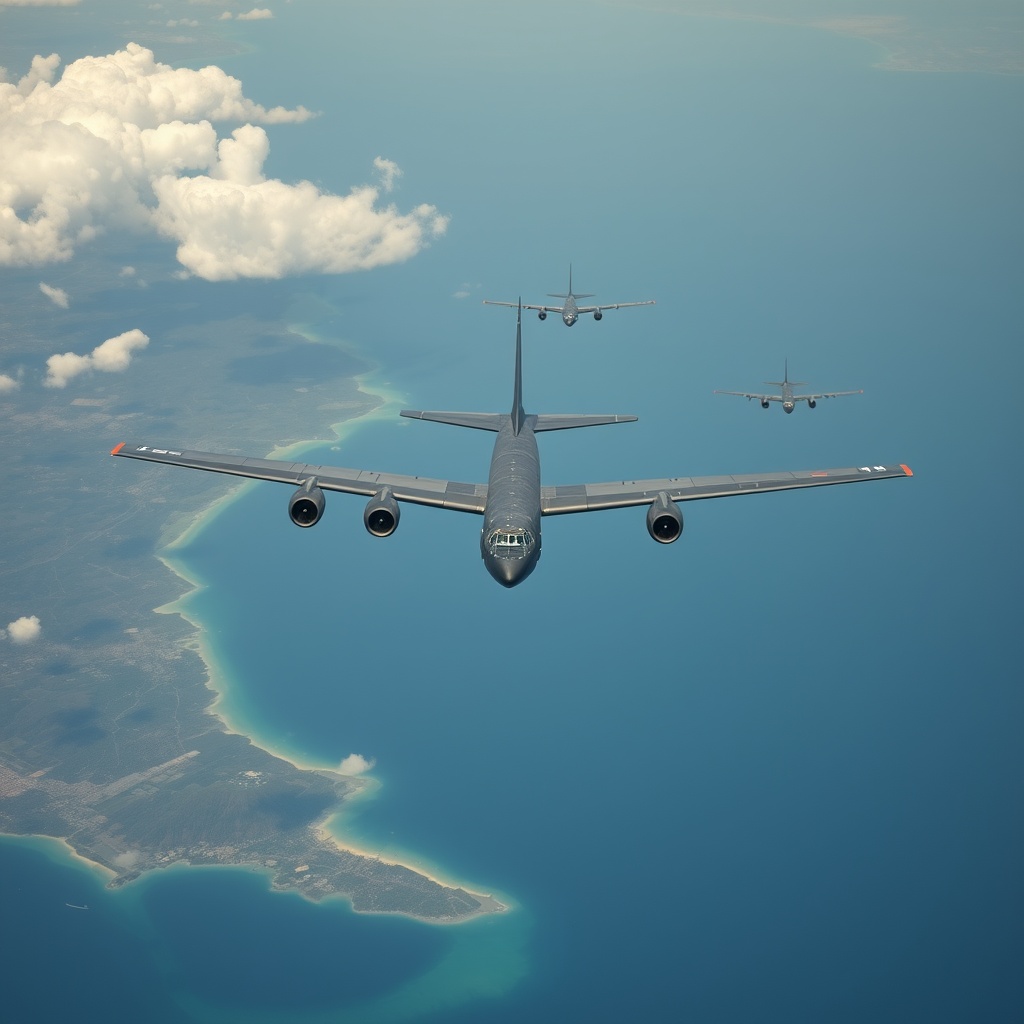
In a demonstration of military might, three B-52 bombers flew off the coast of Venezuela in a show of force by the Trump administration. This event, which took place on a Wednesday, saw the bombers take off from Barksdale Air Force Base in Louisiana and fly for hours near the Venezuelan coast, according to flight tracking data. This move is seen as a clear message to the Venezuelan government, led by President Nicolas Maduro, and a display of the United States' commitment to supporting the country's opposition leader, Juan Guaido. In this article, we will explore the context behind this event, the significance of the B-52 bombers, and the implications of this show of force for the region and the world.
Historical Context and Geopolitical Tensions
The relationship between the United States and Venezuela has been strained for several years, with the U.S. imposing economic sanctions on the country and recognizing Juan Guaido as the legitimate president. The Venezuelan government, led by Nicolas Maduro, has been accused of human rights abuses, corruption, and mismanagement of the economy, leading to a severe crisis that has caused widespread poverty, hunger, and migration. The U.S. has been a strong supporter of Guaido and the opposition, providing financial and diplomatic aid in an effort to bring about a transition of power. The flight of the B-52 bombers off the coast of Venezuela is the latest in a series of moves by the Trump administration to increase pressure on the Maduro government.
The use of B-52 bombers in this context is significant. The B-52 is a long-range, strategic bomber that has been in service since the 1950s and is capable of carrying a wide range of weapons, including nuclear bombs. The fact that the U.S. chose to deploy these bombers, which are a symbol of American military power, sends a clear message to the Venezuelan government and its allies, including Russia and China. The deployment of these bombers is also a reminder of the U.S. military's global reach and its ability to project power into any region of the world.
Military Significance and Capabilities
The B-52 bombers that flew off the coast of Venezuela are part of the U.S. Air Force's fleet of strategic bombers. These aircraft are capable of flying long distances and carrying heavy payloads, making them a key component of the U.S. military's nuclear deterrent. The B-52 has been used in a variety of roles, including conventional bombing missions, reconnaissance, and maritime surveillance. The fact that the U.S. chose to deploy these bombers in a show of force demonstrates the flexibility and versatility of the B-52 fleet.
The flight of the B-52 bombers off the coast of Venezuela also highlights the U.S. military's ability to conduct operations in multiple theaters simultaneously. The U.S. has a global network of bases and alliances that allow it to project power into any region of the world. The deployment of B-52 bombers to the region demonstrates the U.S. commitment to supporting its allies and defending its interests in the Western Hemisphere.
Regional and Global Implications
The deployment of B-52 bombers off the coast of Venezuela has significant implications for the region and the world. The move is seen as a clear message to the Venezuelan government and its allies, and a demonstration of the U.S. commitment to supporting the opposition. The deployment of these bombers also sends a message to other countries in the region, including Cuba and Nicaragua, which have been accused of supporting the Maduro government.
The event also has global implications, as it demonstrates the U.S. military's ability to project power into any region of the world. The deployment of B-52 bombers to the region is a reminder of the U.S. military's global reach and its commitment to defending its interests and supporting its allies. The move is also seen as a demonstration of the Trump administration's willingness to use military power to achieve its foreign policy goals.
According to a statement from the U.S. Southern Command, the deployment of the B-52 bombers is part of a broader effort to demonstrate the U.S. commitment to the region and to support the opposition in Venezuela. The statement noted that the deployment is a "clear message" to the Maduro government and its allies, and a demonstration of the U.S. military's ability to project power into the region.
Case Study: Previous Shows of Force
This is not the first time that the U.S. has conducted a show of force in the region. In recent years, the U.S. has deployed a variety of military assets to the region, including warships, submarines, and aircraft. These deployments have been seen as a demonstration of the U.S. commitment to supporting its allies and defending its interests in the region.
For example, in 2019, the U.S. deployed a fleet of warships to the Caribbean in a show of force aimed at the Venezuelan government. The deployment included the USS Abraham Lincoln, a Nimitz-class aircraft carrier, and several other warships. The deployment was seen as a clear message to the Maduro government and its allies, and a demonstration of the U.S. military's ability to project power into the region.
Statistics and Data
According to flight tracking data, the three B-52 bombers that flew off the coast of Venezuela flew for several hours and covered a distance of over 5,000 miles. The bombers were escorted by several F-15 fighter jets, which provided air support and protection during the mission.
The deployment of the B-52 bombers is also significant in terms of the economic costs involved. According to estimates, the cost of deploying a single B-52 bomber for a mission can range from $100,000 to $500,000, depending on the distance and duration of the flight. The deployment of three B-52 bombers, therefore, would have cost several million dollars.
Conclusion
In conclusion, the deployment of B-52 bombers off the coast of Venezuela is a significant event that demonstrates the U.S. commitment to supporting the opposition and defending its interests in the region. The move is seen as a clear message to the Maduro government and its allies, and a demonstration of the U.S. military's ability to project power into any region of the world. The deployment of these bombers is also a reminder of the U.S. military's global reach and its commitment to defending its interests and supporting its allies.
As the situation in Venezuela continues to unfold, it is likely that the U.S. will continue to play a major role in the region. The deployment of B-52 bombers is just one example of the U.S. military's ability to project power into the region, and it is likely that we will see more deployments of this type in the future.
The implications of this event are far-reaching, and it is likely that the deployment of B-52 bombers will have significant consequences for the region and the world. The U.S. commitment to supporting the opposition in Venezuela is clear, and the deployment of these bombers is just one example of the measures that the U.S. is willing to take to achieve its foreign policy goals.
In the future, it will be important to continue to monitor the situation in Venezuela and the role that the U.S. is playing in the region. The deployment of B-52 bombers is a significant event, and it is likely that we will see more developments of this type in the coming months and years. As the U.S. continues to navigate the complex geopolitical landscape of the Western Hemisphere, it is clear that the deployment of B-52 bombers off the coast of Venezuela is just one example of the measures that the U.S. is willing to take to defend its interests and support its allies.

Leave a comment