
Introduction
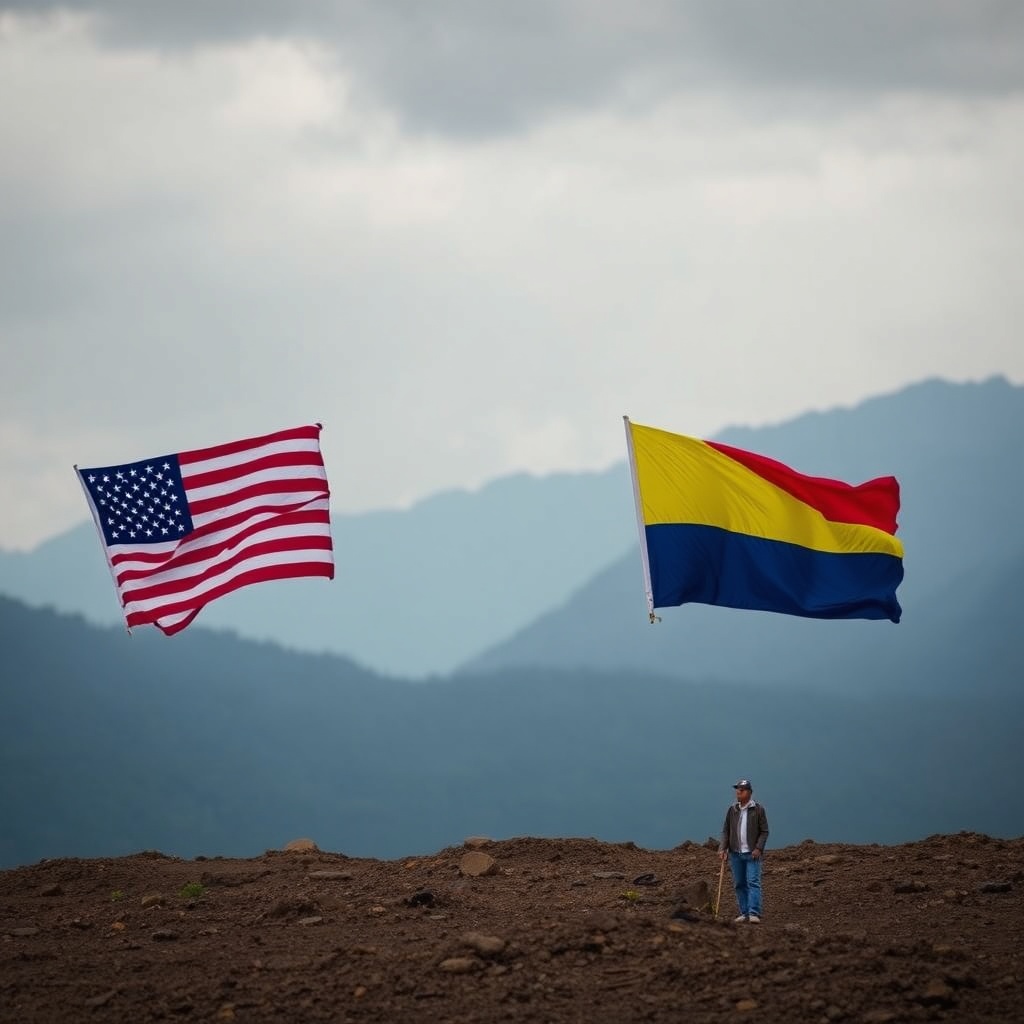
The relationship between the United States and Colombia has been a complex and multifaceted one, with cooperation on issues such as counter-narcotics efforts and trade agreements, but also tensions over issues like sovereignty and territorial integrity. Recently, a significant incident has strained this relationship, as Colombia accused the US of violating its sovereignty in a strike against a "drug-carrying submarine". This article will delve into the details of this incident, explore the context and implications of this event, and examine the broader issues at play in the US-Colombia relationship.
Background to the Incident
On a day in recent history, the US announced that it had struck a "drug-carrying submarine" in international waters, resulting in the repatriation of survivors to the US. However, Colombia swiftly responded, accusing the US of violating its sovereignty in the process. The Colombian government argued that the US had not obtained the necessary permissions or followed the proper protocols in carrying out the strike, which was allegedly conducted within Colombia's exclusive economic zone (EEZ). This zone extends 200 nautical miles from the coast of Colombia, and the country has long been sensitive about protecting its sovereignty and territorial integrity within this area.
The incident highlights the challenges and complexities of international cooperation on issues like counter-narcotics efforts. While the US and Colombia have a long history of cooperation on these issues, including joint operations against drug traffickers and shared intelligence, there are also significant tensions and disagreements. The US has been criticized for its heavy-handed approach to counter-narcotics efforts, which some argue prioritizes military action over more nuanced and sustainable solutions. Meanwhile, Colombia has long been concerned about protecting its sovereignty and territorial integrity, particularly in the face of external pressures and interventions.
Implications of the Incident
The incident has significant implications for the US-Colombia relationship, as well as for the broader region. In the short term, it is likely to strain diplomatic relations between the two countries, with Colombia potentially re-evaluating its cooperation with the US on counter-narcotics efforts. The Colombian government may also seek to strengthen its own military capabilities and assert its sovereignty more forcefully, particularly in the face of external pressures.
In the longer term, the incident highlights the need for more nuanced and sustainable approaches to counter-narcotics efforts. Rather than relying solely on military action, the US and Colombia should prioritize joint efforts to address the root causes of drug trafficking, including poverty, inequality, and lack of economic opportunity. This could involve increased investment in alternative crop programs, job training initiatives, and social programs, as well as more effective and efficient law enforcement strategies.
The incident also underscores the importance of respecting sovereignty and territorial integrity, particularly in the face of external pressures and interventions. The US and Colombia should work to establish clearer protocols and guidelines for joint operations, including procedures for obtaining permissions and following international law. This could involve establishing joint committees or working groups to oversee counter-narcotics efforts, as well as increasing transparency and accountability in these operations.
Regional and Global Context
The incident is not an isolated event, but rather part of a broader pattern of tensions and challenges in the US-Colombia relationship. In recent years, there have been significant disagreements over issues like trade agreements, immigration policy, and human rights. The US has also been criticized for its approach to counter-narcotics efforts in the region, including its support for controversial figures and its prioritization of military action over more nuanced and sustainable solutions.
The incident also has implications for the broader region, particularly in terms of the balance of power and influence in the Western Hemisphere. The US has long been the dominant player in the region, but in recent years, there have been significant challenges to its influence, including the rise of China and other external actors. The incident highlights the need for the US to re-evaluate its approach to the region, prioritizing more nuanced and sustainable solutions to challenges like drug trafficking, and respecting the sovereignty and territorial integrity of its partners.
In terms of statistics, it is worth noting that the US has invested significant resources in counter-narcotics efforts in Colombia, including over $10 billion in aid since 2000. However, despite these efforts, drug trafficking remains a significant challenge in the region, with Colombia remaining one of the largest producers of cocaine in the world. The incident highlights the need for a more effective and sustainable approach to counter-narcotics efforts, one that prioritizes joint cooperation and respects the sovereignty and territorial integrity of all parties involved.
Case Studies and Examples
There are several case studies and examples that illustrate the complexities and challenges of counter-narcotics efforts in the region. For example, the US-backed "Plan Colombia" initiative, launched in 2000, aimed to reduce drug trafficking and violence in Colombia through a combination of military action, alternative crop programs, and social initiatives. While the initiative had some successes, including a significant reduction in drug-related violence, it also had significant limitations and challenges, including the displacement of thousands of farmers and the exacerbation of social and economic inequalities.
Another example is the US-backed "Merida Initiative", launched in 2008, which aimed to reduce drug trafficking and violence in Mexico through a combination of military action, law enforcement training, and social initiatives. While the initiative had some successes, including a significant reduction in drug-related violence, it also had significant limitations and challenges, including the exacerbation of social and economic inequalities and the displacement of thousands of people.
These case studies and examples highlight the need for more nuanced and sustainable approaches to counter-narcotics efforts, ones that prioritize joint cooperation and respect the sovereignty and territorial integrity of all parties involved. They also underscore the importance of addressing the root causes of drug trafficking, including poverty, inequality, and lack of economic opportunity, rather than relying solely on military action or law enforcement strategies.
Conclusion
In conclusion, the incident in which Colombia accused the US of violating its sovereignty in a strike against a "drug-carrying submarine" highlights the complexities and challenges of counter-narcotics efforts in the region. The US and Colombia have a long history of cooperation on these issues, but there are also significant tensions and disagreements, particularly over issues like sovereignty and territorial integrity. To address these challenges, the US and Colombia should prioritize more nuanced and sustainable approaches to counter-narcotics efforts, ones that respect the sovereignty and territorial integrity of all parties involved and address the root causes of drug trafficking.
The incident also underscores the importance of respecting sovereignty and territorial integrity, particularly in the face of external pressures and interventions. The US and Colombia should work to establish clearer protocols and guidelines for joint operations, including procedures for obtaining permissions and following international law. This could involve establishing joint committees or working groups to oversee counter-narcotics efforts, as well as increasing transparency and accountability in these operations.
Ultimately, the US-Colombia relationship is a complex and multifaceted one, with significant opportunities for cooperation and mutual benefit, but also challenges and tensions. By prioritizing more nuanced and sustainable approaches to counter-narcotics efforts, and respecting the sovereignty and territorial integrity of all parties involved, the US and Colombia can build a stronger and more effective partnership, one that addresses the root causes of drug trafficking and promotes peace, stability, and prosperity in the region.

Leave a comment