
Introduction
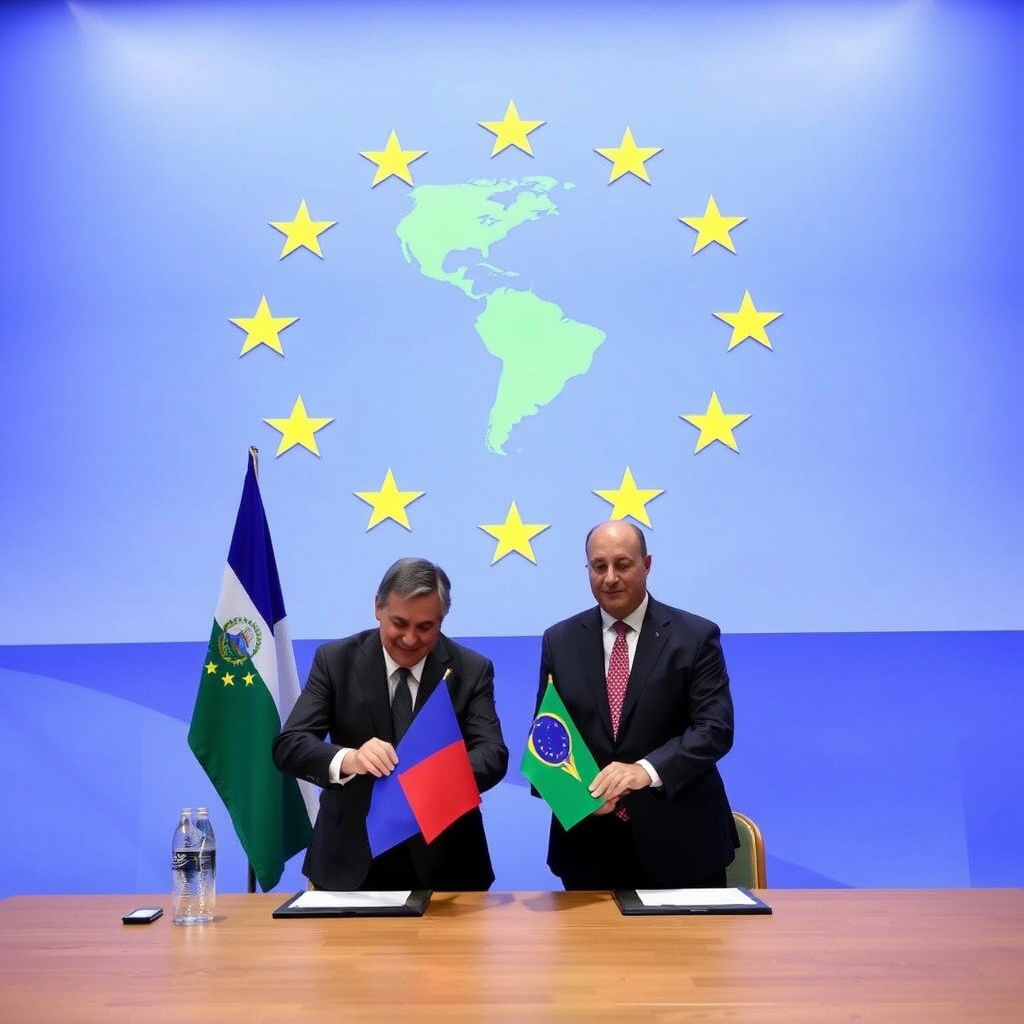
The European Union (EU) and the Mercosur bloc of South American nations have made history by signing a landmark free trade agreement, marking a significant milestone in the economic relations between the two regions. The agreement, which was formally signed in Asunción, Paraguay, is the result of years of negotiations and is expected to have far-reaching implications for trade, investment, and economic growth in both regions. In this article, we will delve into the details of the agreement, its potential benefits and challenges, and what it means for the future of trade between the EU and Mercosur.
Background and Negotiations
The Mercosur bloc, which comprises Argentina, Brazil, Paraguay, and Uruguay, has been engaged in negotiations with the EU since 1999. The talks were initially slow, but gained momentum in recent years, with both sides recognizing the potential benefits of a free trade agreement. The EU is one of the world's largest economies, with a combined GDP of over $18 trillion, while Mercosur is a significant economic bloc in South America, with a combined GDP of over $2.5 trillion. The agreement is expected to eliminate tariffs on most goods, reduce non-tariff barriers, and increase investment opportunities between the two regions.
The negotiations were not without their challenges, however. The EU and Mercosur had to overcome significant differences in their negotiating positions, including disagreements over agricultural subsidies, intellectual property rights, and environmental standards. The EU also had to address concerns from its own member states, particularly those with significant agricultural sectors, which were worried about the impact of the agreement on their domestic industries. Despite these challenges, the two sides were able to reach a compromise, and the agreement was finally signed in 2019.
Key Provisions of the Agreement
The EU-Mercosur free trade agreement is a comprehensive agreement that covers a wide range of areas, including trade in goods, services, and investment. Some of the key provisions of the agreement include:
- Tariff elimination: The agreement eliminates tariffs on most goods, including agricultural products, industrial goods, and services. This is expected to increase trade between the two regions and reduce costs for businesses and consumers.
- Non-tariff barriers: The agreement reduces non-tariff barriers, such as regulatory and administrative hurdles, which can hinder trade between the two regions.
- Investment: The agreement promotes investment between the two regions, by providing a stable and predictable investment environment.
- Intellectual property: The agreement includes provisions to protect intellectual property rights, including patents, trademarks, and copyrights.
- Environmental and labor standards: The agreement includes provisions to promote environmental and labor standards, and to ensure that trade is conducted in a sustainable and responsible manner.
Benefits of the Agreement
The EU-Mercosur free trade agreement is expected to have significant benefits for both regions. Some of the potential benefits include:
- Increased trade: The agreement is expected to increase trade between the two regions, by reducing tariffs and non-tariff barriers. This is expected to benefit businesses and consumers in both regions, by increasing access to new markets and reducing costs.
- Economic growth: The agreement is expected to promote economic growth in both regions, by increasing investment and trade.
- Job creation: The agreement is expected to create new job opportunities in both regions, particularly in sectors such as agriculture, manufacturing, and services.
- Improved competitiveness: The agreement is expected to improve the competitiveness of businesses in both regions, by reducing costs and increasing access to new markets.
Challenges and Criticisms
While the EU-Mercosur free trade agreement has been widely welcomed, it has also been criticized by some groups. Some of the challenges and criticisms include:
- Agricultural subsidies: The agreement has been criticized by some EU member states, which are concerned about the impact of the agreement on their agricultural sectors. The EU has agreed to increase its imports of agricultural products from Mercosur, which could lead to increased competition for EU farmers.
- Environmental concerns: The agreement has been criticized by some environmental groups, which are concerned about the impact of increased trade on the environment. The agreement includes provisions to promote environmental standards, but some groups argue that these provisions do not go far enough.
- Labor standards: The agreement has been criticized by some labor groups, which are concerned about the impact of the agreement on labor standards in both regions. The agreement includes provisions to promote labor standards, but some groups argue that these provisions do not go far enough.
Case Studies and Examples
The EU-Mercosur free trade agreement is expected to have significant implications for businesses and industries in both regions. Some examples of how the agreement could benefit businesses and industries include:
- Automotive sector: The agreement is expected to benefit the automotive sector in both regions, by reducing tariffs and non-tariff barriers. This could lead to increased trade in automotive products, such as cars and car parts.
- Agricultural sector: The agreement is expected to benefit the agricultural sector in both regions, by increasing trade in agricultural products. This could lead to increased exports of agricultural products from Mercosur to the EU, and increased imports of agricultural products from the EU to Mercosur.
- Services sector: The agreement is expected to benefit the services sector in both regions, by reducing barriers to trade in services. This could lead to increased trade in services, such as financial services, telecommunications, and tourism.
Statistics and Data
The EU-Mercosur free trade agreement is expected to have significant implications for trade and investment between the two regions. Some statistics and data that illustrate the potential benefits of the agreement include:
- Trade volumes: The EU is Mercosur's second-largest trading partner, accounting for around 20% of Mercosur's total trade. The agreement is expected to increase trade volumes between the two regions, by reducing tariffs and non-tariff barriers.
- Investment: The EU is a significant investor in Mercosur, with EU companies accounting for around 30% of total foreign investment in the region. The agreement is expected to promote investment between the two regions, by providing a stable and predictable investment environment.
- GDP: The EU and Mercosur have a combined GDP of over $20 trillion, making them two of the world's largest economic blocs. The agreement is expected to promote economic growth and job creation in both regions, by increasing trade and investment.
Conclusion
The EU-Mercosur free trade agreement is a landmark agreement that marks a significant milestone in the economic relations between the two regions. The agreement is expected to have far-reaching implications for trade, investment, and economic growth in both regions, and is a significant step towards promoting economic integration and cooperation between the EU and Mercosur. While there are challenges and criticisms associated with the agreement, the potential benefits of the agreement are significant, and it is expected to have a positive impact on businesses, industries, and communities in both regions. As the agreement is implemented and trade between the two regions increases, it is likely that we will see significant economic benefits, including increased trade volumes, investment, and job creation.

Leave a comment