
Introduction
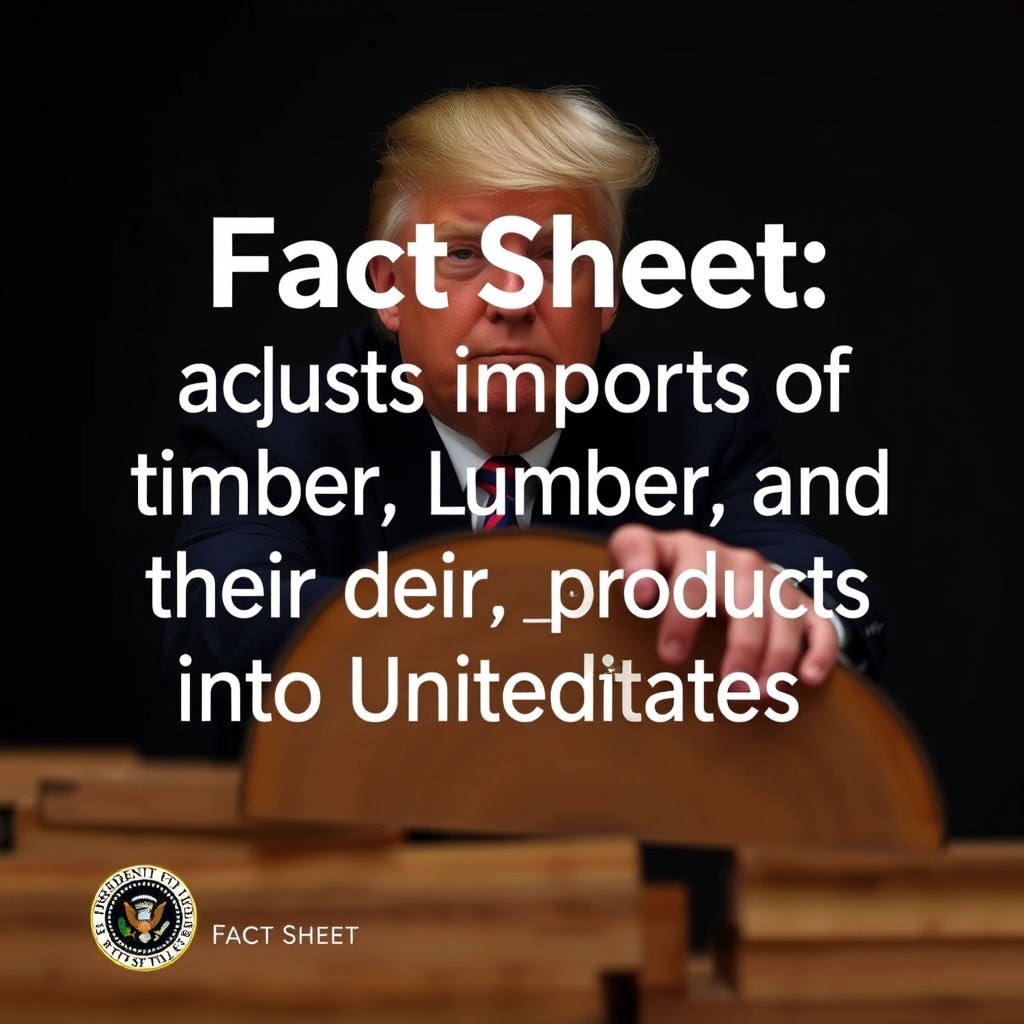
On a significant day in December 2025, President Donald J. Trump made a pivotal decision that would impact the United States' lumber industry. By signing a Proclamation invoking Section 232 of the Trade Expansion Act of 1962, the President adjusted imports of timber, lumber, and their derivative products into the United States. This move was designed to support America's lumber industry, which has been facing numerous challenges in recent years. In this article, we will delve into the details of this Proclamation, its potential effects on the industry, and the broader implications for the U.S. economy.
Background and Context
To understand the significance of President Trump's decision, it is essential to consider the current state of the U.S. lumber industry. The industry has been experiencing difficulties due to increased competition from foreign producers, particularly those in Canada. The U.S. has been imposing tariffs on Canadian softwood lumber imports since the 1980s, but the issue remains unresolved. The latest Proclamation aims to address these concerns and provide relief to the domestic lumber industry.
The Trade Expansion Act of 1962, which the Proclamation invokes, is a federal law that authorizes the President to investigate and take action to adjust imports that threaten national security. Section 232 of the Act is specifically designed to address trade issues related to national security, allowing the President to impose tariffs or other trade restrictions on imported goods that are deemed a threat to national security. In the context of the lumber industry, the Proclamation argues that the influx of foreign timber and lumber products poses a risk to the domestic industry, which is essential for national security and economic stability.
Effects on the Lumber Industry
The Proclamation's adjustment of imports of timber, lumber, and their derivative products is expected to have a significant impact on the U.S. lumber industry. By reducing the amount of foreign lumber entering the market, the domestic industry is likely to experience an increase in demand for its products. This, in turn, could lead to an increase in production, employment, and revenue for U.S. lumber companies.
According to the U.S. Census Bureau, the value of U.S. lumber production has been declining in recent years, from $10.3 billion in 2018 to $9.4 billion in 2022. The Proclamation's measures could help reverse this trend, providing a much-needed boost to the industry. Additionally, the increased demand for domestic lumber products could lead to investments in new technologies and infrastructure, further enhancing the industry's competitiveness.
However, it is essential to consider the potential consequences of the Proclamation on the broader economy. The adjustment of imports could lead to higher prices for lumber and timber products, which could have a ripple effect on various industries, including construction, furniture manufacturing, and packaging. Consumers may also face higher costs for goods that rely on lumber and timber products, such as housing and furniture.
International Trade Implications
The Proclamation's invocation of Section 232 of the Trade Expansion Act of 1962 has significant international trade implications. The move is likely to be met with resistance from foreign governments, particularly Canada, which has been a major supplier of lumber to the U.S. market. The Canadian government has already expressed concerns about the Proclamation, arguing that it could lead to a trade war between the two countries.
The U.S. has been involved in a long-standing dispute with Canada over softwood lumber imports, with the two countries imposing tariffs on each other's products. The Proclamation's measures could exacerbate this dispute, leading to further trade tensions between the two nations. Other countries, such as China and Brazil, which also export lumber and timber products to the U.S., may also be affected by the Proclamation.
The World Trade Organization (WTO) has been involved in resolving trade disputes related to lumber and timber products. The organization has ruled in favor of the U.S. in some cases, but the Proclamation's invocation of Section 232 could be seen as a unilateral move, potentially undermining the WTO's authority. The international trade community will be closely watching the developments surrounding the Proclamation, as it could set a precedent for future trade disputes.
Case Studies and Examples
To illustrate the potential effects of the Proclamation, let us consider a few case studies and examples. One notable example is the experience of the U.S. steel industry, which has been subject to similar trade restrictions in the past. In 2018, the Trump administration imposed tariffs on steel imports, citing national security concerns. The move led to an increase in domestic steel production and employment, but it also resulted in higher prices for steel products and retaliatory tariffs from other countries.
Another example is the experience of the Canadian lumber industry, which has been affected by the U.S. tariffs on softwood lumber imports. The tariffs have led to a decline in Canadian lumber exports to the U.S., resulting in job losses and economic hardship for Canadian lumber companies. The Proclamation's measures could further exacerbate this situation, leading to increased tensions between the two countries.
In terms of statistics, the U.S. lumber industry employs over 500,000 people, with the majority working in the manufacturing sector. The industry generates over $200 billion in economic output each year, making it a significant contributor to the U.S. economy. The Proclamation's measures could help support this industry, but it is essential to consider the potential consequences for other industries and consumers.
Conclusion
In conclusion, President Trump's Proclamation adjusting imports of timber, lumber, and their derivative products into the United States is a significant development that could have far-reaching implications for the U.S. lumber industry and the broader economy. While the move is designed to support the domestic industry, it is essential to consider the potential consequences, including higher prices for consumers and trade tensions with other countries.
As the U.S. lumber industry navigates this new landscape, it is crucial to monitor the effects of the Proclamation and adjust policies accordingly. The international trade community will be watching closely, and the WTO may play a role in resolving any disputes that arise. Ultimately, the success of the Proclamation will depend on its ability to balance the needs of the domestic industry with the broader interests of the U.S. economy and its trading partners.
The future of the U.S. lumber industry is uncertain, but one thing is clear: the Proclamation marks a significant shift in the country's trade policy. As the industry adapts to this new reality, it is essential to prioritize fairness, transparency, and cooperation with international partners. By doing so, the U.S. can ensure that its trade policies support the growth and competitiveness of the domestic lumber industry, while also promoting a stable and prosperous global economy.

Leave a comment