Introduction
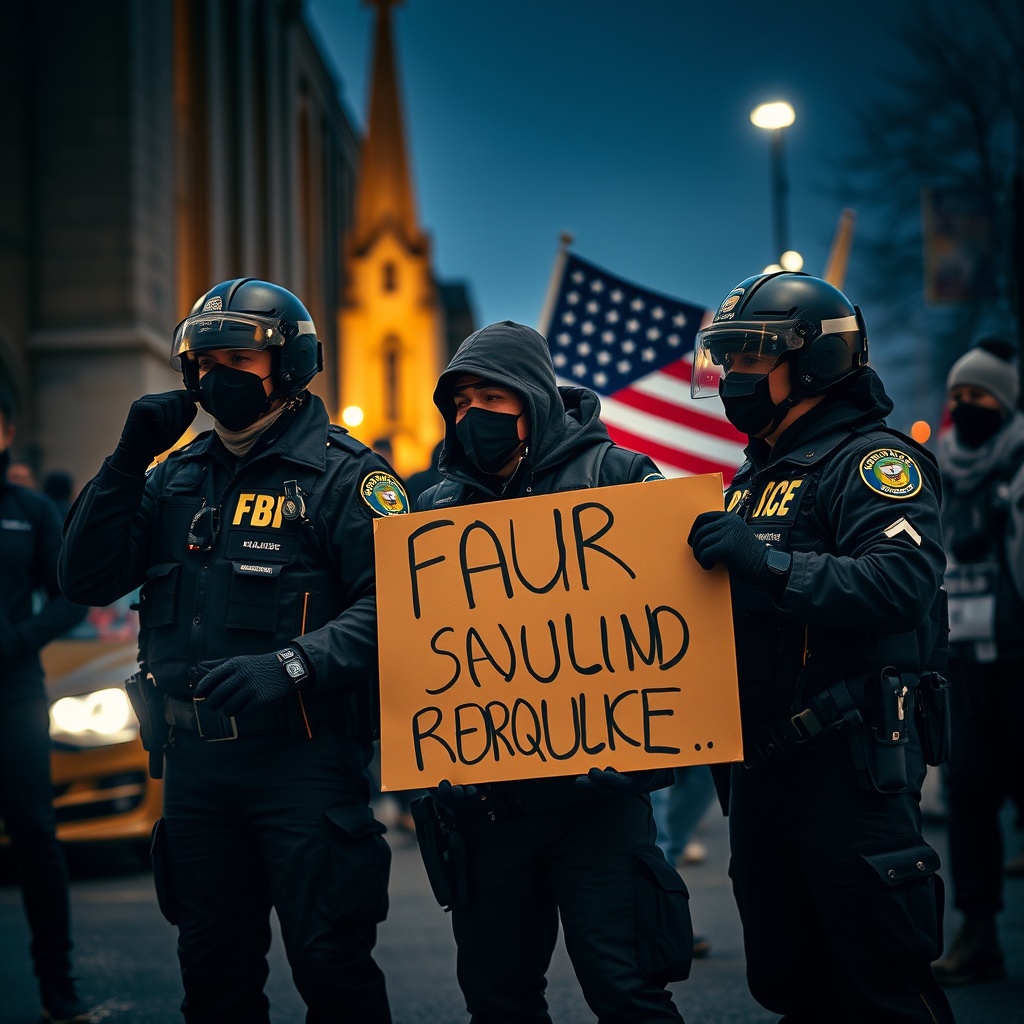
On a day that was meant to be a peaceful gathering of worship, a Minneapolis church service was disrupted by a group of protesters. The protest, which was organized by several individuals and groups, was calling for the resignation of a church pastor who they claimed works for Immigration and Customs Enforcement (ICE). The situation took a dramatic turn when the FBI and Homeland Security arrested three protesters, sparking a heated debate about freedom of speech, protest, and the role of law enforcement. This article will delve into the details of the incident, the motivations behind the protest, and the implications of the arrests.
Background to the Protest
The protest was organized by a group of individuals and organizations who were opposed to the church pastor's alleged involvement with ICE. According to the organizers, the pastor's work with ICE was incompatible with the values of the church and the community. The protesters claimed that the pastor's involvement with ICE was contributing to the separation of families and the detention of immigrants. The protest was meant to be a peaceful demonstration, with the organizers calling for the pastor's resignation and an end to the church's alleged collaboration with ICE.
The incident is not an isolated one, as there have been several instances of protests and demonstrations against ICE and its practices across the United States. The controversy surrounding ICE has been a contentious issue, with many arguing that the agency's practices are inhumane and violate human rights. The incident in Minneapolis is a reflection of the broader debate about immigration and the role of law enforcement in the United States.
The Arrests and the Response
The arrest of the three protesters by the FBI and Homeland Security has sparked a heated debate about the limits of free speech and the role of law enforcement. The protesters were arrested for allegedly disrupting the church service, with the authorities claiming that they had exceeded the boundaries of peaceful protest. The arrests have been criticized by many, who argue that the protesters were exercising their right to free speech and assembly.
The response to the arrests has been mixed, with some arguing that the protesters had gone too far and disrupted a peaceful gathering. Others have argued that the arrests were an overreach of authority and an attempt to stifle dissent. The incident has raised questions about the balance between free speech and public order, and the role of law enforcement in maintaining that balance.
According to the American Civil Liberties Union (ACLU), the arrests may have been a violation of the protesters' First Amendment rights. The ACLU has argued that the protesters were engaged in peaceful protest and that the arrests were an attempt to intimidate and silence them. The incident has also raised concerns about the use of federal law enforcement agencies to suppress dissent and protest.
Implications and Consequences
The incident in Minneapolis has significant implications for the future of protest and free speech in the United States. The arrests of the three protesters have sent a chilling message to those who would seek to exercise their right to free speech and assembly. The incident has also raised concerns about the use of federal law enforcement agencies to suppress dissent and protest.
The controversy surrounding ICE and its practices is likely to continue, with many arguing that the agency's practices are inhumane and violate human rights. The incident in Minneapolis is a reflection of the broader debate about immigration and the role of law enforcement in the United States. As the debate continues, it is likely that there will be more protests and demonstrations, and the response of law enforcement will be closely watched.
According to a report by the National Institute of Justice, the use of federal law enforcement agencies to suppress dissent and protest is a growing concern. The report found that the use of federal agencies to suppress protest can have a chilling effect on free speech and can lead to the erosion of trust between law enforcement and the community.
Case Studies and Statistics
There have been several instances of protests and demonstrations against ICE and its practices across the United States. According to a report by the Pew Research Center, the number of protests and demonstrations against ICE has increased significantly in recent years. The report found that the majority of Americans oppose the practices of ICE and believe that the agency should be reformed.
A case study by the University of California, Berkeley found that the use of federal law enforcement agencies to suppress dissent and protest can have a significant impact on the community. The study found that the use of federal agencies can lead to the erosion of trust between law enforcement and the community, and can have a chilling effect on free speech.
According to statistics from the FBI, the number of arrests for civil disorders has increased significantly in recent years. The statistics show that the majority of arrests are for non-violent offenses, such as disorderly conduct and trespassing. The statistics also show that the use of federal law enforcement agencies to suppress dissent and protest is on the rise.
Conclusion
The arrest of the three protesters in Minneapolis has sparked a heated debate about the limits of free speech and the role of law enforcement. The incident has raised questions about the balance between free speech and public order, and the role of law enforcement in maintaining that balance. As the debate continues, it is likely that there will be more protests and demonstrations, and the response of law enforcement will be closely watched.
The controversy surrounding ICE and its practices is likely to continue, with many arguing that the agency's practices are inhumane and violate human rights. The incident in Minneapolis is a reflection of the broader debate about immigration and the role of law enforcement in the United States. As the country moves forward, it is essential to find a balance between free speech and public order, and to ensure that the rights of all individuals are protected.
In the words of the ACLU, "The right to protest and express dissent is a fundamental aspect of our democracy. The government should not be using federal law enforcement agencies to suppress dissent and protest, but rather to protect the rights of all individuals to exercise their First Amendment rights." The incident in Minneapolis is a reminder of the importance of protecting free speech and the role of law enforcement in maintaining public order. As the country continues to grapple with the complexities of immigration and the role of law enforcement, it is essential to prioritize the protection of human rights and the preservation of democracy.

Leave a comment