
Introduction
The world of politics is no stranger to controversy and power struggles, and a recent incident involving California Governor Gavin Newsom has brought these dynamics to the forefront. According to Newsom, the White House, under the Trump administration, blocked him from speaking at the prestigious global forum in Davos, Switzerland. This move has sparked a heated debate about the limits of executive power, the role of state governments in international relations, and the implications for global cooperation. In this article, we will delve into the details of this incident, explore its significance, and examine the broader context of state-federal relations and international diplomacy.
Background: The World Economic Forum in Davos
The World Economic Forum (WEF) in Davos is an annual gathering of global leaders from politics, business, and civil society. It provides a platform for discussing pressing global issues, from economic inequality and climate change to technological innovation and geopolitical tensions. The forum is known for its high-profile attendees and its ability to facilitate dialogue and cooperation among nations. For a state governor like Gavin Newsom to be invited to speak at such an event is a significant honor, reflecting California's status as a global economic powerhouse and a leader in innovation and environmental policy.
The Incident: Newsom's Blocked Speech
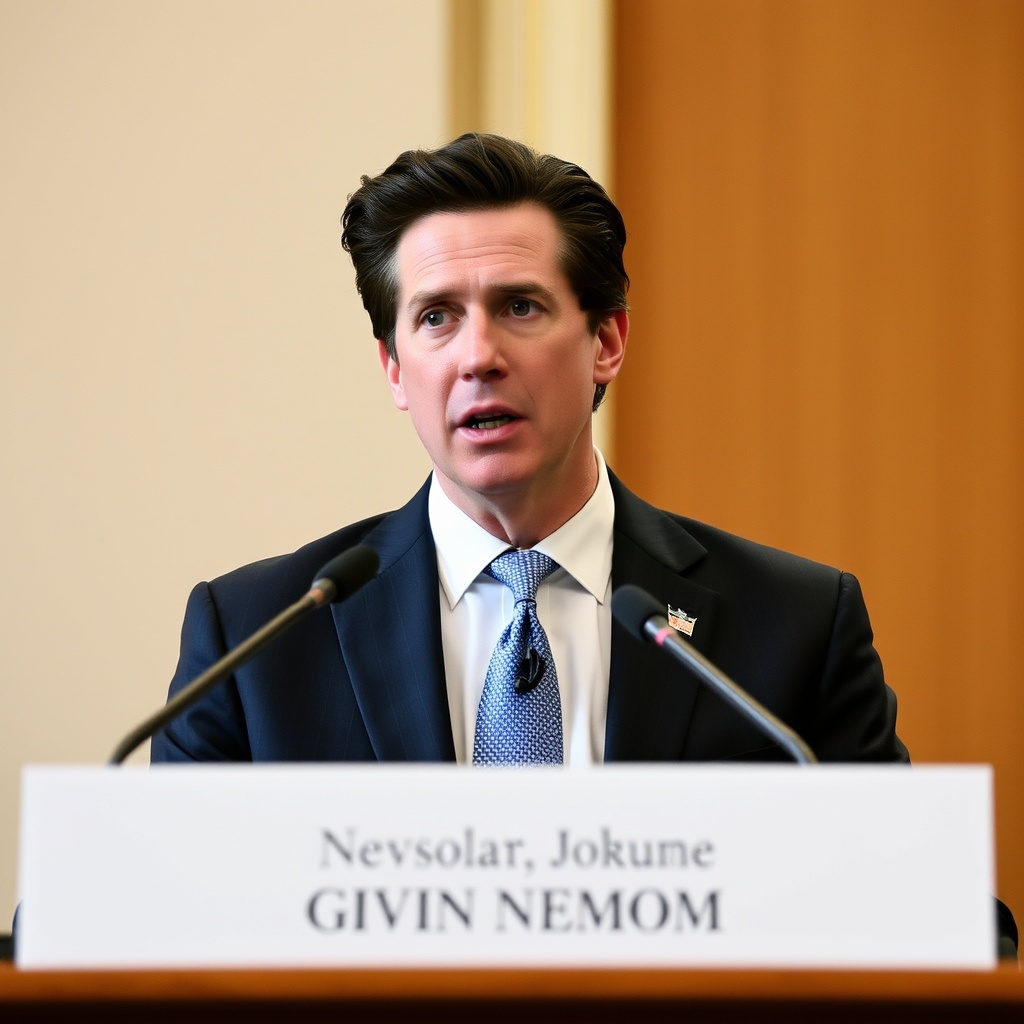
Governor Newsom was scheduled to speak at the WEF in Davos, where he intended to discuss California's pioneering efforts in addressing climate change, promoting sustainable energy, and fostering innovation. However, according to Newsom, the Trump administration intervened, blocking his participation. This move is seen as a reflection of the strained relationship between the federal government and California, which has been at the forefront of resisting Trump's policies on issues like immigration, healthcare, and environmental regulation. The blockade on Newsom's speech is not only a personal rebuke but also a symbolic gesture of the federal government's effort to assert its authority over states that dare to challenge its policies.
Implications: State-Federal Relations and International Diplomacy
The incident involving Governor Newsom and the White House highlights the complex and often contentious nature of state-federal relations in the United States. While the federal government has significant authority over foreign policy, states like California are increasingly engaged in international diplomacy, particularly in areas like trade, climate change, and cultural exchange. This engagement is driven by the recognition that states have unique economic, cultural, and environmental interests that may not be fully represented by federal policies. The blockade on Newsom's speech can be seen as an attempt by the federal government to reassert its dominance in foreign affairs and to limit the ability of states to pursue their own international agendas.
However, this move may have unintended consequences. By blocking Newsom's participation in the WEF, the White House may inadvertently enhance California's reputation as a global leader, independent of federal oversight. It may also galvanize support among other states and international partners for California's initiatives, particularly in the areas of climate action and technological innovation. Furthermore, this incident underscores the importance of subnational diplomacy, where states, cities, and regions engage directly with their international counterparts to address common challenges and promote mutual interests.
Case Studies: Subnational Diplomacy and International Cooperation
There are numerous examples of successful subnational diplomacy around the world. For instance, the state of Baden-Württemberg in Germany has established strong economic and cultural ties with the Chinese province of Jiangsu, promoting trade, investment, and technological cooperation. Similarly, the city of Copenhagen in Denmark has become a global leader in sustainable urban development, sharing its expertise and best practices with cities worldwide. In the United States, states like California, New York, and Washington have been at the forefront of international cooperation on climate change, signing agreements with foreign governments and participating in global initiatives like the Under2 Coalition.
These examples demonstrate that subnational entities can play a vital role in international diplomacy, fostering cooperation, promoting economic development, and addressing global challenges. They also highlight the need for greater flexibility and autonomy in state-federal relations, allowing states to pursue their international interests while still respecting federal authority over foreign policy.
Statistics and Trends
The trend towards greater subnational engagement in international affairs is reflected in various statistics and indicators. According to a report by the Council on Foreign Relations, the number of international agreements signed by U.S. states has increased significantly over the past decade, with states like California, Texas, and New York leading the way. Similarly, a survey by the National Governors Association found that a majority of U.S. governors believe that international trade and investment are critical to their states' economic development, and that they are increasingly engaged in international diplomacy to promote these interests.
Moreover, the growth of global cities and regions as economic and cultural hubs has created new opportunities for subnational diplomacy. Cities like Shanghai, Singapore, and San Francisco are now major players in international trade, innovation, and cultural exchange, often operating independently of national governments. This shift towards a more multipolar and decentralized world order underscores the importance of subnational entities in shaping global agendas and promoting international cooperation.
Conclusion
The incident involving Governor Gavin Newsom and the White House blockade on his speech at the World Economic Forum in Davos has significant implications for state-federal relations, international diplomacy, and the role of subnational entities in global affairs. As the world becomes increasingly interconnected, states, cities, and regions are playing a more prominent role in addressing global challenges and promoting economic, cultural, and environmental cooperation. While the federal government has a critical role in setting foreign policy, it is essential to recognize the value of subnational diplomacy and to provide states and local governments with the autonomy and resources they need to engage effectively in international relations.
In the future, we can expect to see more instances of subnational diplomacy, as states, cities, and regions seek to promote their interests and address common challenges with their international counterparts. The success of these efforts will depend on the ability of federal governments to adapt to this new reality, recognizing the benefits of cooperation and the limitations of a purely top-down approach to international relations. As Governor Newsom's experience shows, the intersection of state-federal relations and international diplomacy is complex and often contentious, but it also presents opportunities for innovation, cooperation, and progress in addressing the global challenges of our time.

Leave a comment