
Introduction
The issue of redistricting has long been a contentious topic in American politics, with both parties often seeking to redraw congressional maps to their advantage. Recently, the Indiana Senate made headlines by announcing that it would not meet to vote on a redrawn congressional map that former President Donald Trump had sought. This decision has significant implications for the state's political landscape and raises important questions about the role of partisanship in the redistricting process. In this article, we will delve into the details of the Indiana Senate's decision, explore the context of redistricting in the United States, and examine the potential consequences of this move.
The Context of Redistricting in the United States
Redistricting is the process by which congressional and state legislative districts are redrawn to reflect changes in population. The process typically occurs every ten years, following the release of new census data. While the goal of redistricting is to ensure that each district has roughly the same number of people, the process is often highly partisan, with each party seeking to draw maps that will give them an electoral advantage. This can lead to gerrymandering, a practice in which district boundaries are manipulated for political gain. Gerrymandering can result in districts that are wildly irregular in shape and may not reflect the natural geographic or demographic boundaries of a community.
The consequences of gerrymandering can be significant. By manipulating district boundaries, politicians can effectively choose their voters, rather than the other way around. This can lead to a lack of competitive elections, as incumbents are often able to draw themselves into safe districts. It can also result in a mismatch between the views of the electorate and the views of the elected representatives. For example, in a state where a majority of voters support a particular party or policy, gerrymandering can allow the opposing party to maintain control of a disproportionate number of seats.
The Indiana Senate's Decision
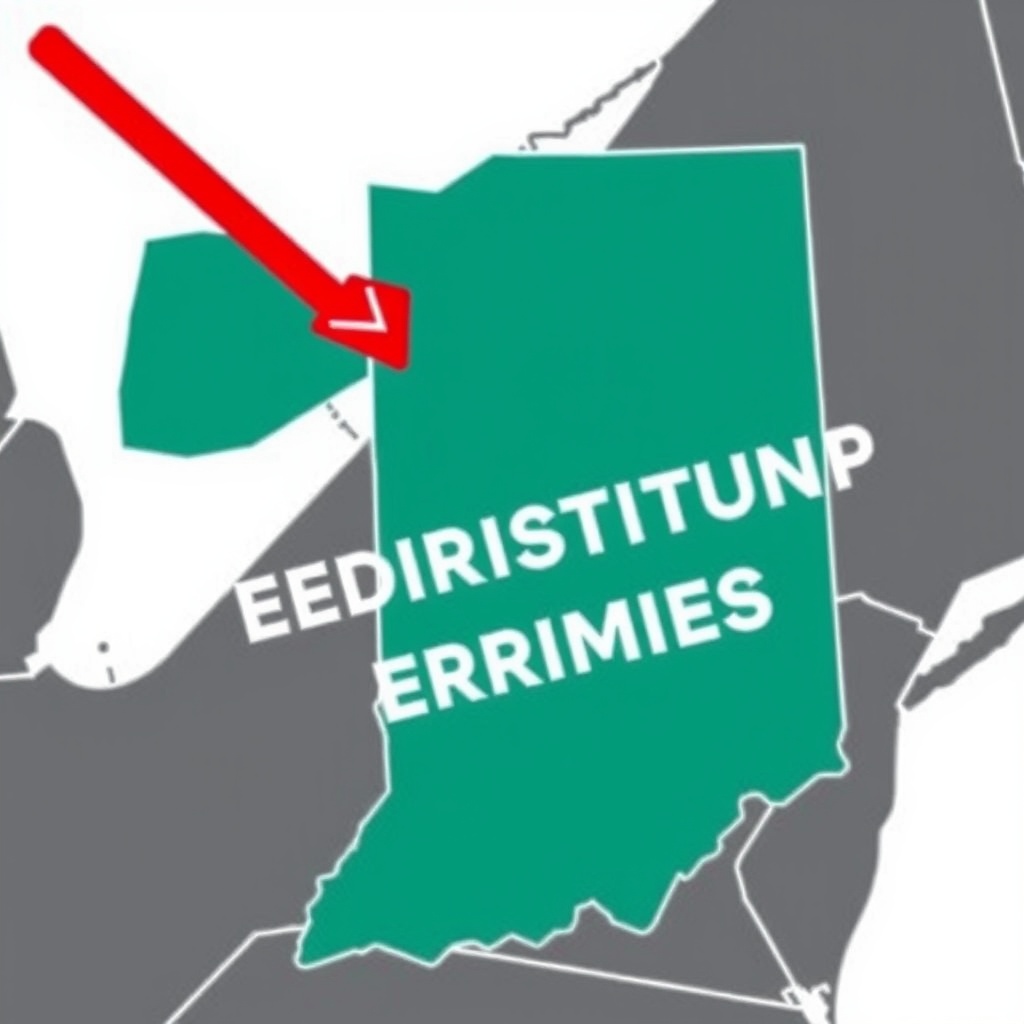
The Indiana Senate's decision not to vote on the redrawn congressional map sought by President Trump is a significant development in the state's redistricting process. According to reports, a top Republican in the chamber stated that the Senate would not meet next month to consider the new map. This move is seen as a setback for Trump, who had been pushing for changes to the state's congressional districts. The exact reasons for the Senate's decision are not entirely clear, but it is likely that the move is a response to concerns about the partisan nature of the redrawn map.
The decision by the Indiana Senate has been met with a mix of reactions from different stakeholders. Some have praised the move as a step towards reducing partisanship in the redistricting process, while others have criticized it as a missed opportunity to address issues with the current district boundaries. The decision is also likely to have implications for the state's electoral landscape, potentially affecting the balance of power in the state's congressional delegation.
The Role of Partisanship in Redistricting
The Indiana Senate's decision highlights the highly partisan nature of the redistricting process. While the goal of redistricting is to ensure that each district has roughly the same number of people, the process is often driven by political considerations. Both parties seek to draw maps that will give them an electoral advantage, and this can lead to highly irregular district boundaries and a lack of competitive elections.
The role of partisanship in redistricting is not limited to Indiana. Across the United States, the process is often highly politicized, with each party seeking to gain an advantage. This can lead to a range of negative consequences, including a lack of representation for certain communities and a decline in electoral competitiveness. To address these issues, some states have implemented reforms aimed at reducing the partisan nature of the redistricting process. For example, some states use independent commissions to draw district boundaries, rather than leaving the process in the hands of politicians.
Case Studies and Examples
There are several examples of states that have implemented reforms aimed at reducing the partisan nature of the redistricting process. One notable example is California, which uses an independent commission to draw district boundaries. The commission is made up of citizens who are not elected officials, and its members are chosen through a random selection process. This approach has been shown to result in more competitive elections and a reduction in gerrymandering.
Another example is Arizona, which also uses an independent commission to draw district boundaries. The commission is made up of two Democrats, two Republicans, and one independent, and its members are chosen by the state's legislative leaders. This approach has been shown to result in more balanced and competitive districts, and has helped to reduce the partisan nature of the redistricting process.
Statistics and Data
There are a range of statistics and data that highlight the impact of gerrymandering and the partisan nature of the redistricting process. For example, according to a report by the Brennan Center for Justice, the number of competitive congressional districts in the United States has declined significantly in recent years. In 2010, there were 53 competitive districts, but by 2020, that number had declined to just 35. This decline is largely due to gerrymandering, which has allowed politicians to draw themselves into safe districts.
Another statistic that highlights the impact of gerrymandering is the number of voters who are represented by a member of Congress who does not reflect their views. According to a report by the Princeton University Gerrymandering Project, in 2020, over 40% of voters in the United States were represented by a member of Congress who did not reflect their views. This is a significant problem, as it can lead to a lack of representation for certain communities and a decline in electoral competitiveness.
Conclusion
The Indiana Senate's decision not to vote on the redrawn congressional map sought by President Trump is a significant development in the state's redistricting process. The decision highlights the highly partisan nature of the redistricting process and raises important questions about the role of partisanship in American politics. To address these issues, it is essential that states implement reforms aimed at reducing the partisan nature of the redistricting process. This can include the use of independent commissions to draw district boundaries, as well as other measures aimed at promoting electoral competitiveness and representation.
Ultimately, the goal of redistricting should be to ensure that each district has roughly the same number of people and that each voter has an equal voice in the electoral process. By reducing the partisan nature of the redistricting process and promoting electoral competitiveness, we can help to ensure that our democracy is more representative and more accountable to the people. As the United States continues to grapple with the challenges of redistricting, it is essential that we prioritize fairness, transparency, and competitiveness in the electoral process.

Leave a comment