
Introduction
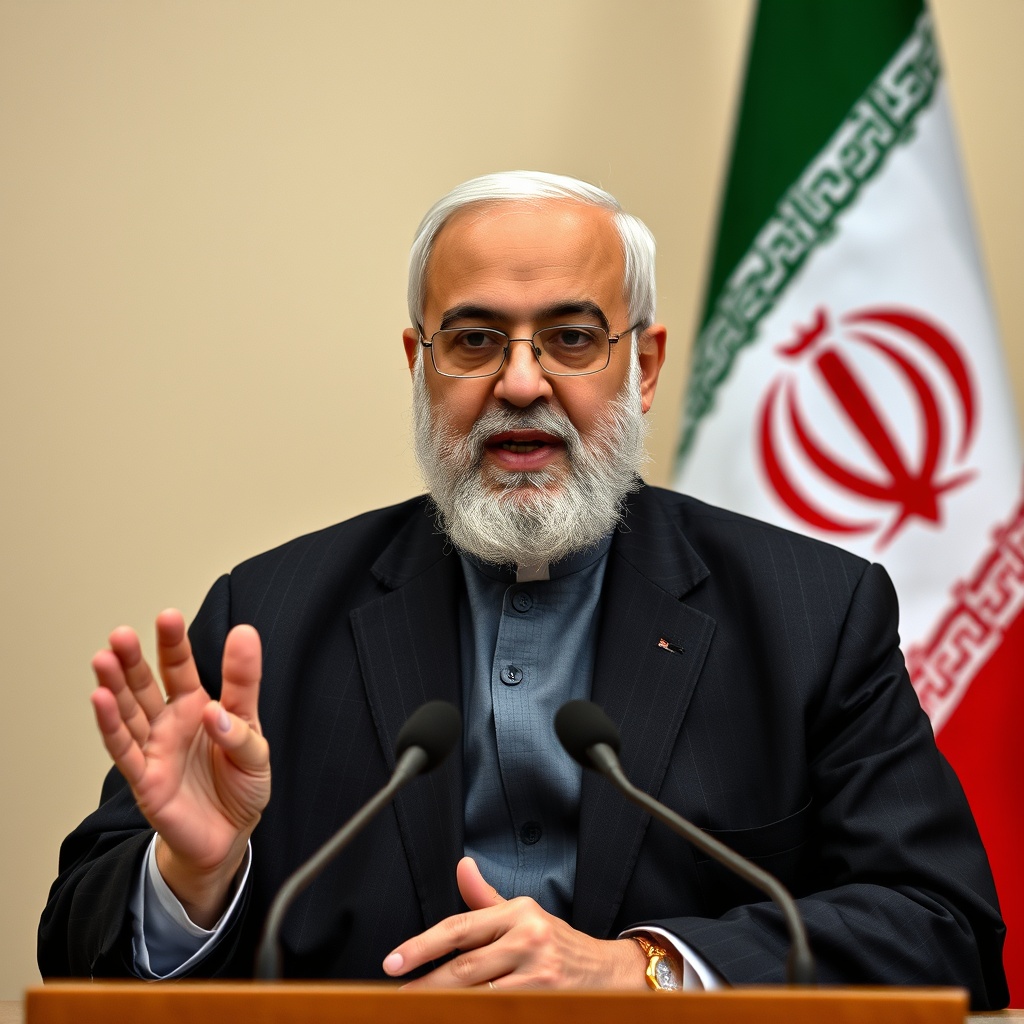
The Iranian foreign minister's statement that Iran has "every right to enjoy a peaceful nuclear energy, including enrichment" has sparked a heated debate in the international community. As the United States pushes for a deal to limit Iran's nuclear program, the Islamic Republic remains adamant about its right to develop nuclear energy for peaceful purposes. This article will delve into the complexities of Iran's nuclear program, the country's motivations, and the international community's concerns. We will also examine the history of Iran's nuclear development, the current state of negotiations, and the potential implications of a nuclear deal.
History of Iran's Nuclear Program
Iran's nuclear program dates back to the 1950s, when the country first began exploring the possibility of developing nuclear energy. In the 1970s, Iran signed a nuclear cooperation agreement with the United States, which included the sale of nuclear reactors and fuel. However, the 1979 Iranian Revolution led to a significant shift in the country's nuclear policy. The new government, led by Ayatollah Khomeini, was skeptical of Western intentions and sought to develop a more independent nuclear program.
In the 1980s, Iran began to develop its own nuclear infrastructure, including the construction of nuclear reactors and research facilities. The country also established a network of nuclear research centers and universities, which helped to train a new generation of nuclear scientists and engineers. However, Iran's nuclear program was not without controversy. In the 1990s, the International Atomic Energy Agency (IAEA) began to suspect that Iran was secretly developing a nuclear weapons program.
International Concerns and Sanctions
The IAEA's concerns about Iran's nuclear program led to a series of inspections and investigations, which ultimately revealed that Iran had been hiding a significant portion of its nuclear activities. In 2002, the IAEA reported that Iran had been secretly enriching uranium, which is a key component of nuclear fuel. The discovery sparked a international outcry, with many countries calling for Iran to suspend its nuclear program.
In response to Iran's refusal to comply with international demands, the United Nations Security Council imposed a series of economic sanctions on the country. The sanctions, which were enforced by the United States, the European Union, and other countries, had a significant impact on Iran's economy. The country's oil exports were severely limited, and its access to international financial markets was restricted.
Despite the sanctions, Iran continued to develop its nuclear program. In 2010, the country announced that it had successfully enriched uranium to 20%, which is a significant step towards developing a nuclear weapon. The announcement sparked a new wave of international concern, with many countries warning that Iran's nuclear program posed a significant threat to regional and global security.
Negotiations and the Joint Comprehensive Plan of Action (JCPOA)
In 2015, Iran and a group of world powers, including the United States, the United Kingdom, France, Germany, China, and Russia, reached a historic agreement on Iran's nuclear program. The Joint Comprehensive Plan of Action (JCPOA) limited Iran's nuclear activities in exchange for the lifting of economic sanctions.
Under the terms of the JCPOA, Iran agreed to reduce its uranium enrichment activities, limit its stockpile of low-enriched uranium, and convert its Arak heavy-water reactor to a research reactor that cannot produce plutonium. In return, the international community agreed to lift sanctions on Iran's oil exports, banking sector, and other industries.
However, the JCPOA was not without controversy. Many critics argued that the agreement did not go far enough in limiting Iran's nuclear activities, and that the country could still develop a nuclear weapon in the future. In 2018, the United States withdrew from the JCPOA, citing concerns about Iran's ballistic missile program and its support for terrorism in the region.
Current State of Negotiations
Today, negotiations between Iran and the international community are ongoing. The Iranian foreign minister's statement that Iran has "every right to enjoy a peaceful nuclear energy, including enrichment" suggests that the country is determined to develop its nuclear program, despite international concerns.
The United States has imposed a series of new sanctions on Iran, including sanctions on the country's oil exports and banking sector. However, the European Union has continued to support the JCPOA, and has established a special purpose vehicle to facilitate trade with Iran.
The current state of negotiations is complex and uncertain. While Iran has agreed to limit its nuclear activities in exchange for economic benefits, the country's long-term goals and intentions remain unclear. The international community is watching the situation closely, with many countries warning that a nuclear-armed Iran would pose a significant threat to regional and global security.
Case Studies and Examples
Several case studies and examples illustrate the complexities of Iran's nuclear program and the international community's response. For example, the Israeli bombing of the Osirak nuclear reactor in Iraq in 1981 highlights the risks of nuclear proliferation in the region. The bombing, which was carried out to prevent Iraq from developing a nuclear weapon, demonstrates the willingness of countries to take military action to prevent the spread of nuclear weapons.
Another example is the Libyan nuclear program, which was dismantled in 2003 after the country's leader, Muammar Gaddafi, agreed to abandon his nuclear ambitions. The Libyan case study demonstrates the potential benefits of diplomacy and cooperation in preventing the spread of nuclear weapons.
Statistics and Data
Several statistics and data points illustrate the significance of Iran's nuclear program and the international community's response. For example, according to the IAEA, Iran's nuclear program has grown significantly in recent years, with the country's uranium enrichment capacity increasing by over 50% since 2015.
Additionally, the economic sanctions imposed on Iran have had a significant impact on the country's economy. According to the World Bank, Iran's economy contracted by over 5% in 2018, due in part to the sanctions.
Conclusion
In conclusion, the Iranian foreign minister's statement that Iran has "every right to enjoy a peaceful nuclear energy, including enrichment" highlights the complexities and challenges of Iran's nuclear program. While the country has the right to develop nuclear energy for peaceful purposes, the international community has legitimate concerns about the potential risks of nuclear proliferation.
As negotiations between Iran and the international community continue, it is essential to consider the long-term implications of a nuclear deal. The JCPOA has been successful in limiting Iran's nuclear activities, but it is not a permanent solution. A more comprehensive and sustainable agreement is needed to address the concerns of all parties involved.
Ultimately, the future of Iran's nuclear program will depend on the ability of the international community to work together to prevent the spread of nuclear weapons. This will require a combination of diplomacy, cooperation, and enforcement, as well as a commitment to the principles of non-proliferation and disarmament. As the world watches the situation in Iran, one thing is clear: the stakes are high, and the consequences of failure could be catastrophic.

Leave a comment