
Introduction
The Israeli-Palestinian conflict has been a longstanding and complex issue, with periods of relative calm punctuated by outbreaks of violence. Recently, Israel launched air strikes in southern Gaza, accusing Hamas of a "bold violation of the ceasefire." This escalation of tensions has raised concerns about the stability of the region and the potential for further conflict. In this article, we will examine the background to the conflict, the events leading up to the air strikes, and the implications of this latest development.
Background to the Conflict
The Israeli-Palestinian conflict has its roots in the early 20th century, when Zionist Jews, fleeing persecution in Europe, began to migrate to Palestine, then under Ottoman rule. Following World War I, the British took control of the region and, in 1917, issued the Balfour Declaration, which expressed support for the establishment of a Jewish homeland in Palestine. This move was met with resistance from the Arab population, who had been living in the region for centuries. The conflict escalated after World War II, with the establishment of the State of Israel in 1948, leading to the displacement of hundreds of thousands of Palestinians, known as the Nakba or "catastrophe" in Arabic.
Since then, the conflict has continued, with periods of relative calm punctuated by outbreaks of violence. The Gaza Strip, a coastal region bordering Egypt and Israel, has been a particular flashpoint, with Israel maintaining a blockade on the territory since 2007. Hamas, a Palestinian Islamist organization, has been in control of Gaza since 2007, and has been accused of launching rocket attacks against Israel. Israel, in turn, has launched numerous military operations in Gaza, resulting in significant civilian casualties and damage to infrastructure.
The Ceasefire and Its Violation
In recent years, there have been several ceasefires between Israel and Hamas, but these have often been short-lived. The most recent ceasefire was agreed upon in May 2021, after a period of intense violence in which hundreds of people were killed. However, the ceasefire has been fragile, with both sides accusing each other of violations.
According to Israeli officials, Hamas has been responsible for a number of attacks in recent weeks, including the launch of incendiary balloons and the firing of rockets into Israeli territory. These attacks have been seen as a "bold violation of the ceasefire" and have prompted Israel to launch air strikes in response.
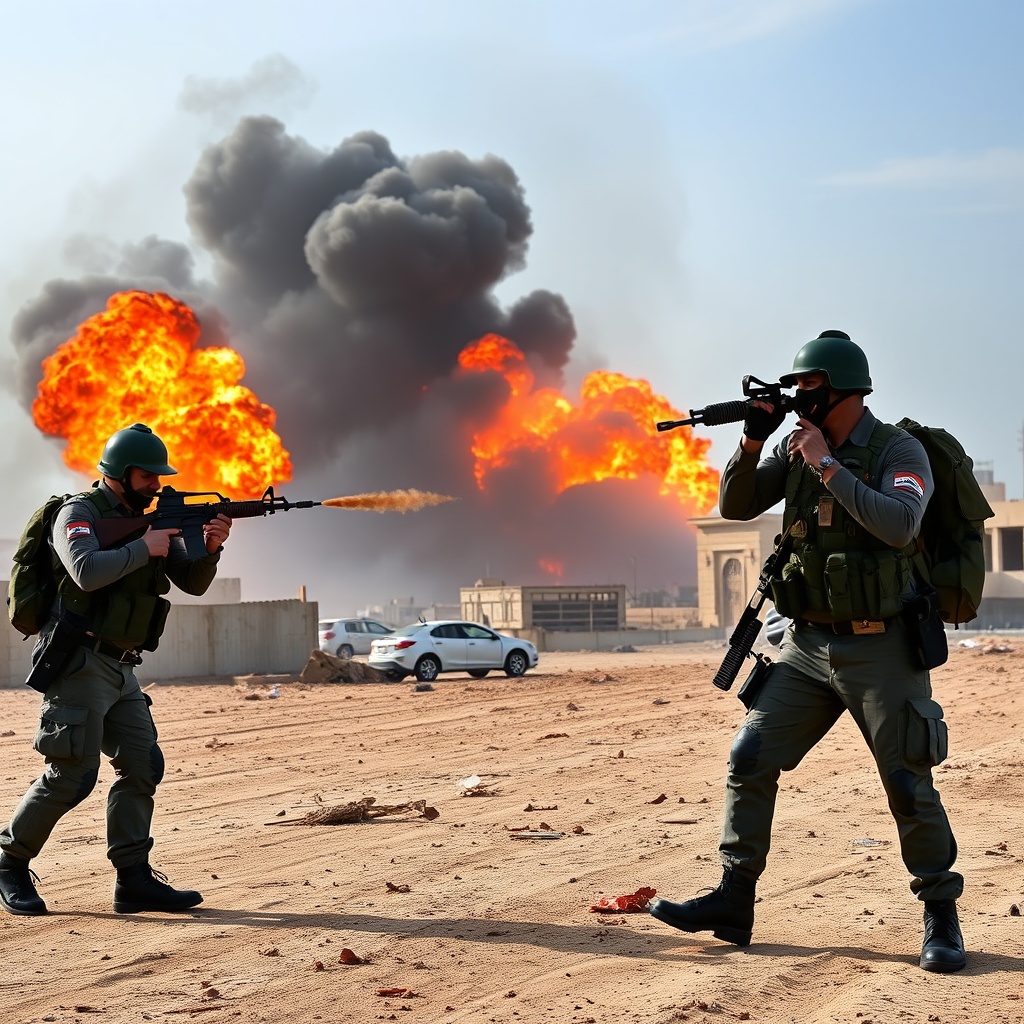
The air strikes, which targeted Hamas military sites in southern Gaza, are the latest escalation of tensions in the region. Israeli military officials have stated that the strikes are a response to the "escalating aggression" of Hamas and are intended to deter further attacks. However, Palestinian officials have condemned the strikes, saying that they will only lead to further violence and instability.
Implications of the Air Strikes
The air strikes in Gaza have significant implications for the region and the wider Middle East. The escalation of tensions between Israel and Hamas increases the risk of further conflict, which could have devastating consequences for civilians in Gaza and Israel.
The humanitarian situation in Gaza is already dire, with high levels of poverty and unemployment, and a lack of access to basic services such as healthcare and education. The blockade, which has been in place since 2007, has had a devastating impact on the economy and infrastructure of Gaza, and has led to widespread poverty and deprivation.
The air strikes also have implications for the wider region. The conflict between Israel and Hamas is closely tied to the broader Middle East peace process, and any escalation of tensions could have a negative impact on efforts to achieve a lasting peace.
In recent years, there have been efforts to negotiate a two-state solution to the conflict, with the establishment of an independent Palestinian state alongside the State of Israel. However, these efforts have been slow to progress, and the latest escalation of tensions is a significant setback.
International Response
The international community has been quick to respond to the air strikes, with many countries calling for restraint and a return to the ceasefire. The United Nations has condemned the violence, saying that it is "deeply concerned" about the escalation of tensions and the impact on civilians.
The European Union has also called for calm, saying that the violence is "unacceptable" and that a lasting solution to the conflict can only be achieved through negotiations. The United States, a close ally of Israel, has also called for restraint, saying that it is "deeply concerned" about the escalation of tensions and the impact on civilians.
However, the international response has been criticized for being inadequate, with many arguing that more needs to be done to address the root causes of the conflict. The blockade of Gaza, which has been in place since 2007, is seen as a major obstacle to peace, and many are calling for it to be lifted.
Conclusion
The air strikes in Gaza are a significant escalation of tensions in the region, and have raised concerns about the stability of the Middle East. The conflict between Israel and Hamas is complex and deeply ingrained, with roots in the early 20th century. The latest escalation of tensions is a setback for efforts to achieve a lasting peace, and highlights the need for a more comprehensive and inclusive approach to addressing the conflict.
The international community has a critical role to play in promoting peace and stability in the region. This includes calling for restraint and a return to the ceasefire, as well as addressing the root causes of the conflict, including the blockade of Gaza and the occupation of the West Bank.
Ultimately, a lasting solution to the conflict will require a negotiated settlement that addresses the needs and concerns of both Israelis and Palestinians. This will require courage, compromise, and a commitment to peace from all parties involved. The alternative is a continuation of the cycle of violence, which will only lead to further suffering and instability in the region.
As the situation in Gaza continues to unfold, it is essential that the international community remains vigilant and committed to promoting peace and stability in the region. This includes providing humanitarian assistance to those affected by the conflict, as well as supporting efforts to negotiate a lasting peace.
In the words of the United Nations Secretary-General, "the situation in Gaza is a powder keg, waiting to ignite." It is essential that all parties involved take steps to reduce tensions and promote peace, rather than allowing the conflict to escalate further. The future of the Middle East, and the lives of millions of people, depend on it.
The statistics are alarming, with the United Nations reporting that over 2,000 Palestinians have been killed in Gaza since 2008, and over 10,000 injured. The economic situation in Gaza is also dire, with the blockade leading to high levels of poverty and unemployment.
The case of Gaza is a stark reminder of the human cost of conflict, and the need for a comprehensive and inclusive approach to promoting peace and stability in the region. It is essential that the international community learns from the mistakes of the past, and works towards a more just and equitable solution to the conflict.
As we look to the future, it is clear that the situation in Gaza will remain a major challenge for the international community. However, with courage, compromise, and a commitment to peace, it is possible to imagine a different future, one in which Israelis and Palestinians can live in peace and security, and the Middle East can flourish as a region of stability and prosperity.

Leave a comment