
Introduction
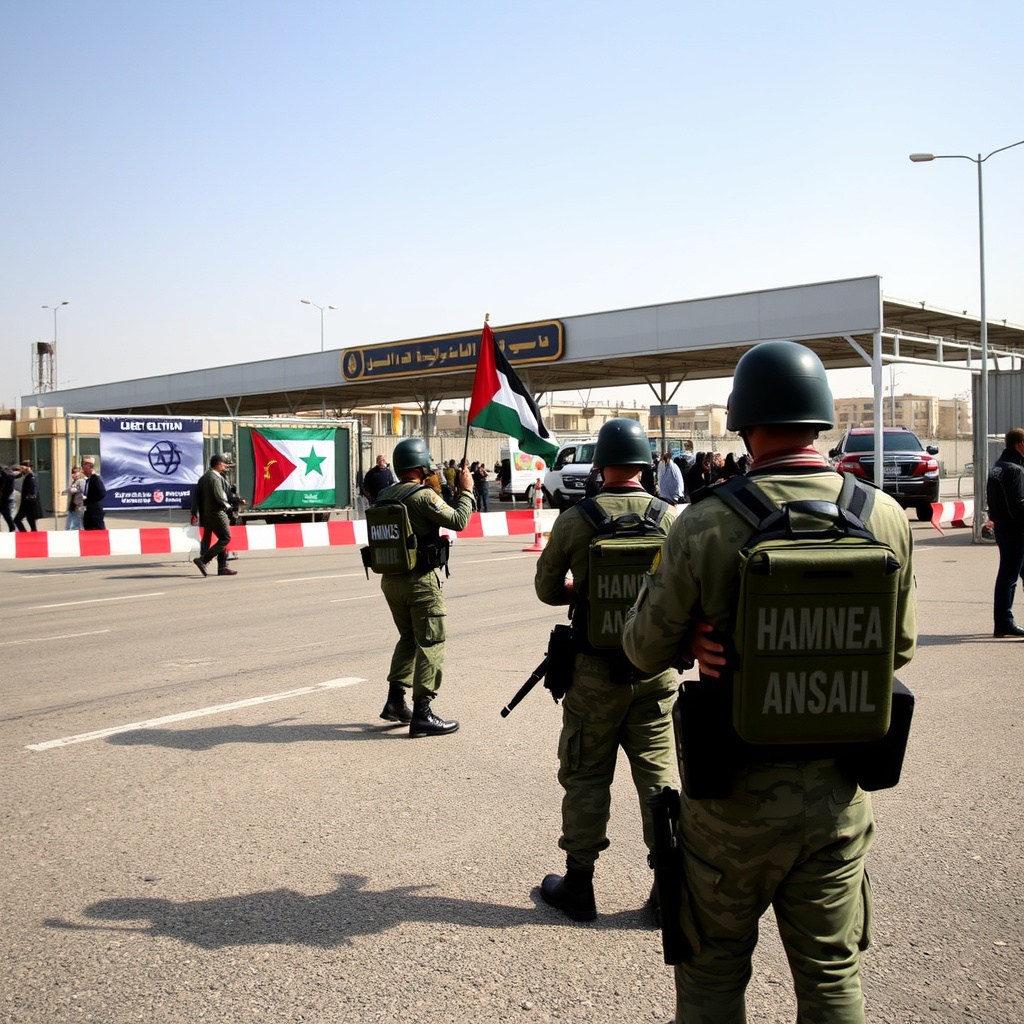
The Israeli-Palestinian conflict has been a longstanding and complex issue, with periods of relative calm punctuated by outbreaks of violence. One of the most recent developments in this conflict is the closure of the Rafah border crossing between Gaza and Egypt, which was initially set to reopen on Monday, October 21, 2025, according to the Palestinian Embassy in Egypt. However, Israeli Prime Minister has announced that the crossing will remain closed until further notice, citing concerns over ceasefire violations by Hamas. This article will delve into the background of the conflict, the current situation, and the implications of the border closure.
Background of the Conflict
The Israeli-Palestinian conflict has its roots in the early 20th century, when Zionist Jews, fleeing persecution in Europe, began immigrating to Palestine, then under Ottoman rule. Following World War I, the British took control of the region and, in 1917, issued the Balfour Declaration, which expressed support for the establishment of a Jewish homeland in Palestine. This move was met with resistance from the Arab population, who had been living in the region for centuries. The conflict escalated after World War II, with the establishment of the State of Israel in 1948, leading to the displacement of hundreds of thousands of Palestinians, known as the Nakba or "catastrophe" in Arabic.
Since then, the conflict has continued, with periods of relative calm punctuated by outbreaks of violence, including the First Intifada (1987-1993), the Second Intifada (2000-2005), and the Gaza Wars (2008-2009, 2012, and 2014). The conflict has resulted in the deaths of thousands of people, the displacement of millions, and the destruction of infrastructure and homes. Despite numerous attempts at peace negotiations, a lasting resolution has yet to be achieved.
Current Situation
The current situation in Gaza is particularly dire, with the region facing a severe humanitarian crisis. The Gaza Strip, home to approximately 2 million people, has been under an Israeli blockade since 2007, which has severely restricted the movement of people and goods. The blockade has led to widespread poverty, unemployment, and a lack of access to basic necessities like food, water, and healthcare.
The Rafah border crossing, which is the only crossing point between Gaza and Egypt, is a critical lifeline for the people of Gaza. The crossing is used for the movement of people, goods, and humanitarian aid, and its closure has severe consequences for the population. The crossing is typically closed for extended periods, with occasional openings to allow for the passage of humanitarian aid and urgent medical cases.
According to the Palestinian Embassy in Egypt, the Rafah border crossing was initially set to reopen on Monday, October 21, 2025. However, Israeli Prime Minister has announced that the crossing will remain closed until further notice, citing concerns over ceasefire violations by Hamas. This move has been met with widespread criticism from Palestinian officials, who argue that the closure will exacerbate the humanitarian crisis in Gaza.
Implications of the Border Closure
The closure of the Rafah border crossing has severe implications for the people of Gaza. The crossing is a critical lifeline, and its closure will restrict the movement of people, goods, and humanitarian aid. The closure will also exacerbate the humanitarian crisis in Gaza, which is already facing severe poverty, unemployment, and a lack of access to basic necessities.
The closure of the border crossing will also have significant economic implications. The Gaza Strip is heavily reliant on imports, and the closure of the border crossing will restrict the movement of goods, including food, medicine, and construction materials. This will lead to shortages and price increases, further exacerbating the poverty and unemployment in the region.
Furthermore, the closure of the border crossing will also have significant humanitarian implications. The crossing is used for the passage of humanitarian aid, including food, medicine, and shelter. The closure will restrict the movement of aid, leaving thousands of people without access to basic necessities.
In addition, the closure of the border crossing will also have significant political implications. The move is likely to be seen as a punitive measure by Israel, aimed at pressuring Hamas to comply with the ceasefire agreement. However, the move is likely to have the opposite effect, with Hamas and other Palestinian factions likely to view the closure as a provocation, leading to further escalation of the conflict.
According to a report by the United Nations Office for the Coordination of Humanitarian Affairs (OCHA), the Gaza Strip is facing a severe humanitarian crisis, with over 70% of the population relying on humanitarian aid to survive. The report also notes that the blockade has led to a significant decline in the standard of living in Gaza, with poverty and unemployment rates exceeding 50%.
In conclusion, the closure of the Rafah border crossing is a significant development in the Israeli-Palestinian conflict, with severe implications for the people of Gaza. The closure will restrict the movement of people, goods, and humanitarian aid, exacerbating the humanitarian crisis in the region. The move is likely to be seen as a punitive measure by Israel, aimed at pressuring Hamas to comply with the ceasefire agreement. However, the move is likely to have the opposite effect, leading to further escalation of the conflict.
Conclusion
The Israeli-Palestinian conflict is a complex and longstanding issue, with periods of relative calm punctuated by outbreaks of violence. The closure of the Rafah border crossing is a significant development in this conflict, with severe implications for the people of Gaza. The closure will restrict the movement of people, goods, and humanitarian aid, exacerbating the humanitarian crisis in the region.
To resolve this conflict, it is essential to address the underlying issues, including the blockade of Gaza, the occupation of the West Bank, and the displacement of Palestinians. A lasting resolution will require a comprehensive and inclusive approach, involving all parties to the conflict, including Israel, Hamas, and the Palestinian Authority.
In the short term, it is essential to reopen the Rafah border crossing, allowing for the movement of people, goods, and humanitarian aid. This will help to alleviate the humanitarian crisis in Gaza and provide a glimmer of hope for the people of the region.
In the long term, it is essential to work towards a lasting resolution to the conflict, based on the principles of justice, equality, and human rights. This will require a commitment to peace, reconciliation, and cooperation, as well as a willingness to address the underlying issues and work towards a comprehensive and inclusive solution.
Ultimately, the resolution of the Israeli-Palestinian conflict will require a collective effort, involving governments, international organizations, and civil society. It will require a commitment to peace, justice, and human rights, as well as a willingness to work towards a comprehensive and inclusive solution. Only then can we hope to achieve a lasting peace in the region, and an end to the suffering of the Palestinian people.

Leave a comment