
Introduction
The Middle East has long been a region of turmoil and conflict, with various nations and factions vying for power and influence. One of the most significant and enduring conflicts in the region is the one between Israel and Iran. On Tuesday, March 3, 2026, the Israeli military reported that Iranian missiles had struck the Tel Aviv area in central Israel. This incident has significant implications for the region and the world at large. In this article, we will explore the background of the Israel-Iran conflict, the details of the recent missile strikes, and the potential consequences of this event.
Background of the Israel-Iran Conflict
The conflict between Israel and Iran is rooted in a complex web of historical, cultural, and ideological factors. Israel, a Jewish state established in 1948, has long been at odds with its Arab and Muslim neighbors, who have historically been opposed to the existence of a Jewish state in the region. Iran, a Shia Muslim nation, has been a key player in the region's geopolitics and has long been a supporter of various anti-Israeli factions, including the Palestinian militant group Hamas and the Lebanese militia Hezbollah.
In recent years, tensions between Israel and Iran have escalated significantly, with both nations engaging in a series of proxy wars and covert operations. Iran has been accused of attempting to develop nuclear weapons, which Israel sees as an existential threat. In response, Israel has launched several airstrikes against Iranian targets in Syria and Lebanon, and has also been involved in a series of cyberattacks against Iranian infrastructure.
The Recent Missile Strikes
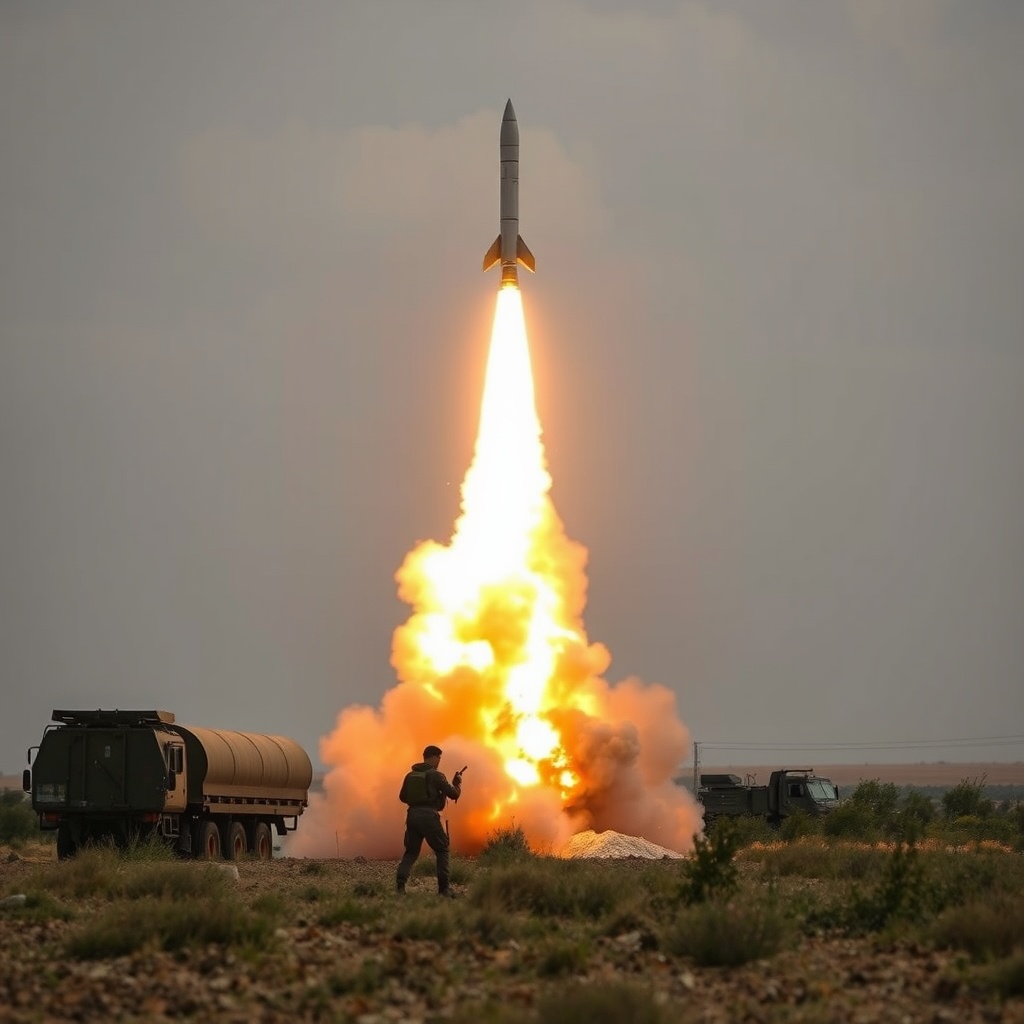
According to reports from the Israeli military, the recent missile strikes were launched from Iranian territory and struck the Tel Aviv area in central Israel. The strikes were reportedly carried out using advanced missiles, which were able to evade Israeli air defenses and strike their targets with precision. The Israeli military has stated that the strikes were a response to Israeli attacks on Iranian targets in the region, and that they will not tolerate such aggression.
The details of the strikes are still emerging, but it is clear that they have significant implications for the region. The use of advanced missiles by Iran suggests that the nation is continuing to develop its military capabilities, and that it is willing to use them to attack its enemies. The fact that the strikes were able to evade Israeli air defenses also raises questions about the effectiveness of Israel's military capabilities.
Potential Consequences of the Missile Strikes
The recent missile strikes have significant implications for the region and the world at large. The conflict between Israel and Iran has the potential to draw in other nations, including the United States, Russia, and European powers. The use of advanced missiles by Iran also raises concerns about the proliferation of such weapons, and the potential for them to fall into the hands of terrorist groups.
The strikes also have significant implications for the Israeli-Palestinian conflict. The Palestinian militant group Hamas, which is supported by Iran, has been involved in a series of conflicts with Israel in recent years. The recent missile strikes may embolden Hamas and other anti-Israeli factions, leading to further violence and instability in the region.
In addition to the regional implications, the missile strikes also have significant global implications. The conflict between Israel and Iran has the potential to disrupt global energy markets, as Iran is a major oil producer and Israel is a key player in the region's energy sector. The conflict also has significant implications for global security, as it has the potential to draw in other nations and to escalate into a wider conflict.
Case Studies and Examples
There are several case studies and examples that illustrate the complexity and danger of the Israel-Iran conflict. One such example is the 2006 Lebanon War, in which Israel launched a series of airstrikes against Hezbollah targets in Lebanon. The war resulted in significant damage and loss of life, and highlighted the dangers of the conflict escalating into a wider war.
Another example is the 2019 attacks on Saudi Arabian oil facilities, which were attributed to Iran. The attacks, which used advanced drones and missiles, highlighted the potential for Iran to use such weapons to attack its enemies and to disrupt global energy markets.
Statistics and Data
There are several statistics and data points that illustrate the significance of the Israel-Iran conflict. According to a report by the International Institute for Strategic Studies, Iran has developed a significant military capability, including advanced missiles and drones. The report also notes that Iran has a significant number of troops and militia fighters in the region, which could be used to attack Israeli targets.
Another data point is the number of Israeli airstrikes against Iranian targets in the region. According to a report by the Israeli military, there have been over 1,000 such airstrikes in the past year alone, highlighting the significant level of violence and instability in the region.
Conclusion
The recent missile strikes against Israel by Iran have significant implications for the region and the world at large. The conflict between Israel and Iran is complex and multifaceted, with a long history of violence and instability. The use of advanced missiles by Iran raises concerns about the proliferation of such weapons, and the potential for them to fall into the hands of terrorist groups.
As the conflict continues to escalate, it is likely that other nations will become involved, including the United States, Russia, and European powers. The conflict also has significant implications for global energy markets and global security, and has the potential to disrupt the delicate balance of power in the region.
In order to prevent further violence and instability, it is essential that the international community takes a strong and coordinated approach to addressing the conflict. This could include diplomatic efforts to reduce tensions between Israel and Iran, as well as economic and military support for nations in the region that are affected by the conflict. Ultimately, a lasting resolution to the conflict will require a comprehensive and multifaceted approach, one that takes into account the complex historical, cultural, and ideological factors that are driving the conflict.

Leave a comment