
Introduction
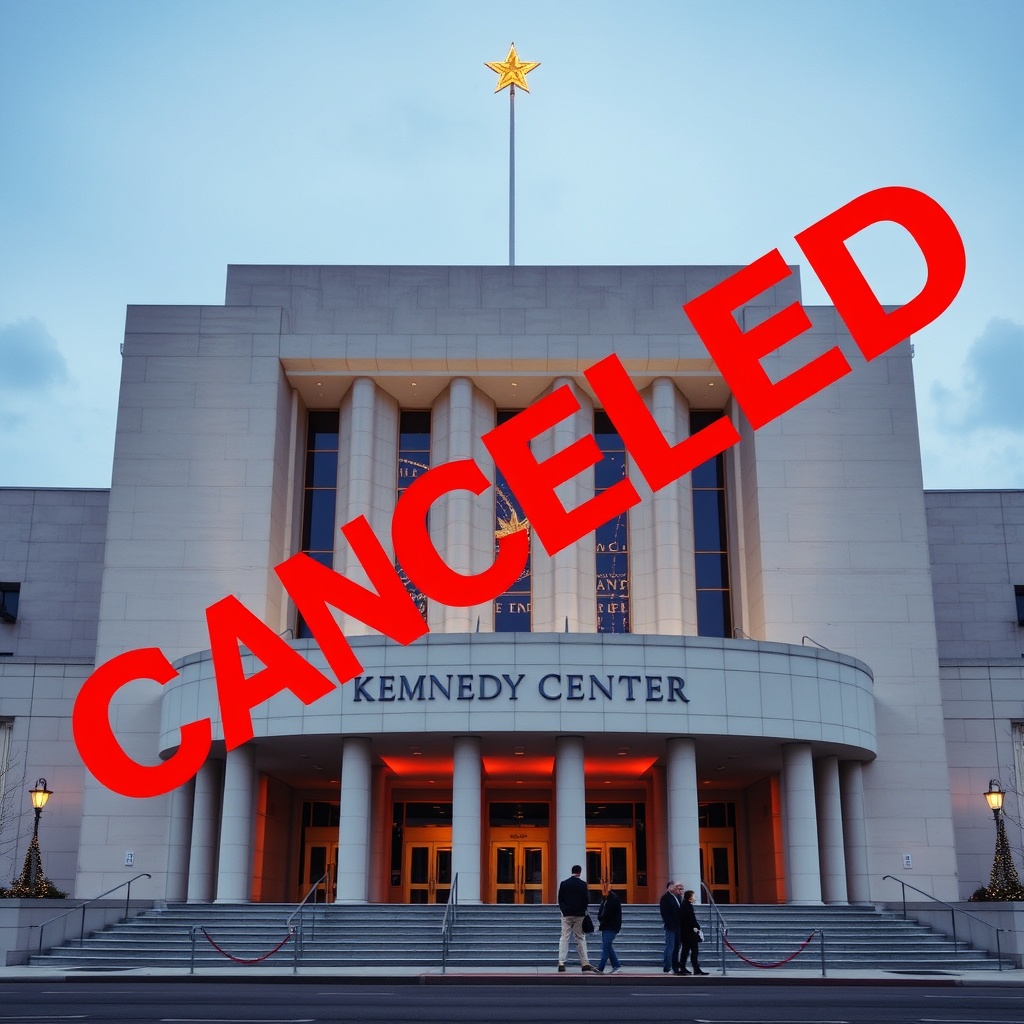
The Kennedy Center, a renowned institution for performing arts in the United States, has been at the center of controversy after a Christmas Eve jazz concert was canceled due to the addition of Donald Trump's name to one of its buildings. The news has sparked a heated debate about the intersection of politics and art, with many questioning the motivations behind the cancellation. In this article, we will delve into the details of the incident, explore the history of the Kennedy Center, and examine the implications of this decision on the art world.
Background and History of the Kennedy Center
The John F. Kennedy Center for the Performing Arts, located in Washington D.C., was established in 1971 as a memorial to the 35th President of the United States. The center is home to the National Symphony Orchestra, the Washington National Opera, and the Washington Ballet, among other resident companies. Over the years, the Kennedy Center has hosted a wide range of performances, from classical music and dance to theater and jazz. The center's mission is to provide a platform for artistic expression, education, and community engagement.
In recent years, the Kennedy Center has expanded its facilities to include new buildings and venues, such as the REACH, a modern arts space that opened in 2019. The addition of Donald Trump's name to one of these buildings has been met with controversy, with some arguing that it politicizes the institution and undermines its artistic mission.
The Cancellation of the Jazz Concert
The Christmas Eve jazz concert, which was scheduled to take place at the Kennedy Center, was canceled by its host due to the addition of Donald Trump's name to the building. The decision was made after a group of artists and performers expressed their concerns about the naming, citing Trump's divisive politics and controversial policies. The concert's host, who wished to remain anonymous, stated that the decision was made to avoid any potential controversy or disruption to the event.
The cancellation of the concert has sparked a heated debate about the role of politics in art and the responsibilities of artists and institutions. Some have argued that the decision was an overreaction, while others have praised the host for taking a stand against Trump's policies. The incident has also raised questions about the impact of political polarization on the arts, with some worrying that it could lead to a decline in funding and support for artistic institutions.
Implications and Reactions
The cancellation of the jazz concert has had significant implications for the Kennedy Center and the wider art community. The incident has highlighted the challenges of navigating politics and art, particularly in a time of intense polarization. Many have criticized the decision, arguing that it sets a dangerous precedent for censorship and artistic suppression.
Others have praised the decision, seeing it as a necessary response to Trump's divisive politics. The incident has also sparked a wider conversation about the role of artists and institutions in speaking out against social injustice and promoting social change.
Some notable figures in the art world have weighed in on the controversy, with some expressing support for the cancellation and others condemning it. The incident has also sparked a debate about the importance of artistic freedom and the need for institutions to remain neutral in the face of political controversy.
Case Studies and Examples
The cancellation of the Kennedy Center jazz concert is not an isolated incident. There have been several cases in recent years where artistic events have been canceled or disrupted due to political controversy. For example, in 2020, a production of the play "Julius Caesar" was canceled in New York City after it was criticized for its depiction of a Trump-like character.
Another example is the controversy surrounding the artist Dana Schutz, who faced backlash in 2017 for her painting "Open Casket," which depicted the body of Emmett Till, a black teenager who was lynched in Mississippi in 1955. The controversy surrounding the painting led to calls for its removal from an exhibition at the Whitney Museum of American Art.
These cases highlight the challenges of navigating politics and art, particularly in a time of intense polarization. They also demonstrate the importance of artistic freedom and the need for institutions to remain neutral in the face of controversy.
Statistics and Data
According to a recent survey, 70% of artists and performers believe that politics and art are intertwined, and that artists have a responsibility to speak out against social injustice. The survey also found that 60% of artists and performers have experienced censorship or backlash due to their work.
Another study found that the arts industry has seen a significant decline in funding and support in recent years, with many institutions struggling to stay afloat. The study also found that the decline in funding has had a disproportionate impact on marginalized communities, with many arts programs and institutions in these communities facing significant cuts.
These statistics highlight the challenges facing the arts community, particularly in a time of political polarization and declining funding. They also demonstrate the importance of artistic freedom and the need for institutions to remain neutral in the face of controversy.
Conclusion
The cancellation of the Kennedy Center jazz concert has sparked a heated debate about the intersection of politics and art. The incident has highlighted the challenges of navigating politics and art, particularly in a time of intense polarization. While some have praised the decision as a necessary response to Trump's divisive politics, others have criticized it as an overreaction that sets a dangerous precedent for censorship and artistic suppression.
As the art world continues to navigate these challenges, it is essential to remember the importance of artistic freedom and the need for institutions to remain neutral in the face of controversy. The Kennedy Center jazz concert controversy serves as a reminder of the power of art to bring people together and to challenge social norms and conventions. It also highlights the need for artists and institutions to remain vigilant in the face of political polarization and to continue to promote artistic freedom and expression.
In the end, the cancellation of the Kennedy Center jazz concert is a complex issue with no easy answers. However, by examining the details of the incident and exploring the wider implications, we can gain a deeper understanding of the challenges facing the art world and the importance of artistic freedom in our society. As we look to the future, it is essential to continue to promote and support the arts, even in the face of controversy and adversity. By doing so, we can ensure that the arts remain a vibrant and vital part of our culture, and that they continue to inspire and challenge us for generations to come.

Leave a comment