
Introduction
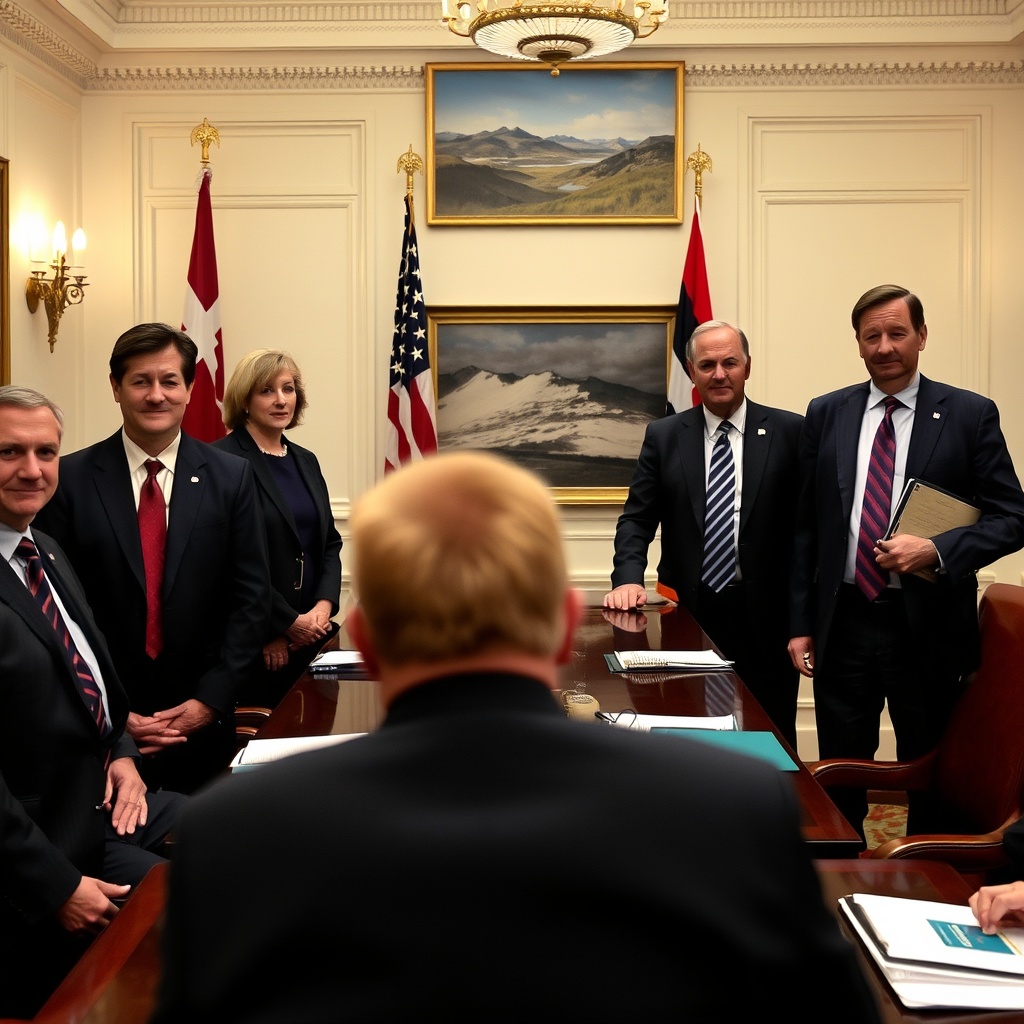
In a significant display of diplomatic unity, lawmakers from the United States are set to meet with Danish officials to address a contentious issue that has been a point of tension between the two nations: the proposed acquisition of Greenland by the United States. This move is seen as a direct rebuke to former President Donald Trump's infamous suggestion to purchase the autonomous territory from Denmark. The meeting, scheduled to take place on Wednesday, will be attended by Arctic Caucus co-Chairs Lisa Murkowski (R-Alaska) and Angus King (I-Maine), who will engage in discussions with Danish Ambassador Jesper Møller Sørensen. The primary objective of this gathering is to reaffirm the strong bilateral relationship between the United States and Denmark, while also underscoring the importance of respecting Greenland's autonomy and sovereignty.
Background on the Greenland Controversy
The controversy surrounding the potential purchase of Greenland by the United States began in August 2019, when then-President Trump expressed interest in acquiring the territory. This proposal was met with widespread criticism and ridicule, both domestically and internationally. The idea of purchasing a sovereign territory was seen as not only impractical but also deeply disrespectful to the people of Greenland and Denmark. The Danish government swiftly rejected the proposal, with Prime Minister Mette Frederiksen describing it as "absurd." Despite the backlash, Trump continued to express interest in the idea, citing strategic and economic benefits.
The reaction from Greenland was equally negative, with the territory's premier, Kim Kielsen, stating that Greenland is not for sale. The people of Greenland have consistently expressed a desire for greater autonomy and self-governance, rather than being subject to foreign ownership or control. The territory has a unique cultural identity and a fragile ecosystem, which would be severely impacted by any large-scale acquisition or development.
Diplomatic Implications and Reactions
The meeting between U.S. lawmakers and Danish officials is a crucial step in repairing and strengthening the diplomatic relationship between the two countries. The Arctic Caucus, co-chaired by Murkowski and King, has been instrumental in promoting U.S. interests in the Arctic region, while also fostering cooperation with other nations on issues such as climate change, sustainable development, and regional security.
The decision to meet with Danish Ambassador Sørensen demonstrates a commitment to respecting Denmark's sovereignty and its relationship with Greenland. This gesture is seen as a significant departure from the Trump administration's approach, which was widely criticized for its disregard for international norms and diplomatic protocols.
In recent years, the Arctic region has become increasingly important in terms of global politics and economics. The melting of sea ice and the opening of new shipping lanes have created opportunities for trade, resource extraction, and tourism. However, these developments also pose significant challenges, including the need for sustainable development, environmental protection, and cooperation among nations.
The Role of the Arctic Caucus
The Arctic Caucus, established in 2008, plays a vital role in promoting U.S. interests in the Arctic region. The caucus is a bipartisan group of lawmakers who work together to address the unique challenges and opportunities presented by the Arctic. The caucus has been instrumental in shaping U.S. policy on issues such as climate change, energy development, and regional security.
Under the leadership of co-Chairs Murkowski and King, the Arctic Caucus has worked to promote cooperation and collaboration among nations in the Arctic region. This includes supporting initiatives such as the Arctic Council, a high-level intergovernmental forum that brings together nations to address common challenges and opportunities in the region.
The meeting between the Arctic Caucus and Danish officials is a significant step in advancing U.S.-Danish cooperation on Arctic issues. The two nations have a long history of collaboration on issues such as fisheries management, environmental protection, and regional security. By reaffirming their commitment to mutual respect and cooperation, the United States and Denmark can work together to address the complex challenges and opportunities presented by the Arctic region.
Conclusion
The meeting between U.S. lawmakers and Danish officials to discuss the proposed acquisition of Greenland is a significant development in the ongoing saga surrounding this issue. By rebuking Trump's suggestion and reaffirming their respect for Denmark's sovereignty, the United States is taking a crucial step in repairing its diplomatic relationship with Denmark.
As the Arctic region continues to evolve and become increasingly important in terms of global politics and economics, the United States and Denmark must work together to address common challenges and opportunities. The Arctic Caucus, under the leadership of co-Chairs Murkowski and King, will play a vital role in promoting U.S. interests in the region, while also fostering cooperation and collaboration among nations.
In the years to come, it is likely that the issue of Greenland's sovereignty and autonomy will continue to be a point of discussion and debate. However, by prioritizing mutual respect, cooperation, and diplomacy, the United States and Denmark can work together to build a stronger, more sustainable future for the people of Greenland and the entire Arctic region. As the world continues to navigate the complexities of the 21st century, the importance of diplomacy, cooperation, and respect for sovereignty will only continue to grow.

Leave a comment