
Introduction
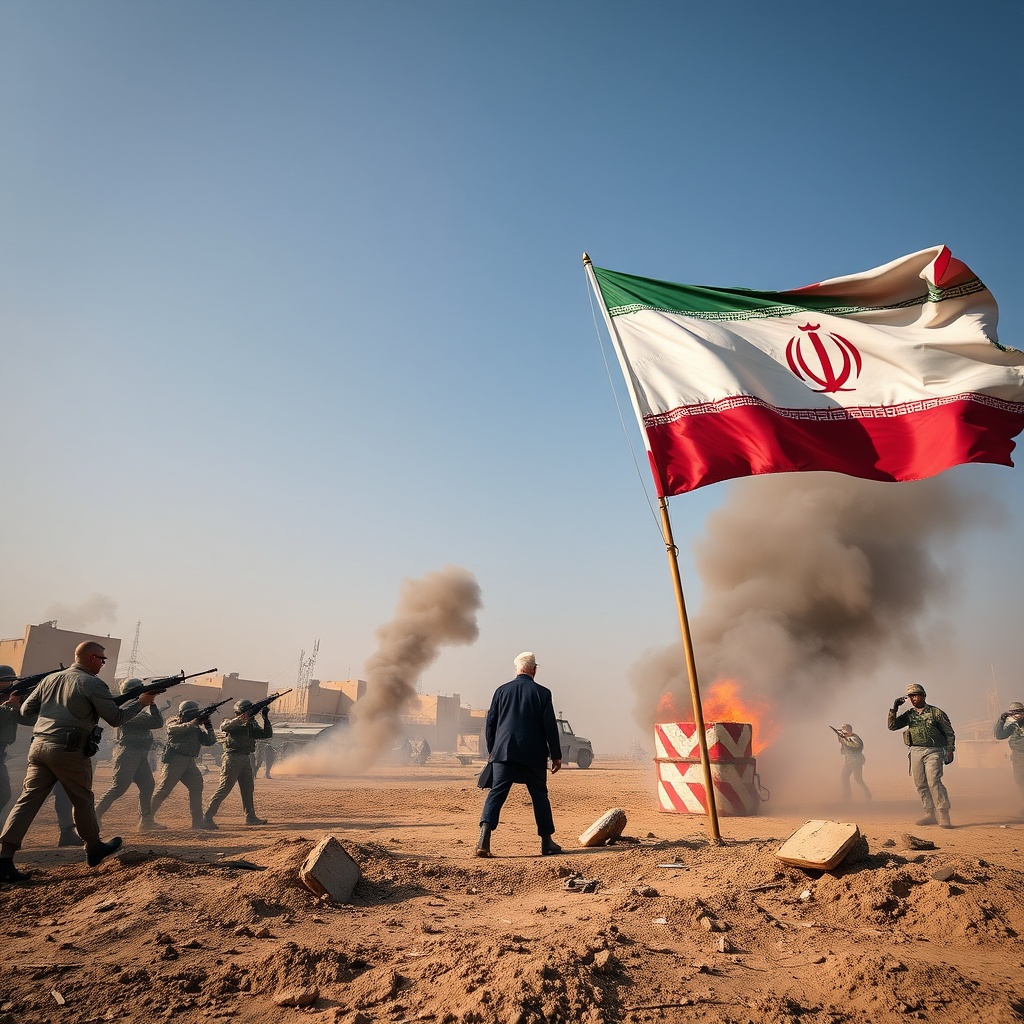
The Middle East has long been a region of conflict and tension, with various countries and factions vying for power and influence. In recent years, the situation has become increasingly complex, with the United States and Iran engaging in a series of escalating confrontations. According to a recent report by the Financial Times, US President Donald Trump has stated that the US will not make a deal with Iran except on the basis of "unconditional surrender." This statement has significant implications for the region and the world at large. In this article, we will explore the background to the current conflict, the recent developments, and the potential consequences of Trump's stance.
Background to the Conflict
The conflict between the US and Iran has its roots in the 1979 Iranian Revolution, which saw the overthrow of the US-backed Shah and the establishment of an Islamic republic. Since then, the two countries have had a fraught relationship, with the US imposing economic sanctions on Iran and Iran pursuing a nuclear program that the US and its allies see as a threat to regional stability. In 2015, the US, along with other world powers, signed the Joint Comprehensive Plan of Action (JCPOA) with Iran, which limited Iran's nuclear program in exchange for relief from economic sanctions. However, in 2018, Trump withdrew the US from the JCPOA, citing concerns about Iran's ballistic missile program and its support for militant groups in the region.
Recent Developments
The situation in the Middle East has deteriorated significantly in recent months, with waves of US and Israeli strikes hitting Iran. The strikes have targeted Iranian military facilities and personnel, as well as those of Iranian-backed militias in countries such as Iraq and Syria. The US has also imposed additional economic sanctions on Iran, including sanctions on the country's oil exports and its banking sector. Iran has responded to these measures by increasing its uranium enrichment activities and shooting down a US drone that it claimed had entered its airspace. The situation has become increasingly volatile, with both sides engaging in a series of escalating confrontations.
According to a report by the Financial Times, the US has carried out a series of strikes against Iranian targets in recent months, including a strike on an Iranian military facility in Syria and a strike on an Iranian-backed militia in Iraq. The report also notes that Israel has carried out a number of strikes against Iranian targets in the region, including a strike on an Iranian military facility in Syria and a strike on an Iranian-backed militia in Lebanon. The strikes have been seen as an attempt to weaken Iran's military capabilities and to disrupt its support for militant groups in the region.
Potential Consequences
The potential consequences of Trump's stance on Iran are significant. By insisting on "unconditional surrender," Trump is effectively closing off any possibility of a negotiated settlement to the conflict. This could lead to a further escalation of violence in the region, with potentially catastrophic consequences. The conflict could also have significant economic implications, with the price of oil potentially rising sharply if Iran's oil exports are disrupted.
According to a report by the International Monetary Fund (IMF), the conflict in the Middle East could have significant economic implications for the region and the world at large. The report notes that the conflict could lead to a decline in oil production, which could have a negative impact on the global economy. The report also notes that the conflict could lead to a decline in trade and investment in the region, which could have a negative impact on economic growth and development.
In addition to the economic implications, the conflict could also have significant humanitarian implications. The conflict could lead to a significant increase in refugee flows, with potentially devastating consequences for the affected populations. The conflict could also lead to a significant increase in human rights abuses, with potentially catastrophic consequences for the affected populations.
Case Studies
There are several case studies that illustrate the potential consequences of the conflict in the Middle East. One example is the conflict in Yemen, which has been ongoing since 2015. The conflict has led to a significant humanitarian crisis, with thousands of people killed and millions displaced. The conflict has also had significant economic implications, with the country's economy effectively collapsing.
Another example is the conflict in Syria, which has been ongoing since 2011. The conflict has led to a significant humanitarian crisis, with thousands of people killed and millions displaced. The conflict has also had significant economic implications, with the country's economy effectively collapsing.
Statistics
There are several statistics that illustrate the potential consequences of the conflict in the Middle East. According to a report by the United Nations, the conflict in Yemen has led to the deaths of over 10,000 people and the displacement of over 3 million people. The report also notes that the conflict has led to a significant decline in the country's economy, with the GDP declining by over 50% since the start of the conflict.
According to a report by the World Bank, the conflict in Syria has led to the deaths of over 500,000 people and the displacement of over 6 million people. The report also notes that the conflict has led to a significant decline in the country's economy, with the GDP declining by over 75% since the start of the conflict.
Conclusion
In conclusion, the conflict in the Middle East is a complex and multifaceted issue, with significant implications for the region and the world at large. Trump's stance on Iran, which insists on "unconditional surrender," is likely to lead to a further escalation of violence in the region, with potentially catastrophic consequences. The conflict could have significant economic implications, with the price of oil potentially rising sharply if Iran's oil exports are disrupted. The conflict could also have significant humanitarian implications, with potentially devastating consequences for the affected populations.
To resolve the conflict, it is essential to engage in diplomatic efforts to find a negotiated settlement. This could involve a return to the JCPOA, which limited Iran's nuclear program in exchange for relief from economic sanctions. It could also involve a broader regional dialogue, which addresses the underlying issues driving the conflict, such as the rivalry between Iran and Saudi Arabia and the Israeli-Palestinian conflict.
Ultimately, the key to resolving the conflict in the Middle East is to find a way to address the underlying issues driving the violence and to engage in diplomatic efforts to find a negotiated settlement. This will require a willingness to compromise and to engage in constructive dialogue, rather than simply insisting on "unconditional surrender." By working together, it is possible to find a way to resolve the conflict and to create a more peaceful and stable region.

Leave a comment