
Introduction
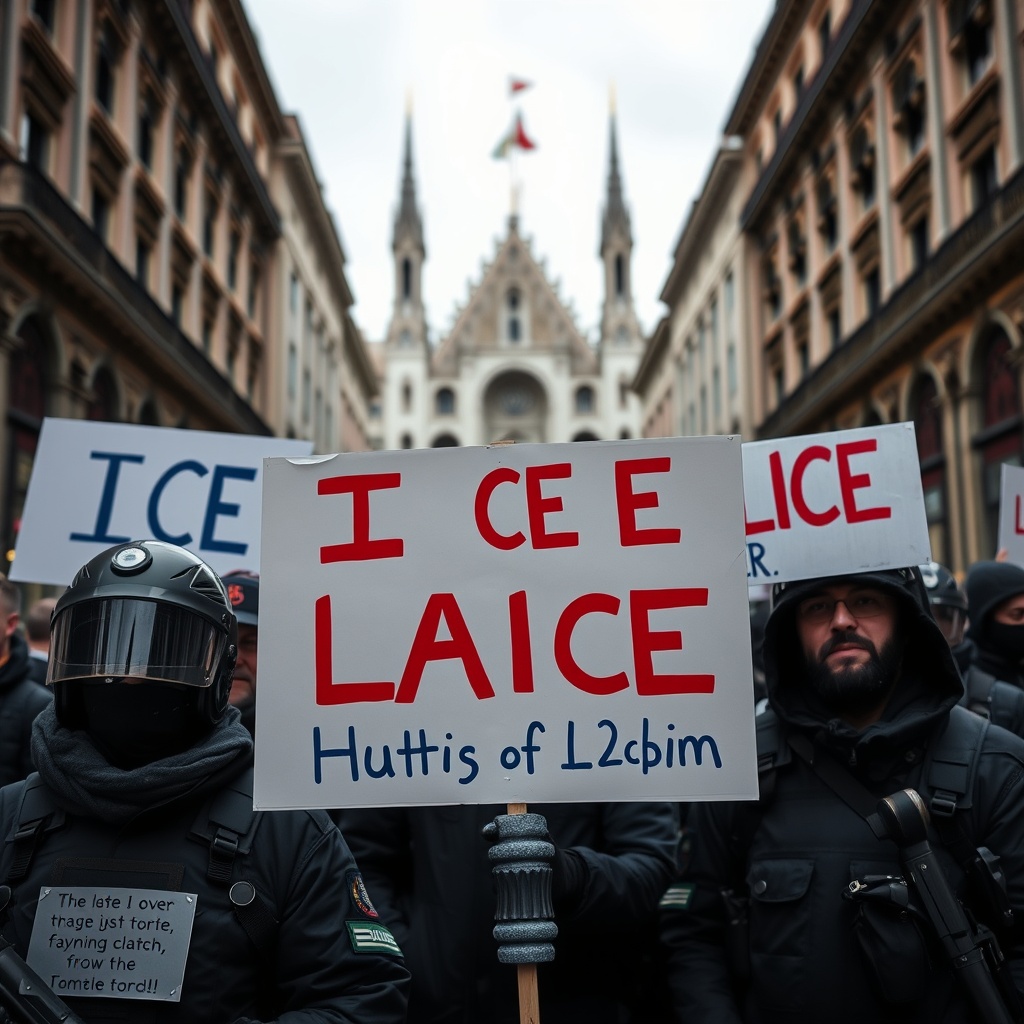
As the world prepares for the Winter Olympics in Milan, Italy, a different kind of gathering took place in the city's central square on Saturday. Hundreds of protesters converged to voice their concerns and demands, specifically calling for the removal of U.S. Immigration and Customs Enforcement (ICE) agents from Italy. The presence of these agents is part of a broader security arrangement for the Winter Games, but it has sparked controversy and opposition among certain groups in Italy. This article delves into the reasons behind the protests, the role of ICE agents in the Winter Olympics, and the broader implications of this development.
Background: The Winter Olympics and Security Concerns
The Winter Olympics are a global event that attracts thousands of athletes, officials, and spectators from around the world. Ensuring the security of such a large and diverse gathering is a complex task that requires careful planning and coordination among various law enforcement and security agencies. In the case of the Milan Winter Olympics, the Italian government has sought assistance from international partners, including the United States, to enhance security measures. This is where the role of U.S. ICE agents comes into play.
U.S. ICE agents are part of the Department of Homeland Security and are primarily responsible for enforcing immigration laws within the United States. However, their expertise in areas such as counterterrorism, cybersecurity, and border security can be valuable assets in securing international events like the Olympics. The decision to involve ICE agents in the security efforts for the Winter Olympics in Milan reflects the global nature of security threats and the need for international cooperation to mitigate them.
The Protesters' Perspective: Concerns Over ICE Involvement
Despite the rationale behind involving U.S. ICE agents in the security arrangements for the Winter Olympics, the move has not been universally welcomed. Protesters in Milan, who gathered in significant numbers, expressed strong opposition to the presence of ICE agents in Italy. Their concerns are multifaceted and reflect broader issues related to immigration, human rights, and national sovereignty.
One of the primary concerns voiced by the protesters is the perceived intrusion of U.S. law enforcement into Italian affairs. The presence of ICE agents, they argue, represents an unwarranted extension of U.S. authority into Italian territory, potentially undermining the country's autonomy in handling its internal security matters. Furthermore, there are concerns about the potential for human rights violations, given the controversial practices and policies associated with ICE in the United States, such as detention and deportation practices that have been criticized by human rights organizations.
The Broader Context: Global Security, Immigration, and Human Rights
The protest in Milan against the presence of U.S. ICE agents at the Winter Olympics reflects a broader global debate about security, immigration, and human rights. As the world becomes increasingly interconnected, the challenges of securing international events and managing migration flows have become more complex. This has led to increased cooperation among countries in areas such as law enforcement and security, but it has also raised questions about the balance between security concerns and individual rights.
The involvement of U.S. ICE agents in the Winter Olympics security is a case in point. While their expertise can contribute to a safer environment for athletes and spectators, their presence also symbolizes the extension of U.S. immigration policies beyond American borders. This can be seen as part of a larger trend where developed countries are externalizing their border controls, often in partnership with international organizations or through bilateral agreements with other nations.
Case Studies and Examples
Similar controversies have arisen in other contexts where foreign law enforcement agencies have been involved in domestic security matters. For instance, the deployment of foreign police units in the European Union's border management operations has raised concerns about accountability, human rights, and the erosion of national sovereignty. In another example, the use of private security companies in international events has highlighted issues related to the privatization of security, regulatory oversight, and the potential for human rights abuses.
These examples illustrate the complexities and challenges associated with international security cooperation, particularly when it involves the deployment of foreign law enforcement personnel on sovereign territory. They also underscore the need for transparent decision-making processes, robust oversight mechanisms, and clear guidelines that respect human rights and national laws.
Conclusion
The protest in Milan against the presence of U.S. ICE agents at the Winter Olympics is a symptom of a larger debate about the intersection of security, immigration, and human rights in the global arena. As the world becomes more interconnected, the need for international cooperation in areas such as law enforcement and security will only grow. However, this cooperation must be balanced against the need to protect individual rights, respect national sovereignty, and ensure that security measures are proportionate and necessary.
The Winter Olympics in Milan provide a unique opportunity for reflection on these issues. The event brings together people from around the world, celebrating unity and friendship through sports. Yet, the controversy over the involvement of U.S. ICE agents serves as a reminder that even in moments of global celebration, the complexities and challenges of the modern world are never far away. As we look to the future, it is essential that we navigate these challenges with a commitment to transparency, accountability, and the protection of human rights, ensuring that our responses to global security concerns do not compromise the values we seek to uphold.

Leave a comment