
Introduction
The Middle East has long been a region of heightened tensions and conflict, with various nations and factions vying for power and influence. One of the key players in this complex web is Iran, an Islamic republic with a history of assertive foreign policy and a reputation for retaliatory actions. Recent developments have seen Iran adopt a new strategy of retaliation, characterized by constant barrages at Israel and targeted attacks on civilian sites around the Gulf. This article will delve into the motivations behind Iran's new approach, the implications for regional stability, and the potential consequences for global security.
Iran's Motivations and Historical Context
To understand Iran's new retaliation strategy, it is essential to consider the country's historical context and motivations. The Islamic Republic has long been at odds with its neighbors and the international community, particularly over issues such as its nuclear program and support for militant groups. The 2015 Joint Comprehensive Plan of Action (JCPOA), also known as the Iran nuclear deal, aimed to curb Iran's nuclear ambitions in exchange for relief from economic sanctions. However, the withdrawal of the United States from the agreement in 2018 and the subsequent reimposition of sanctions have led to a significant escalation of tensions.
Iran's leadership has consistently denounced the actions of the United States and its allies, viewing them as an existential threat to the regime. The assassination of top Iranian military commander Qasem Soleimani in January 2020 further heightened tensions, with Iran vowing to take revenge on those responsible. This toxic mix of historical grievances, perceived threats, and ideological differences has created a volatile environment in which Iran's new retaliation strategy has emerged.
The New Retaliation Strategy: Tactics and Targets
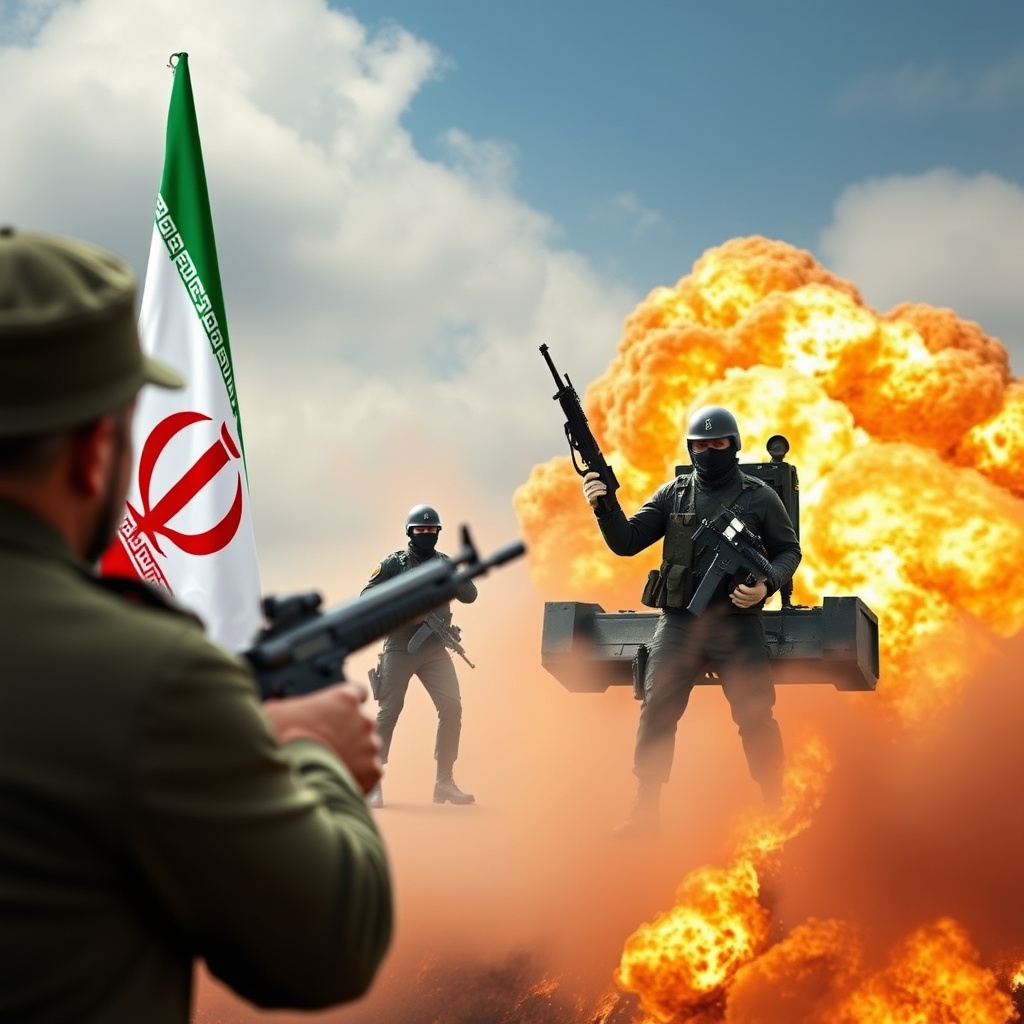
Iran's new approach to retaliation is marked by a shift towards constant and targeted attacks on specific adversaries. The barrage of attacks on Israel, for example, is designed to test the country's defenses and create a sense of uncertainty among its population. These attacks often involve the use of drones, missiles, and other forms of asymmetric warfare, which allow Iran to inflict damage while minimizing the risk of direct confrontation.
In addition to targeting Israel, Iran has also been targeting civilian sites around the Gulf, including oil facilities and shipping lanes. These attacks are intended to disrupt the regional economy and create a sense of instability, which Iran hopes will force its adversaries to reconsider their policies. The use of proxy forces, such as Hezbollah and the Houthis, has also become a key component of Iran's retaliation strategy, allowing the country to maintain plausible deniability while still achieving its objectives.
Regional and Global Implications
The implications of Iran's new retaliation strategy are far-reaching and have significant consequences for regional and global security. The constant barrages at Israel have raised concerns about the potential for a wider conflict, which could draw in other countries and lead to a catastrophic escalation. The targeting of civilian sites around the Gulf has also created a sense of unease among regional leaders, who fear that Iran's actions could disrupt the fragile balance of power in the region.
The global community has been slow to respond to Iran's new strategy, with many countries hesitant to take a firm stance against the Islamic Republic. However, the lack of a unified response has emboldened Iran, which has continued to push the boundaries of what is considered acceptable behavior. The United States, in particular, has been criticized for its inconsistent approach to Iran, with some arguing that the country's withdrawal from the JCPOA and subsequent sanctions have only served to strengthen the Iranian regime.
Case Studies and Examples
Several recent incidents illustrate the scope and complexity of Iran's new retaliation strategy. In January 2020, Iran launched a ballistic missile attack on Iraqi bases hosting US troops, in response to the assassination of Qasem Soleimani. The attack resulted in no fatalities but caused significant damage to the bases and highlighted Iran's ability to strike at targets across the region.
In August 2020, a series of explosions rocked the Iranian city of Natanz, which is home to a key nuclear facility. The incident was widely attributed to Israel, which has been engaged in a shadow war with Iran for several years. The attack highlighted the vulnerability of Iran's nuclear program and the willingness of its adversaries to take direct action against the country's strategic assets.
In September 2020, a drone attack on Saudi Arabia's Abqaiq oil processing facility caused significant damage and disrupted global oil supplies. The attack was claimed by the Houthi rebels, a Yemeni militia group backed by Iran, and marked a significant escalation of the conflict in the region.
Statistics and Data
The frequency and intensity of Iran's retaliatory attacks have increased significantly in recent years. According to data from the Israeli military, the number of rocket attacks from Gaza and Lebanon has more than doubled since 2018, with many of these attacks attributed to Iranian-backed militant groups.
The economic costs of Iran's retaliation strategy are also significant. A report by the Center for Strategic and International Studies estimated that the drone attack on Saudi Arabia's Abqaiq oil processing facility could have cost the global economy up to $10 billion in lost oil production.
Conclusion
Iran's new retaliation strategy represents a significant shift in the country's approach to conflict and diplomacy. The constant barrages at Israel and targeted attacks on civilian sites around the Gulf have created a sense of uncertainty and instability in the region, with far-reaching implications for regional and global security.
As the international community grapples with the challenges posed by Iran's new strategy, it is essential to consider the historical context and motivations behind the country's actions. A comprehensive approach that addresses the root causes of the conflict and provides a framework for de-escalation is urgently needed.
The future of the region hangs in the balance, and the consequences of inaction could be catastrophic. It is time for the international community to come together and address the challenges posed by Iran's new retaliation strategy, before it is too late. The world cannot afford to wait and see how this situation unfolds; it must take proactive steps to prevent a wider conflict and promote a lasting peace in the region.

Leave a comment