
Introduction
The Northern Lights, also known as the Aurora Borealis, are a breathtaking natural phenomenon that has captivated humans for centuries. Typically visible in the polar regions, the Northern Lights are a rare treat for those living in lower latitudes. However, a recent coronal mass ejection (CME) recorded on Friday could bring this spectacle to parts of the United States tonight. According to forecasts, the CME could reach Earth and cause geomagnetic storms on Sunday night, making the Northern Lights visible from as many as 10 states. In this article, we will delve into the details of this event, explore the science behind the Northern Lights, and provide information on the best viewing locations.
What are the Northern Lights?
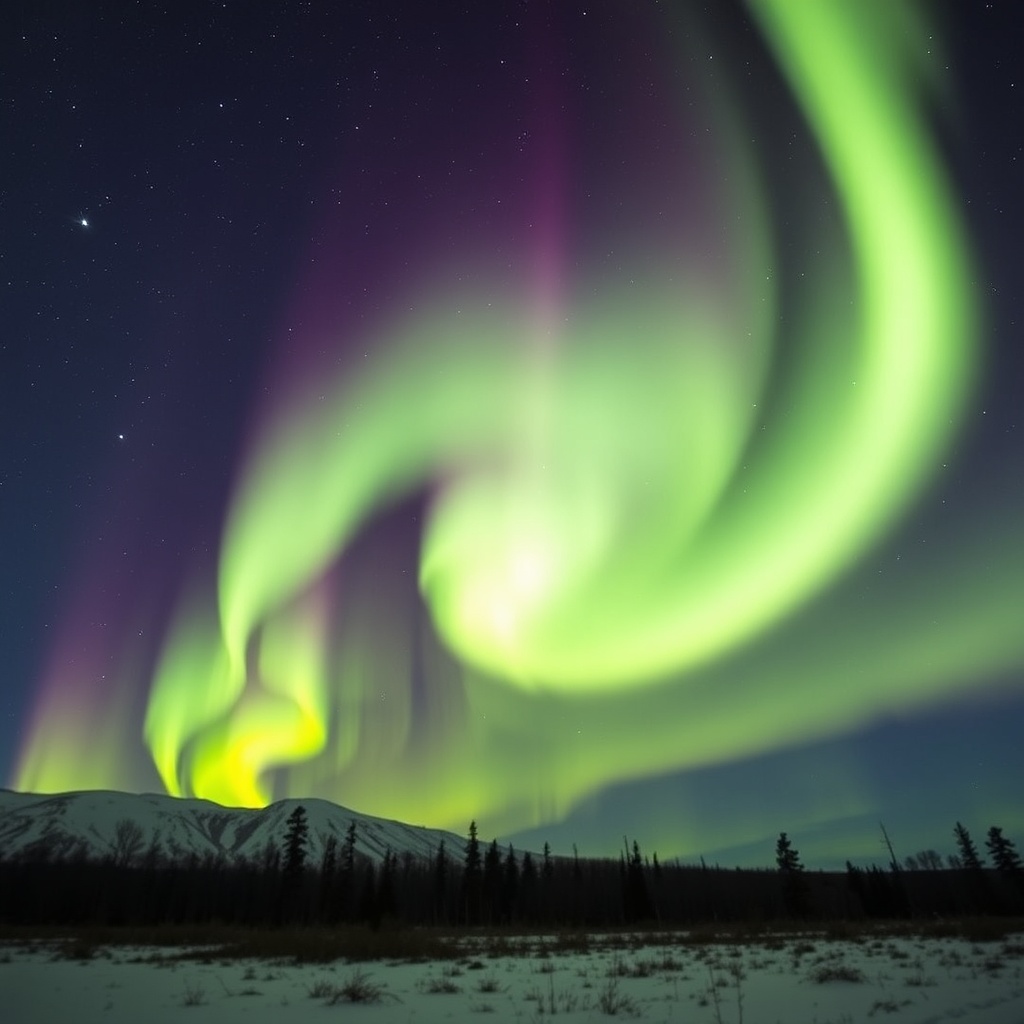
The Northern Lights, or Aurora Borealis, are a natural phenomenon that occurs when charged particles from the sun interact with the Earth's magnetic field and atmosphere. The resulting display of colored lights can be breathtaking, with vibrant hues of green, blue, and red dancing across the night sky. The Northern Lights are typically visible in the polar regions, where the Earth's magnetic field is strongest. However, during periods of high solar activity, the Northern Lights can be visible at lower latitudes, making them a rare treat for those living in the United States.
The science behind the Northern Lights is complex, but it can be broken down into a few key steps. First, the sun emits a stream of charged particles, known as a solar wind, which includes electrons and protons. When this solar wind reaches the Earth's magnetic field, it is redirected towards the poles. At the poles, the solar wind collides with the Earth's atmosphere, causing the atoms and molecules to become excited. As these atoms and molecules return to their ground state, they release energy in the form of light, creating the spectacular display of the Northern Lights.
Where and When to See the Northern Lights
According to forecasts, the Northern Lights could be visible from as many as 10 states tonight, including:
- Alaska
- Washington
- Oregon
- Idaho
- Montana
- North Dakota
- South Dakota
- Minnesota
- Wisconsin
- Michigan
The best viewing times are typically between midnight and 3 am, when the sky is darkest. However, the Northern Lights can be visible as early as 9 pm and as late as 6 am, depending on the level of solar activity and the clarity of the sky.
To increase your chances of seeing the Northern Lights, it's essential to find a location with minimal light pollution. National parks, remote areas, and dark sky reserves are ideal locations for viewing the Northern Lights. Some popular locations include:
- Denali National Park, Alaska
- Olympic National Park, Washington
- Crater Lake National Park, Oregon
- Glacier National Park, Montana
- Voyageurs National Park, Minnesota
The Impact of the Coronal Mass Ejection
The coronal mass ejection (CME) recorded on Friday is a significant event that could bring the Northern Lights to parts of the United States. A CME is a massive burst of plasma and magnetic field that is ejected from the sun's corona, the outer atmosphere of the sun. When a CME reaches the Earth, it can cause a geomagnetic storm, which can lead to spectacular displays of the Northern Lights.
The CME that was recorded on Friday is particularly significant because of its strength and direction. The CME is expected to reach the Earth on Sunday night, causing a geomagnetic storm that could last for several hours. During this time, the Northern Lights could be visible at lower latitudes, making them a rare treat for those living in the United States.
Conclusion
The Northern Lights are a breathtaking natural phenomenon that can be seen in the polar regions and, on rare occasions, at lower latitudes. The coronal mass ejection recorded on Friday could bring this spectacle to parts of the United States tonight, making it visible from as many as 10 states. To increase your chances of seeing the Northern Lights, find a location with minimal light pollution and get outside between midnight and 3 am. With a little luck and clear skies, you could witness one of the most spectacular displays of natural beauty on the planet.
As we look to the future, it's essential to remember that the Northern Lights are a natural phenomenon that is influenced by solar activity. As the sun enters a new cycle of activity, we can expect to see more frequent and intense displays of the Northern Lights. Whether you're a seasoned aurora hunter or just starting to explore the night sky, the Northern Lights are a sight that is sure to leave you in awe.
In the coming years, we can expect to see more frequent and intense displays of the Northern Lights, thanks to the sun's increasing activity. The sun's magnetic field is expected to weaken, allowing more charged particles to reach the Earth's atmosphere, causing more frequent and intense geomagnetic storms. This means that the Northern Lights could become a more regular sight in the United States, making it easier for people to witness this breathtaking phenomenon.
Overall, the Northern Lights are a natural wonder that continues to captivate and inspire people around the world. Whether you're a scientist, a photographer, or simply someone who appreciates the beauty of the night sky, the Northern Lights are a sight that is sure to leave you in awe. So, get outside tonight, look up at the sky, and see if you can catch a glimpse of this breathtaking phenomenon.

Leave a comment