
Introduction
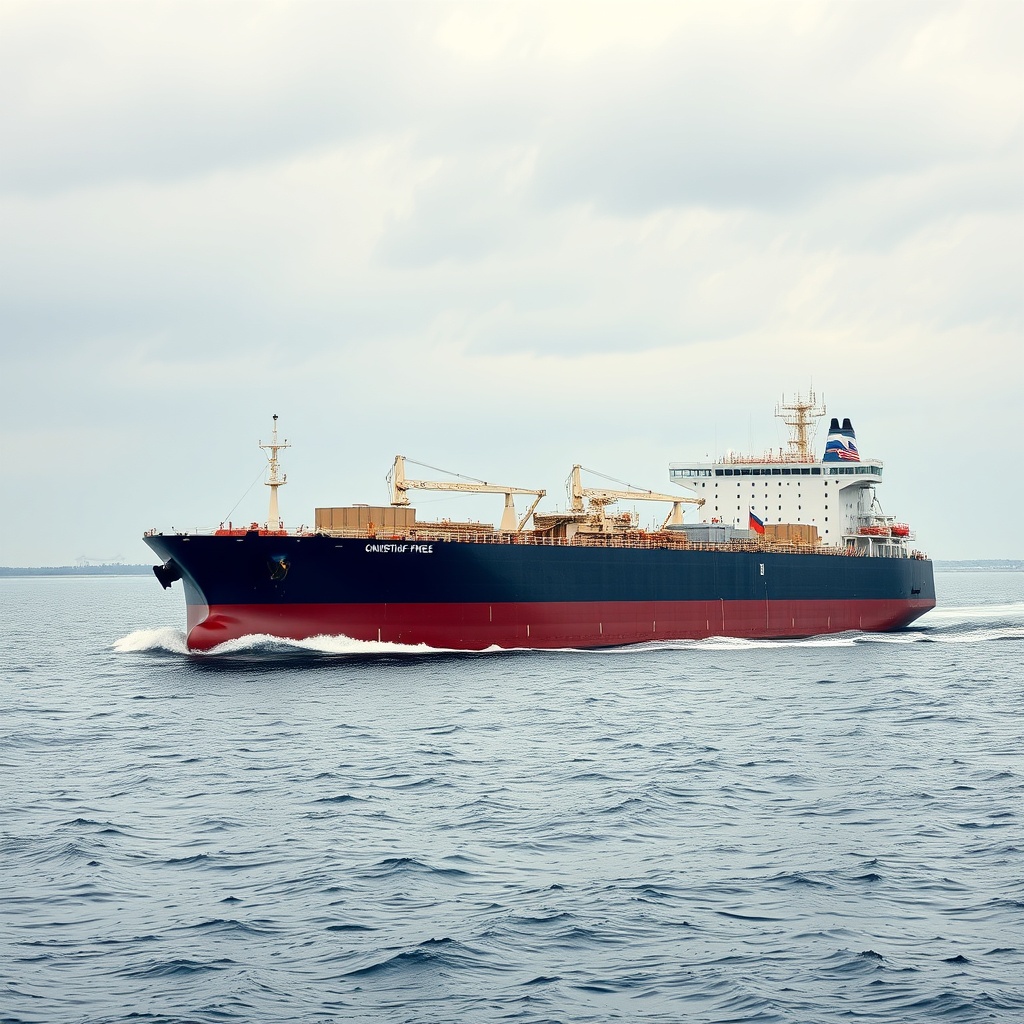
The world of international relations and maritime law has been abuzz with the recent developments surrounding an oil tanker that has been pursued by the United States for nearly two weeks. The tanker, which has been at the center of a diplomatic tug-of-war, has now been spotted with a Russian flag crudely painted on its side. This move is seen as a strategic attempt to potentially alter the trajectory of the tanker's fate, given the complex web of international relations and maritime laws that govern such scenarios. In this article, we will delve into the details of this incident, exploring the implications of flying a Russian flag, the background of the tanker and its cargo, and the potential outcomes of this high-stakes game of maritime cat and mouse.
The Oil Tanker and Its Pursuit
The oil tanker in question has been the subject of international attention due to its cargo and the routes it has taken. Originally, the tanker was believed to be carrying oil from Venezuela, a country under significant economic sanctions by the United States. The U.S. has been actively pursuing vessels suspected of violating these sanctions, aiming to curb Venezuela's ability to export oil and thus pressure the Venezuelan government. The pursuit of this particular tanker is part of a broader strategy by the U.S. to enforce its sanctions and protect its interests.
The tanker's decision to paint a Russian flag on its side introduces a new dynamic into this situation. Russia has been a vocal supporter of Venezuela, providing the country with economic and military aid. By flying a Russian flag, the tanker may be attempting to claim protection under Russian sovereignty, potentially complicating U.S. efforts to intercept or detain the vessel. International law allows ships to fly the flag of any country that has granted them registry, but the practice of "flag of convenience" or changing flags to avoid legal issues is not uncommon and is often viewed with skepticism.
Implications of Flying a Russian Flag
Flying a Russian flag on the oil tanker has significant implications, both legally and diplomatically. Under international maritime law, a ship is subject to the laws of the country whose flag it flies. If the tanker is indeed flying a Russian flag, Russia could claim jurisdiction over the vessel, potentially shielding it from U.S. sanctions. However, this move could also escalate tensions between the U.S. and Russia, as it may be seen as a direct challenge to U.S. authority and its sanctions regime.
Furthermore, the legitimacy of the flag change could be questioned. For a flag change to be recognized internationally, it must be done in accordance with the laws of both the country the ship is leaving and the one it is joining. The process involves more than just painting a new flag on the side of the ship; it requires legal registration and compliance with the maritime laws of the new flag state. If the flag change is deemed illegitimate, it could undermine any claims of protection under Russian sovereignty.
Potential Outcomes and International Reactions
The potential outcomes of this situation are varied and depend on a range of factors, including the response of the U.S., Russia, and other international actors. If the U.S. chooses to continue pursuing the tanker, despite the presence of a Russian flag, it could lead to a significant escalation of tensions between the two nations. On the other hand, if the U.S. backs down, it could be seen as a victory for Russia and potentially undermine the effectiveness of U.S. sanctions against Venezuela.
International organizations, such as the International Maritime Organization (IMO), may also play a role in resolving this situation. The IMO has standards and regulations regarding flag states and their responsibilities, including ensuring that ships flying their flags comply with international law. If the legitimacy of the tanker's flag change is disputed, the IMO could be called upon to clarify the situation and potentially intervene.
The reaction of other nations will also be crucial. European countries, which have their own set of sanctions against Venezuela, may align with the U.S. in condemning any attempts to circumvent these sanctions. Meanwhile, countries that have been critical of U.S. sanctions, such as China and Iran, may support Russia's stance, seeing it as a pushback against what they perceive as U.S. overreach.
Case Studies and Historical Precedents
This is not the first time that ships have changed flags to avoid legal issues or sanctions. There have been numerous cases throughout history where vessels have engaged in "flag-hopping" to evade capture or prosecution. For example, during the Iranian oil embargo in the 1950s, some tankers flew flags of convenience to continue trading with Iran despite international sanctions.
More recently, the practice of changing flags to avoid sanctions has been observed in the context of North Korea. Despite strict international sanctions, some ships have been accused of changing their flags and using clandestine methods to supply North Korea with goods. These examples illustrate the complexities and challenges of enforcing maritime law and sanctions in the face of determined efforts to evade them.
Conclusion
The saga of the oil tanker with a crudely painted Russian flag is a stark reminder of the complexities of international relations, maritime law, and the cat-and-mouse game played by nations and ships to evade sanctions and protect interests. As this situation unfolds, it will be crucial to watch the responses of the U.S., Russia, and other international actors. The outcome will not only affect the fate of the tanker and its cargo but could also have broader implications for international relations, the effectiveness of sanctions, and the future of maritime law. In a world where global trade and political alliances are increasingly intertwined, incidents like these highlight the need for clear, enforceable international laws and the challenges of navigating the high seas of diplomacy.

Leave a comment