
Introduction
The United States has recently deployed over 150 aircraft to Europe and the Middle East, sparking concerns of potential military action against Iran. This significant buildup comes on the heels of a failed round of nuclear talks between the two nations, which concluded last week without a deal. The move has raised tensions in the region, with many speculating about the intentions of the Trump administration. In this article, we will delve into the details of the military buildup, the current state of U.S.-Iran relations, and the potential implications of a military strike.
Background on U.S.-Iran Relations
The relationship between the United States and Iran has been strained for decades, with tensions escalating in recent years. The two nations have been at odds over a range of issues, including Iran's nuclear program, its support for militant groups in the region, and its human rights record. In 2015, the Obama administration negotiated a nuclear deal with Iran, known as the Joint Comprehensive Plan of Action (JCPOA), which lifted economic sanctions on Iran in exchange for limits on its nuclear program. However, the Trump administration withdrew from the deal in 2018, citing concerns that it did not do enough to prevent Iran from developing nuclear weapons.
Since then, tensions between the two nations have continued to escalate. The United States has reimposed economic sanctions on Iran, which have had a devastating impact on the country's economy. Iran has responded by increasing its uranium enrichment activities and supporting militant groups in the region. The recent round of nuclear talks, which concluded last week without a deal, has done little to ease tensions.
The Military Buildup
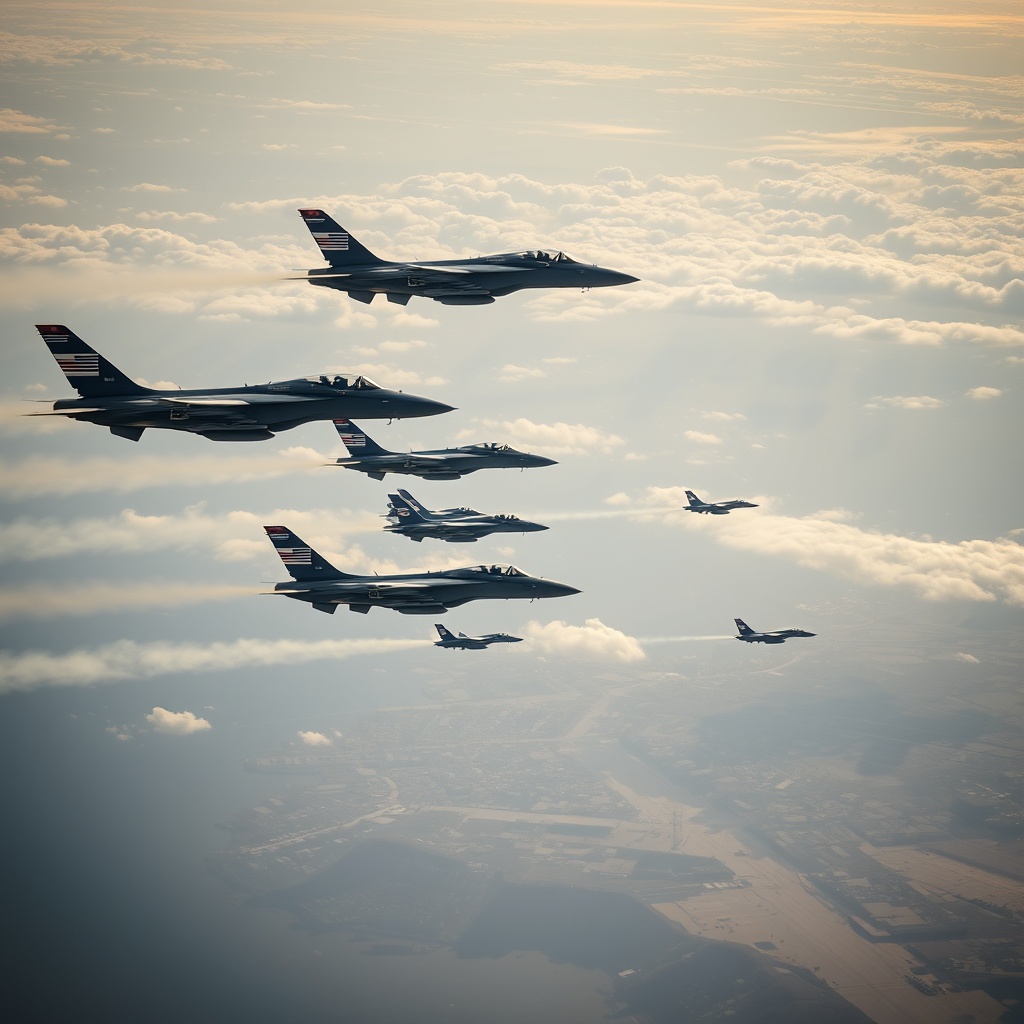
The deployment of over 150 U.S. aircraft to Europe and the Middle East is a significant escalation of the military presence in the region. The aircraft include fighter jets, bombers, and transport planes, and are being stationed at various bases in countries such as the United Kingdom, Germany, and the United Arab Emirates. The buildup is seen as a show of force by the Trump administration, and is intended to demonstrate its commitment to defending its allies in the region.
The military buildup has been met with concern by many in the region, who fear that it could lead to a wider conflict. Iran has warned that it will respond to any military action by the United States, and has threatened to attack U.S. targets in the region. The European Union has also expressed concern about the buildup, and has called for a de-escalation of tensions.
According to a report by the Washington Post, the buildup includes:
- 50 F-16 fighter jets deployed to the United Kingdom
- 20 B-52 bombers deployed to Germany
- 30 F-15 fighter jets deployed to the United Arab Emirates
- 20 C-130 transport planes deployed to Kuwait
The report also notes that the buildup is part of a larger military strategy by the Trump administration, which aims to increase the U.S. military presence in the region and to demonstrate its commitment to defending its allies.
Potential Implications of a Military Strike
A military strike against Iran would have significant implications for the region and the world. It would likely lead to a wider conflict, with Iran responding by attacking U.S. targets in the region. The conflict could also draw in other countries, such as Israel and Saudi Arabia, which have their own interests in the region.
A military strike would also have significant economic implications. Iran is a major oil producer, and a conflict could disrupt oil supplies and drive up prices. This could have a devastating impact on the global economy, particularly in countries that rely heavily on oil imports.
According to a report by the Center for Strategic and International Studies, a military strike against Iran could have the following implications:
- A significant increase in oil prices, potentially exceeding $100 per barrel
- A disruption to global oil supplies, potentially leading to shortages and economic instability
- A wider conflict in the region, potentially drawing in other countries and leading to a humanitarian crisis
Case Studies: Historical Precedents
There are several historical precedents for a military strike against Iran. In 1980, the United States launched a failed rescue mission to free American hostages held by Iran, known as Operation Eagle Claw. The mission ended in disaster, with several U.S. servicemen killed and the hostages remaining in captivity.
In 2003, the United States launched a military invasion of Iraq, which was widely seen as a precursor to a potential strike against Iran. The invasion had significant consequences for the region, including the rise of militant groups such as ISIS and a devastating humanitarian crisis.
More recently, the United States has launched military strikes against Iran's allies in the region, including Syria and Yemen. These strikes have been seen as a way of containing Iran's influence in the region, but have also raised concerns about the potential for a wider conflict.
Conclusion
The deployment of over 150 U.S. aircraft to Europe and the Middle East is a significant escalation of the military presence in the region. The buildup comes on the heels of a failed round of nuclear talks between the United States and Iran, and has raised concerns about the potential for a military strike. A military strike against Iran would have significant implications for the region and the world, including the potential for a wider conflict, economic instability, and a humanitarian crisis.
As the situation continues to unfold, it is essential that the international community remains vigilant and works towards a peaceful resolution to the conflict. This includes supporting diplomatic efforts to negotiate a new nuclear deal, as well as providing humanitarian aid to those affected by the conflict. Ultimately, a peaceful resolution to the conflict will require a commitment to diplomacy and a willingness to engage in constructive dialogue with all parties involved.
In the words of a former U.S. diplomat, "The situation with Iran is a complex and challenging one, but it is not insoluble. With patience, persistence, and a commitment to diplomacy, we can find a way forward that avoids conflict and promotes peace and stability in the region." As the world watches the situation unfold, it is essential that we remain committed to finding a peaceful solution to the conflict, and that we work towards a future where the people of Iran and the wider region can live in peace and prosperity.

Leave a comment