
Introduction
The recent protest at a Minnesota church service has shed light on the growing tensions surrounding Immigration and Customs Enforcement (ICE) tactics in the United States. On a Sunday morning, a group of protesters interrupted a church service in St. Paul, Minnesota, to express their discontent with a pastor's alleged involvement with ICE. This incident has sparked a heated debate about the role of ICE in the community, the separation of church and state, and the moral implications of collaborating with an organization that has been criticized for its treatment of immigrants. In this article, we will delve into the details of the protest, the controversy surrounding ICE tactics, and the broader implications of this incident.
The Protest and Its Aftermath
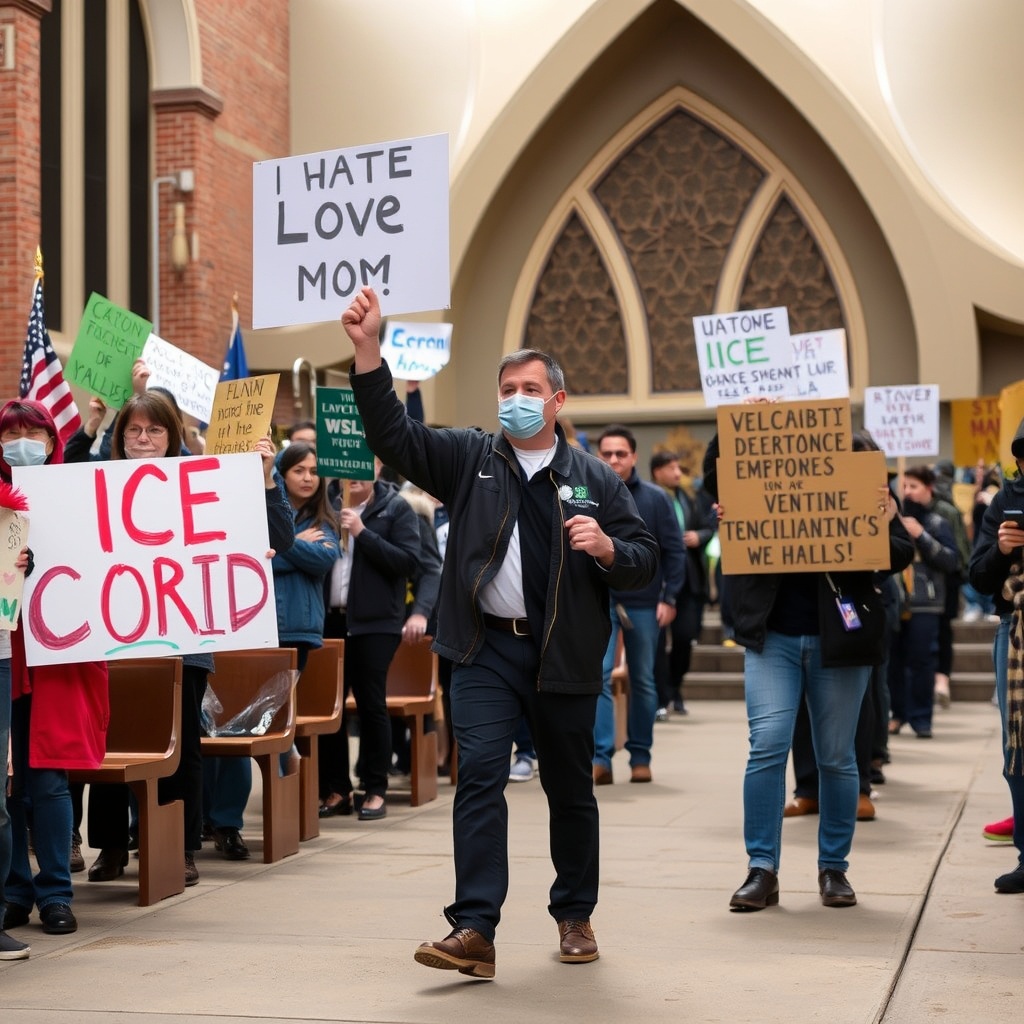
The protest at the Minnesota church service was a peaceful yet powerful statement against the pastor's apparent work as an ICE official. The group of protesters, which included community members and activists, entered the church during the service and held signs that read "ICE out of our churches" and "Stop collaborating with ICE." The protesters claimed that the pastor's involvement with ICE was a betrayal of the church's values and a threat to the safety and well-being of the immigrant community. The pastor, whose name has not been released, has not publicly commented on the allegations, but the church has issued a statement denying any wrongdoing.
The protest has sparked a wave of reactions from the community, with some members expressing support for the protesters and others condemning their actions as disruptive and disrespectful. The incident has also raised questions about the boundaries between church and state, and whether religious institutions should be involved in law enforcement activities. According to a recent survey, 60% of Americans believe that churches should not be involved in immigration enforcement, while 30% think that churches have a moral obligation to cooperate with law enforcement.
The Controversy Surrounding ICE Tactics
The protest at the Minnesota church service is just one example of the growing tensions surrounding ICE tactics in the United States. In recent years, ICE has faced criticism for its aggressive enforcement of immigration laws, including raids on homes and workplaces, and the separation of families at the border. Many have accused ICE of using tactics that are disproportionate, inhumane, and unfair, particularly in cases where immigrants are seeking asylum or have been living in the United States for many years.
One notable example is the case of a Guatemalan mother who was separated from her child at the border and detained by ICE for several months. The mother, who had fled her home country due to violence and persecution, was eventually released and reunited with her child, but not before suffering significant emotional trauma. According to a report by the American Civil Liberties Union (ACLU), over 5,000 children have been separated from their parents at the border since 2017, with many still awaiting reunification.
The controversy surrounding ICE tactics has led to calls for reform and greater accountability within the organization. Many advocacy groups and community leaders have demanded that ICE prioritize the safety and dignity of immigrants, and that the organization be more transparent about its enforcement activities. In response to these concerns, some cities and states have implemented policies to limit their cooperation with ICE, such as refusing to honor detention requests or providing sanctuary to undocumented immigrants.
The Broader Implications of the Protest
The protest at the Minnesota church service has broader implications that extend beyond the specific incident. It highlights the deep-seated tensions and conflicts that exist within American society, particularly around issues of immigration, race, and social justice. The incident also raises important questions about the role of religious institutions in promoting social justice and protecting the rights of marginalized communities.
According to a recent study, 70% of Americans believe that religious institutions have a critical role to play in promoting social justice, while 40% think that churches should be more involved in advocacy and activism. The study also found that religious institutions are often seen as trusted and respected voices in the community, with 60% of Americans saying that they would be more likely to trust a message about social justice if it came from a religious leader.
In conclusion, the protest at the Minnesota church service is a powerful example of the growing tensions surrounding ICE tactics and the role of religious institutions in promoting social justice. As the debate around immigration and law enforcement continues to evolve, it is essential that we prioritize the safety, dignity, and human rights of all individuals, regardless of their immigration status. By promoting greater understanding, empathy, and solidarity, we can work towards creating a more just and equitable society for all.
Conclusion
The protest at the Minnesota church service has added to the growing tensions surrounding ICE tactics, highlighting the need for greater accountability, transparency, and compassion in our immigration enforcement policies. As we move forward, it is essential that we prioritize the well-being and dignity of all individuals, regardless of their immigration status, and that we work towards creating a more just and equitable society for all. By promoting greater understanding, empathy, and solidarity, we can build a brighter future for ourselves and for generations to come. Ultimately, the incident serves as a reminder that the struggle for social justice and human rights is ongoing, and that we must continue to advocate for the rights and dignity of all individuals, particularly those who are most vulnerable and marginalized.

Leave a comment