
Introduction
The recent military exercises conducted by China near Taiwan have sparked significant concern and tension in the region. The United States, along with other countries, has expressed deep unease over China's actions, which are seen as a deliberate attempt to intimidate and coerce Taiwan. In response to China's military exercise, the U.S. Department of State has urged Beijing to exercise restraint and refrain from activities that could escalate tensions in the region. This article will delve into the details of China's military exercise, the international response, and the implications for regional stability.
Background and Context
China's military activities near Taiwan are not a new development. For years, China has been engaged in a campaign of psychological warfare, diplomatic pressure, and military intimidation against Taiwan. The People's Liberation Army (PLA) has conducted numerous military exercises, including live-fire drills and amphibious landings, in the Taiwan Strait and surrounding waters. These exercises are designed to demonstrate China's military capabilities and to send a message to Taiwan and the international community that China is committed to reunifying the island with the mainland, by force if necessary.
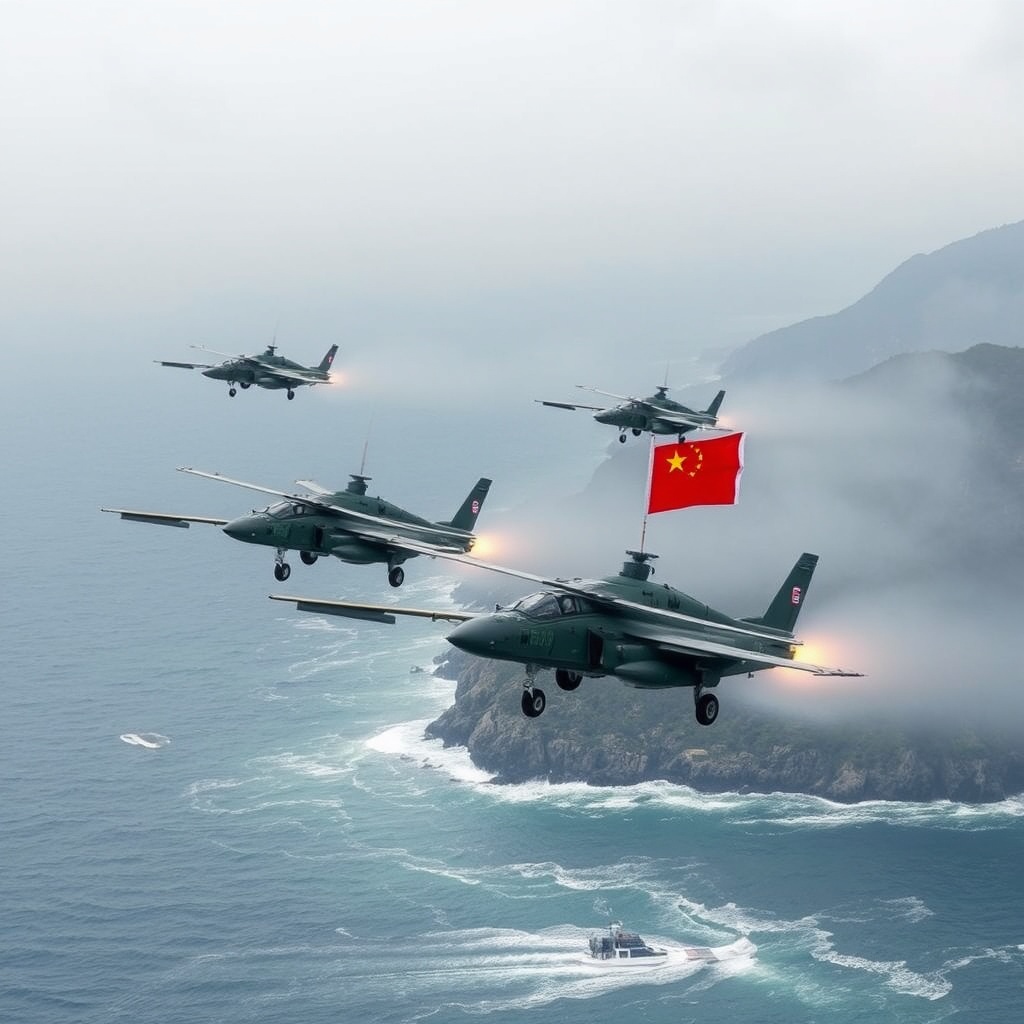
The latest military exercise, which prompted the U.S. response, involved a large-scale deployment of Chinese naval and air assets, including submarines, destroyers, and fighter jets. The exercise was conducted in close proximity to Taiwan's airspace and territorial waters, raising concerns about the potential for miscalculation or accident. The Chinese government has defended the exercise as a routine military activity, but the timing and scope of the exercise suggest that it was intended to send a message to Taiwan and the United States.
International Response
The international community has been quick to condemn China's military exercise and to express support for Taiwan. The United States, in particular, has been vocal in its criticism of China's actions, with the State Department spokesperson stating that "China's military activities and rhetoric toward Taiwan and others in the region increase tensions unnecessarily." The U.S. has also reiterated its commitment to Taiwan's security and has urged Beijing to engage in dialogue with Taiwan's democratically elected government.
Other countries, including Japan, Australia, and the United Kingdom, have also expressed concern about China's military exercise and have called for restraint. The European Union has issued a statement urging China to respect Taiwan's sovereignty and to avoid actions that could destabilize the region. The international community is concerned that China's military exercise could be a precursor to further aggression, including a potential invasion of Taiwan.
Implications for Regional Stability
China's military exercise near Taiwan has significant implications for regional stability. The exercise has raised tensions between China and Taiwan, as well as between China and the United States. The U.S. has a long-standing commitment to Taiwan's defense, and any attempt by China to use force against the island could lead to a confrontation between the two superpowers.
The exercise has also raised concerns about the potential for miscalculation or accident. The Taiwan Strait is a busy shipping lane, and the presence of Chinese military assets in the area increases the risk of a collision or other incident. Furthermore, the exercise has disrupted air traffic and shipping in the region, causing economic losses and inconvenience to travelers.
The long-term implications of China's military exercise are also significant. The exercise has demonstrated China's growing military capabilities and its willingness to use force to achieve its objectives. This has raised concerns about China's intentions in the region and has prompted countries to reevaluate their security relationships with China. The exercise has also highlighted the need for the international community to engage in dialogue with China and to encourage Beijing to adopt a more constructive and peaceful approach to its relationships with its neighbors.
Case Studies and Examples
There are several case studies and examples that illustrate the implications of China's military exercise near Taiwan. One example is the 1995-1996 Taiwan Strait Crisis, in which China conducted a series of military exercises and missile tests in the Taiwan Strait, prompting the United States to deploy two aircraft carrier battle groups to the region. The crisis was eventually resolved through diplomatic efforts, but it highlighted the potential for military conflict in the region.
Another example is the South China Sea dispute, in which China has been engaged in a campaign of island-building and militarization, prompting concerns about the potential for conflict with neighboring countries. The dispute has highlighted the need for the international community to engage in dialogue with China and to encourage Beijing to adopt a more constructive and peaceful approach to its relationships with its neighbors.
Statistics and Data
There are several statistics and data points that illustrate the significance of China's military exercise near Taiwan. According to a report by the Pentagon, China's military spending has increased by over 500% since 2000, with a significant portion of that spending going towards the development of new military technologies and capabilities. The report also notes that China has increased its military presence in the Taiwan Strait, with a significant increase in the number of naval and air assets deployed to the region.
Another statistic is the number of Chinese military exercises conducted in the Taiwan Strait and surrounding waters. According to a report by the Taiwan Ministry of National Defense, China conducted over 1,000 military exercises in the region in 2020, including live-fire drills and amphibious landings. The report also notes that China has increased its use of drones and other unmanned systems in the region, raising concerns about the potential for surveillance and reconnaissance activities.
Conclusion
In conclusion, China's military exercise near Taiwan is a significant development that has raised concerns about regional stability and the potential for conflict. The international community has been quick to condemn China's actions and to express support for Taiwan, and the U.S. has reiterated its commitment to Taiwan's security. The exercise has highlighted the need for the international community to engage in dialogue with China and to encourage Beijing to adopt a more constructive and peaceful approach to its relationships with its neighbors.
As the situation in the Taiwan Strait continues to evolve, it is essential that the international community remains vigilant and committed to promoting peace and stability in the region. This can be achieved through a combination of diplomatic efforts, military presence, and economic engagement. The U.S. and other countries must also continue to support Taiwan's democratic government and to encourage Beijing to engage in dialogue with Taipei.
Ultimately, the resolution of the Taiwan issue will require a long-term commitment to diplomacy and dialogue. China's military exercise near Taiwan is a reminder that the region remains a flashpoint for conflict, and that the international community must remain engaged and committed to promoting peace and stability. As the U.S. State Department spokesperson noted, "We urge Beijing to exercise restraint and to avoid actions that could destabilize the region." The international community must continue to work together to promote a peaceful and stable resolution to the Taiwan issue, and to encourage China to adopt a more constructive and peaceful approach to its relationships with its neighbors.

Leave a comment