
Introduction
The People's Republic of China (PRC) has been making significant headlines in recent years due to its increasing military presence and assertive actions in the Asia-Pacific region. One of the most sensitive and contentious issues in this context is the status of Taiwan, which the PRC considers a renegade province that must eventually be reunited with the mainland. In a move that has sent shockwaves through the international community, the PRC conducted large-scale military exercises around Taiwan from December 29 to 30, 2025, simulating a blockade of the island. This special report delves into the details of these exercises, their implications for regional security, and the potential consequences for Taiwan, the PRC, and the global community.
Background and Context
To understand the significance of the PRC's military exercises around Taiwan, it is essential to grasp the historical and political context of the Taiwan Strait issue. The division between the PRC and Taiwan dates back to the Chinese Civil War, which ended in 1949 with the Communist Party of China (CPC) establishing the PRC on the mainland and the Nationalist Party (KMT) retreating to Taiwan. Since then, the PRC has consistently maintained that Taiwan is an integral part of China and has not ruled out the use of force to achieve reunification.
The situation has been further complicated by the United States' unofficial relationship with Taiwan, which includes the sale of defensive weapons and a commitment to help the island defend itself under the Taiwan Relations Act. This has led to periodic tensions between the U.S. and the PRC, with the latter viewing American involvement as an interference in its internal affairs.
The Military Exercises: Objectives and Implications
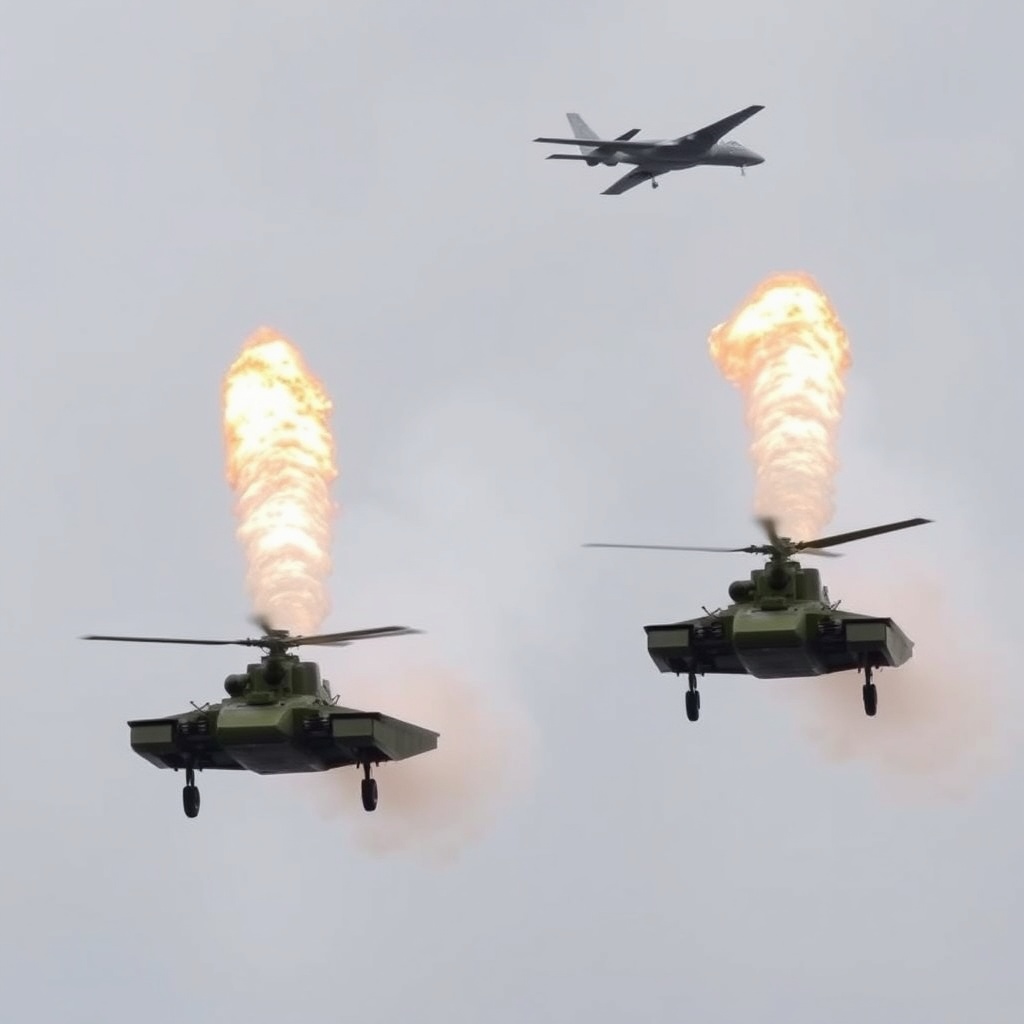
The PRC's recent military exercises around Taiwan were notable for their scale and complexity. They involved various branches of the People's Liberation Army (PLA), including the navy, air force, and rocket force, and simulated scenarios such as a naval blockade and airborne assaults. The exercises were designed to demonstrate the PLA's capabilities and readiness to use force against Taiwan if necessary.
The implications of these exercises are multifaceted: - Deterrence: By showcasing its military prowess, the PRC aims to deter Taiwan from moving towards formal independence and to warn the U.S. and other countries against interfering in the Taiwan Strait issue. - Preparation for Conflict: The exercises suggest that the PRC is actively preparing for potential military conflict over Taiwan. This includes practicing the coordination of different military branches and testing the effectiveness of its weapon systems. - Regional Stability: The exercises have raised concerns about regional stability and the potential for miscalculation. The Asia-Pacific is a critical region for global trade and security, and any conflict over Taiwan could have far-reaching consequences.
International Responses and Reactions
The international community has watched the PRC's military exercises around Taiwan with a mixture of concern and alarm. The U.S. has been particularly vocal, with officials reaffirming the American commitment to Taiwan's defense and calling on the PRC to refrain from using coercion against the island.
Other countries in the region, such as Japan and Australia, have also expressed their concerns about the exercises and the potential for destabilization in the Asia-Pacific. The European Union has called for restraint and dialogue, emphasizing the importance of resolving differences peacefully.
Economic and Political Consequences
The PRC's military exercises around Taiwan have significant economic and political consequences: - Economic Impact: Tensions in the Taiwan Strait can affect trade and investment flows in the region. A conflict could disrupt global supply chains, particularly in the technology sector, where Taiwan plays a critical role. - Political Fallout: The exercises have strained relations between the PRC and the U.S., as well as with other countries that have diplomatic relations with Taiwan. This could lead to a further polarization of the international community, with potential long-term implications for global governance and security.
Conclusion
The PRC's surprise military exercise around Taiwan in December 2025 marks a significant escalation in tensions across the Taiwan Strait. As the international community navigates this complex and sensitive issue, it is crucial to prioritize dialogue, diplomacy, and restraint. The potential consequences of conflict are too severe to contemplate, and all parties must work towards a peaceful resolution that respects the rights and interests of all involved.
The future of the Taiwan Strait issue will depend on a delicate balance of military deterrence, diplomatic engagement, and economic cooperation. The PRC must be persuaded to abandon its coercive approach and engage in meaningful dialogue with Taiwan, facilitated by the international community. Meanwhile, Taiwan must continue to strengthen its defenses and seek support from like-minded countries, while also exploring avenues for peaceful coexistence with the PRC.
Ultimately, the stability of the Asia-Pacific region and the future of Taiwan depend on the ability of all stakeholders to navigate these challenging waters with wisdom, patience, and a commitment to peace. As the world enters a new year, the hope is that 2026 will bring renewed efforts towards dialogue and cooperation, rather than further escalation and conflict. The consequences of failure are too great to ignore, and the responsibility to act lies with all nations that value peace, stability, and the well-being of the people of Taiwan and the region.

Leave a comment