
Introduction
The recent protest at the US consulate in Pakistan's Karachi has resulted in the loss of at least ten lives, with many more injured. The protest, which turned violent, was sparked by the killing of Iran's Supreme Leader Ayatollah Ali Khamenei in joint US-Israeli strikes. The incident has sent shockwaves throughout the region, highlighting the complex and sensitive nature of international relations in the Middle East. This article will delve into the details of the protest, the events leading up to it, and the potential implications for the region.
Background to the Protest
The killing of Ayatollah Ali Khamenei, Iran's Supreme Leader, in joint US-Israeli strikes has been met with widespread condemnation and outrage across the Middle East. Khamenei, who has been the Supreme Leader of Iran since 1989, was a highly influential figure in the region, known for his strong stance against the United States and Israel. The joint US-Israeli strikes that resulted in his death have been seen as a significant escalation of tensions in the region, and have sparked fears of a wider conflict.
The protest at the US consulate in Karachi, Pakistan's largest city, was one of several that took place across the region in response to Khamenei's killing. The protest, which began peacefully, quickly turned violent as demonstrators clashed with security forces. At least ten people were killed, and many more were injured, in the violence that ensued.
The Protest and its Aftermath
The protest at the US consulate in Karachi was organized by a local pro-Iran group, which had called for a demonstration against the killing of Ayatollah Khamenei. The group, which has ties to the Iranian government, had been planning the protest for several days, and had advertised it on social media.
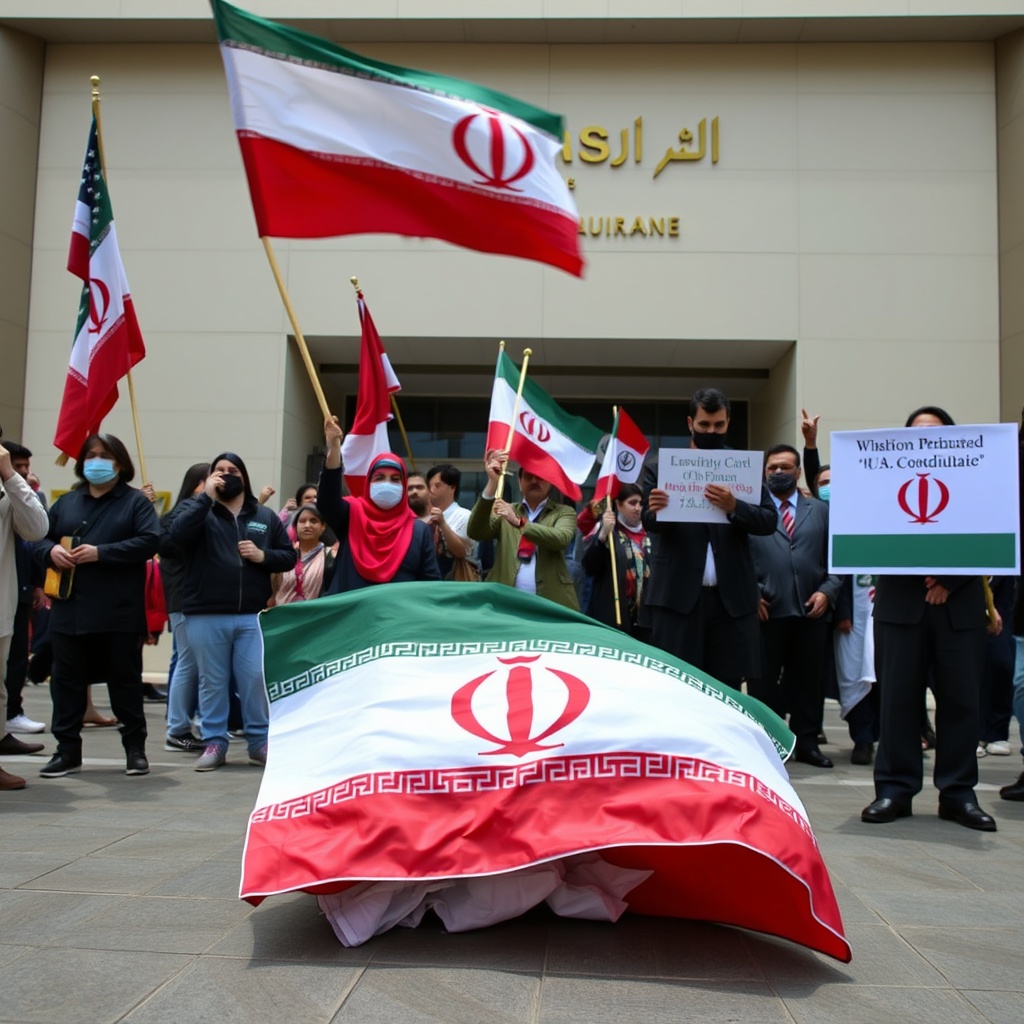
As the protest began, demonstrators gathered outside the US consulate, chanting slogans and waving flags. The mood was initially peaceful, with protesters calling for an end to US and Israeli aggression in the region. However, as the protest wore on, the mood began to turn ugly, with some demonstrators throwing stones and attempting to breach the consulate's security perimeter.
Security forces, who had been deployed to the scene, responded with tear gas and batons, in an attempt to disperse the crowd. However, the violence only escalated, with protesters setting fire to vehicles and buildings, and security forces firing live ammunition into the crowd.
The aftermath of the protest has been marked by widespread condemnation of the violence, with Pakistani officials calling for calm and restraint. The US government has also issued a statement, condemning the attack on its consulate and calling for those responsible to be held accountable.
Regional Implications
The protest at the US consulate in Karachi has significant implications for the region, and highlights the complex and sensitive nature of international relations in the Middle East. The killing of Ayatollah Khamenei has sparked fears of a wider conflict, with many analysts warning of a potential escalation of tensions between the US, Israel, and Iran.
The protest in Karachi is just one example of the widespread outrage and anger that has greeted Khamenei's killing. Similar protests have taken place across the region, with demonstrators calling for an end to US and Israeli aggression in the Middle East.
The incident has also highlighted the role of Pakistan in the region, and its complex relationships with the US, Iran, and other countries. Pakistan has long been a key player in regional politics, and has sought to balance its relationships with different countries in order to maintain stability and security.
However, the protest at the US consulate in Karachi has raised questions about Pakistan's ability to maintain law and order, and its willingness to protect foreign diplomatic missions. The incident has also sparked concerns about the potential for further violence and instability in the region, and has highlighted the need for calm and restraint in the face of rising tensions.
International Response
The international community has been quick to respond to the protest at the US consulate in Karachi, with many countries issuing statements of condemnation and support for the US government. The United Nations has also issued a statement, calling for calm and restraint, and urging all parties to avoid further violence.
The US government has welcomed the international community's response, and has called for those responsible for the attack on its consulate to be held accountable. The Iranian government has also issued a statement, condemning the killing of Ayatollah Khamenei, and calling for an end to US and Israeli aggression in the region.
The incident has also sparked a wider debate about the role of the US and other countries in the region, and the potential for further conflict and instability. Many analysts have warned of a potential escalation of tensions, and have called for a more nuanced and diplomatic approach to regional politics.
Case Studies and Examples
The protest at the US consulate in Karachi is not an isolated incident, and is part of a wider pattern of violence and instability in the region. Similar protests have taken place across the Middle East, with demonstrators calling for an end to US and Israeli aggression.
One example is the 1979 Iranian Revolution, which saw widespread protests and demonstrations against the US-backed Shah of Iran. The revolution ultimately led to the establishment of an Islamic republic in Iran, and had significant implications for the region.
Another example is the 2011 Arab Spring, which saw widespread protests and demonstrations across the Middle East, calling for democratic reform and an end to authoritarian rule. The Arab Spring had significant implications for the region, and led to the overthrow of several governments, including those in Tunisia, Egypt, and Libya.
Statistics and Data
The protest at the US consulate in Karachi has resulted in significant human and material losses. At least ten people were killed, and many more were injured, in the violence that ensued. The protest also resulted in significant damage to property, with several vehicles and buildings set on fire.
According to official statistics, the protest was attended by several thousand people, with many more watching from the sidelines. The protest was organized by a local pro-Iran group, which has ties to the Iranian government.
The incident has also had significant economic implications, with the Pakistani stock market falling sharply in response to the violence. The incident has also raised concerns about the potential for further instability and violence in the region, and has sparked fears of a wider conflict.
Conclusion
The protest at the US consulate in Karachi is a significant incident, with far-reaching implications for the region. The killing of Ayatollah Khamenei has sparked widespread outrage and anger, and has raised fears of a potential escalation of tensions between the US, Israel, and Iran.
The incident has highlighted the complex and sensitive nature of international relations in the Middle East, and has raised questions about the role of different countries in the region. The protest has also sparked a wider debate about the potential for further conflict and instability, and has called for a more nuanced and diplomatic approach to regional politics.
As the region looks to the future, it is clear that the protest at the US consulate in Karachi is just one example of the many challenges and complexities that lie ahead. However, by working together and seeking to understand the perspectives and concerns of different countries and groups, it may be possible to build a more stable and secure future for all.

Leave a comment