
Introduction
The longstanding border dispute between Thailand and Cambodia has been a source of tension and conflict in the region for decades. The two countries have been engaged in a series of skirmishes and clashes over competing claims to territory, resulting in significant loss of life and displacement of people. However, in a major breakthrough, Thailand and Cambodia have signed a new ceasefire agreement, marking a significant step towards ending the border fighting. This article will delve into the background of the conflict, the key terms of the ceasefire agreement, and the implications of this development for the region.
Background to the Conflict
The border dispute between Thailand and Cambodia dates back to the 19th century, when the two countries were under colonial rule. The border was never clearly demarcated, leading to competing claims to territory. The conflict escalated in the 1960s, with both countries claiming sovereignty over the Preah Vihear temple, a ancient Hindu temple located on the border. The International Court of Justice (ICJ) ruled in 1962 that the temple belonged to Cambodia, but the surrounding area remained a point of contention. Over the years, the conflict has resulted in numerous clashes, with both sides suffering significant losses.
In recent years, the conflict has intensified, with both countries engaging in a series of skirmishes and exchanges of artillery fire. The conflict has resulted in significant humanitarian suffering, with thousands of people displaced and many more affected by the fighting. The international community has been calling for a ceasefire and a peaceful resolution to the conflict, and the latest agreement is a major step towards achieving this goal.
Key Terms of the Ceasefire Agreement
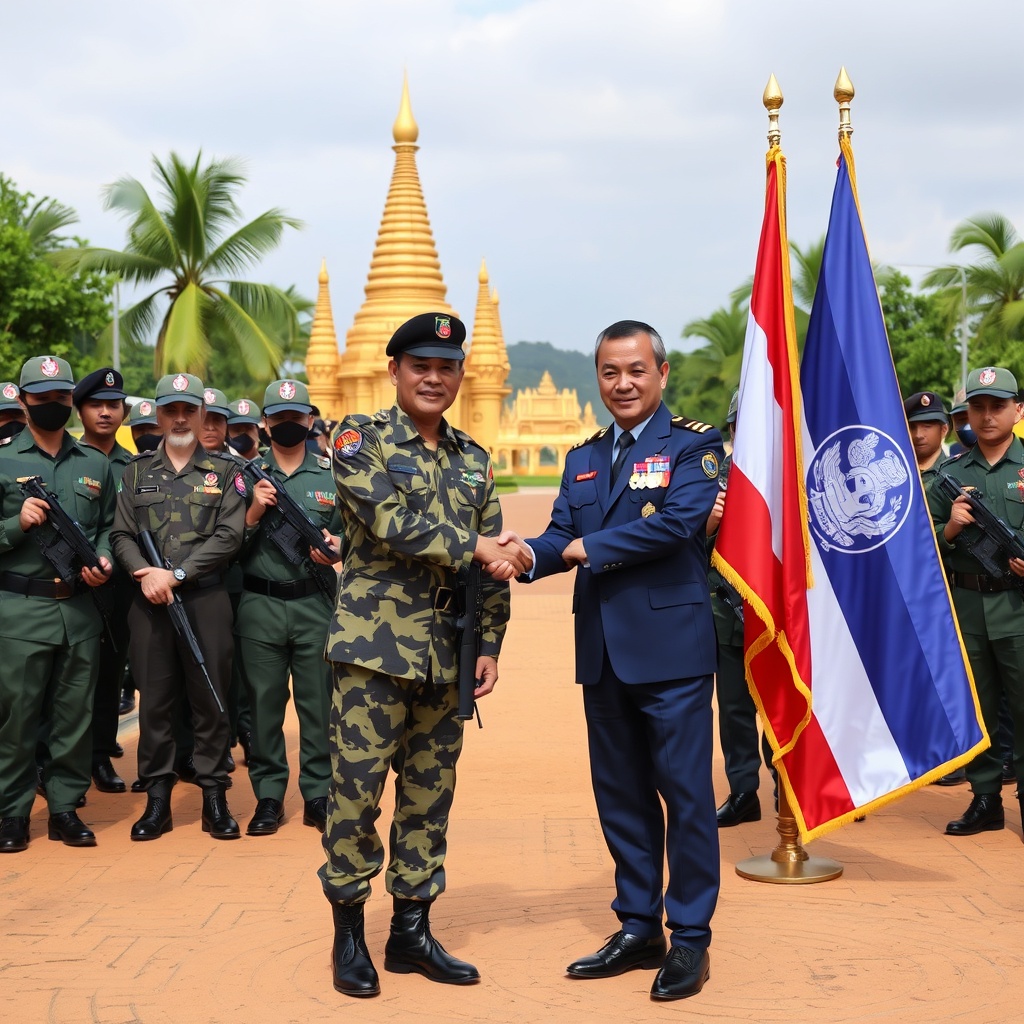
The ceasefire agreement signed by Thailand and Cambodia on Saturday marks a significant breakthrough in the conflict. The agreement establishes a ceasefire along the entire border, effective immediately. Both countries have agreed to withdraw their troops from the border area and to establish a joint committee to oversee the implementation of the agreement. The committee will be responsible for monitoring the ceasefire, investigating any incidents, and making recommendations for further action.
The agreement also provides for the establishment of a buffer zone along the border, to be monitored by international observers. The buffer zone will help to prevent any further clashes and will provide a safe corridor for the return of displaced persons. The agreement also includes provisions for the exchange of prisoners and the repatriation of remains.
The signing of the ceasefire agreement is a major achievement, and it marks a significant step towards a lasting peace between Thailand and Cambodia. The agreement is the result of months of negotiations, facilitated by international mediators, including the United Nations and the Association of Southeast Asian Nations (ASEAN).
Implications of the Ceasefire Agreement
The ceasefire agreement between Thailand and Cambodia has significant implications for the region. The agreement marks a major step towards a lasting peace between the two countries, and it provides a framework for the resolution of the border dispute. The agreement also sends a positive signal to the international community, demonstrating that even the most intractable conflicts can be resolved through diplomacy and dialogue.
The ceasefire agreement is also expected to have significant economic benefits for the region. The conflict has resulted in significant economic losses, with trade and investment between the two countries severely affected. The agreement is expected to lead to an increase in trade and investment, as well as tourism, which will have a positive impact on the local economy.
The agreement also has implications for the wider region. The conflict between Thailand and Cambodia has been a source of instability in Southeast Asia, and the ceasefire agreement is expected to contribute to regional stability. The agreement is also expected to have a positive impact on the ASEAN region, which has been working towards greater integration and cooperation.
In terms of statistics, the conflict has resulted in significant humanitarian suffering. According to the United Nations, over 10,000 people have been displaced by the conflict, and many more have been affected by the fighting. The conflict has also resulted in significant economic losses, with estimates suggesting that the conflict has cost the two countries over $1 billion in lost trade and investment.
The ceasefire agreement is a major step towards addressing these challenges. The agreement provides a framework for the return of displaced persons, as well as the repatriation of remains. The agreement also provides for the establishment of a joint committee to oversee the implementation of the agreement, which will help to ensure that the ceasefire is respected and that the conflict does not escalate again.
Case Studies and Examples
There are several case studies and examples that demonstrate the effectiveness of ceasefire agreements in resolving conflicts. One example is the ceasefire agreement signed between Israel and Hamas in 2014, which marked a significant step towards a lasting peace between the two sides. The agreement established a ceasefire along the entire border, and it provided for the establishment of a buffer zone to prevent any further clashes.
Another example is the ceasefire agreement signed between the government of Colombia and the Revolutionary Armed Forces of Colombia (FARC) in 2016. The agreement marked a significant step towards a lasting peace between the two sides, and it provided for the establishment of a joint committee to oversee the implementation of the agreement.
In both cases, the ceasefire agreements were facilitated by international mediators, and they marked a significant step towards a lasting peace. The agreements also had significant economic benefits, with trade and investment increasing significantly in the aftermath of the agreements.
In the case of Thailand and Cambodia, the ceasefire agreement is expected to have similar benefits. The agreement marks a significant step towards a lasting peace between the two countries, and it provides a framework for the resolution of the border dispute. The agreement is also expected to have significant economic benefits, with trade and investment increasing significantly in the aftermath of the agreement.
Conclusion
The ceasefire agreement signed by Thailand and Cambodia is a major breakthrough in the conflict between the two countries. The agreement marks a significant step towards a lasting peace, and it provides a framework for the resolution of the border dispute. The agreement is expected to have significant economic benefits, with trade and investment increasing significantly in the aftermath of the agreement.
The agreement also sends a positive signal to the international community, demonstrating that even the most intractable conflicts can be resolved through diplomacy and dialogue. The agreement is a major step towards regional stability, and it is expected to have a positive impact on the ASEAN region.
As the two countries move forward, it is essential that they continue to work towards a lasting peace. This will require ongoing dialogue and cooperation, as well as a commitment to respecting the ceasefire agreement. The international community must also continue to support the two countries, providing assistance and guidance as needed.
In the long term, the ceasefire agreement is expected to have a significant impact on the region. The agreement will help to promote regional stability, and it will provide a framework for the resolution of other conflicts in the region. The agreement will also help to promote economic growth and development, as trade and investment increase between the two countries.
Overall, the ceasefire agreement between Thailand and Cambodia is a major step towards a lasting peace, and it provides a framework for the resolution of the border dispute. The agreement is expected to have significant economic benefits, and it sends a positive signal to the international community. As the two countries move forward, it is essential that they continue to work towards a lasting peace, and that the international community continues to support them in this effort.

Leave a comment