
Introduction
The border dispute between Thailand and Cambodia has been a longstanding issue, with tensions escalating in recent years. The conflict has resulted in numerous clashes, displacing thousands of people and causing significant damage to infrastructure. Despite ongoing ceasefire talks, the situation remains volatile, with Cambodia accusing Thailand of "indiscriminate attacks" on its border area. This article will delve into the history of the conflict, the current situation, and the efforts being made to resolve the dispute.
History of the Conflict
The border dispute between Thailand and Cambodia dates back to the 19th century, when the French colonized Cambodia and the British influenced Thailand. The border was never clearly demarcated, leading to disputes over territory and resources. In 1962, the International Court of Justice awarded the Preah Vihear temple, a ancient Hindu temple, to Cambodia, but the surrounding area remained a point of contention. The conflict escalated in 2008, when Cambodia nominated the temple as a UNESCO World Heritage site, leading to protests from Thailand.
The situation deteriorated further in 2011, when clashes broke out between Thai and Cambodian troops, resulting in the deaths of several soldiers and civilians. The conflict has since continued, with periods of relative calm punctuated by outbreaks of violence. The latest escalation began in February, with both sides exchanging artillery fire and accusing each other of aggression.
Current Situation
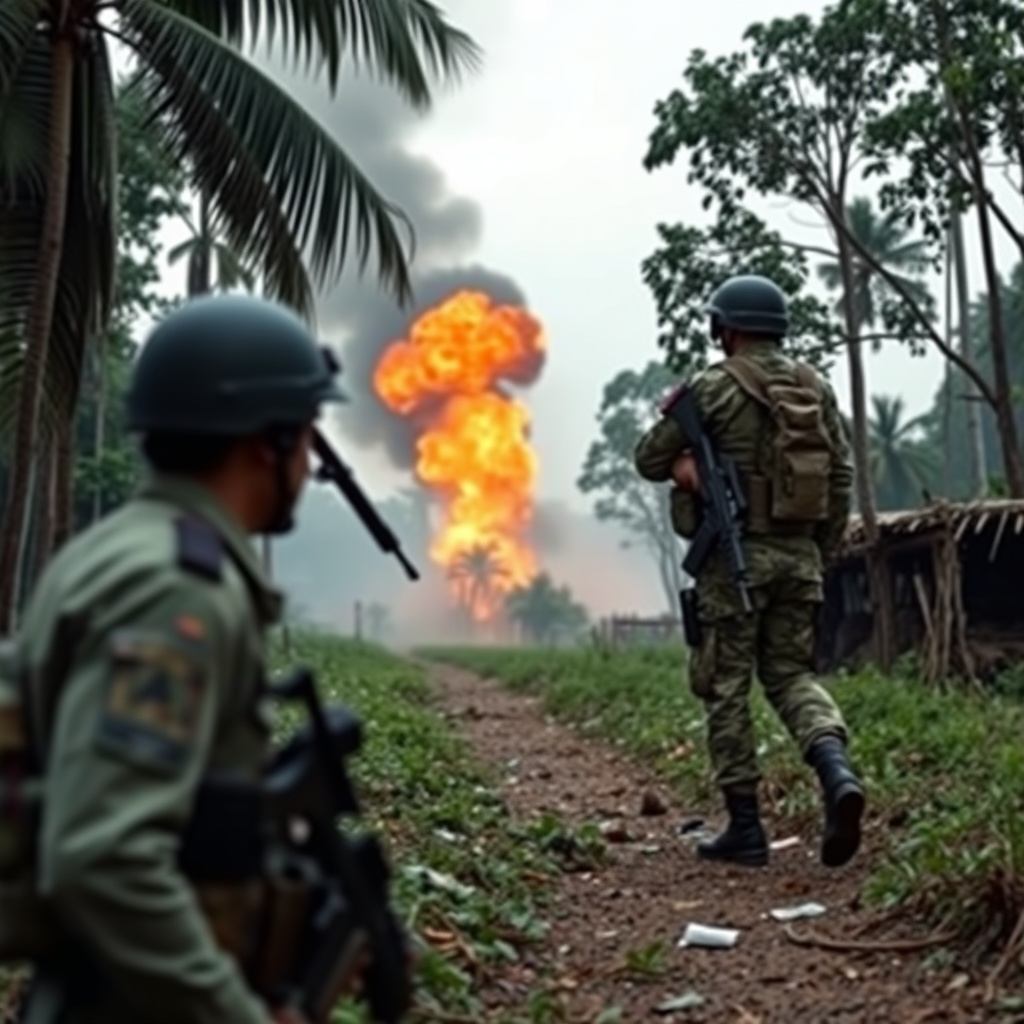
The current situation is dire, with Cambodia accusing Thailand of launching "indiscriminate attacks" on its border area. The Cambodian government has reported that Thai troops have been using heavy artillery, including rockets and mortars, to attack Cambodian positions. The Thai government has denied these allegations, claiming that it is only responding to Cambodian aggression.
The conflict has resulted in significant damage to infrastructure, including homes, schools, and hospitals. Thousands of people have been displaced, with many forced to flee their homes and seek shelter in nearby towns and cities. The humanitarian situation is dire, with many people in need of food, water, and medical care.
Despite the ongoing violence, ceasefire talks are continuing, with negotiators meeting for a third day to try to end the conflict. The talks are being facilitated by the Association of Southeast Asian Nations (ASEAN), which has been working to resolve the dispute. However, the situation remains volatile, with both sides dug in and refusing to back down.
International Response
The international community has been watching the situation with concern, with many countries calling for a peaceful resolution to the conflict. The United States, China, and the European Union have all issued statements urging restraint and encouraging dialogue.
The United Nations has also been involved, with the Secretary-General issuing a statement calling for an immediate ceasefire and urging both sides to return to negotiations. The UN has also offered to provide humanitarian assistance to those affected by the conflict.
ASEAN has been working to resolve the dispute, with the organization's chair, Indonesia, playing a key role in facilitating the ceasefire talks. However, the situation remains challenging, with both sides refusing to back down and the conflict showing no signs of abating.
Case Studies and Examples
The conflict between Thailand and Cambodia is not an isolated incident. Border disputes are common in Southeast Asia, with many countries having unresolved territorial claims. The situation in Thailand and Cambodia is similar to that in other countries, such as Malaysia and Indonesia, which have also experienced border clashes.
For example, the dispute between Malaysia and Indonesia over the island of Sipadan is similar to the conflict between Thailand and Cambodia. The island, which is located in the Celebes Sea, has been claimed by both countries, with tensions escalating in recent years. The situation has been resolved through diplomatic efforts, with both countries agreeing to establish a joint commission to demarcate the border.
Another example is the dispute between Vietnam and China over the Spratly Islands. The islands, which are located in the South China Sea, have been claimed by both countries, as well as several other nations. The situation has been tense, with both sides accusing each other of aggression. However, the conflict has been managed through diplomatic efforts, with both countries agreeing to establish a code of conduct to govern their behavior in the region.
Statistics and Data
The conflict between Thailand and Cambodia has resulted in significant human and economic costs. According to the Cambodian government, the conflict has resulted in the deaths of over 100 people, with many more injured. The conflict has also displaced thousands of people, with over 10,000 forced to flee their homes.
The economic costs of the conflict have also been significant, with the Cambodian government estimating that the conflict has cost the country over $100 million. The conflict has also had a significant impact on trade, with the closure of the border resulting in losses of over $50 million per month.
The situation is also having a significant impact on the environment, with the conflict resulting in the destruction of forests and wildlife habitats. The Cambodian government has reported that the conflict has resulted in the destruction of over 1,000 hectares of forest, with many more under threat.
Conclusion
The conflict between Thailand and Cambodia is a complex and challenging issue, with both sides refusing to back down. Despite ongoing ceasefire talks, the situation remains volatile, with the potential for further violence. The international community has been watching the situation with concern, with many countries calling for a peaceful resolution to the conflict.
To resolve the dispute, both sides will need to be willing to compromise and find a mutually acceptable solution. This may involve the establishment of a joint commission to demarcate the border, as well as the implementation of confidence-building measures to reduce tensions. The international community can also play a role, by providing humanitarian assistance and supporting diplomatic efforts to resolve the conflict.
Ultimately, the resolution of the conflict will require a long-term commitment to peace and stability. This will involve the establishment of a durable ceasefire, as well as the implementation of measures to prevent future conflicts. With the support of the international community, it is possible to resolve the dispute and establish a lasting peace between Thailand and Cambodia.
As the situation continues to evolve, it is essential to remain vigilant and continue to push for a peaceful resolution to the conflict. The people of Thailand and Cambodia deserve to live in peace and stability, and it is the responsibility of the international community to support them in this endeavor. With persistence and determination, it is possible to resolve the conflict and establish a brighter future for the people of the region.

Leave a comment