
Introduction
The Trump administration's efforts to deploy National Guard troops to Portland, Oregon, have been a topic of controversy and debate. In a recent development, the administration has filed a motion seeking to dissolve the remaining order that prevents them from deploying National Guard troops to the city. This move is part of a broader effort by the federal government to crack down on protests and demonstrations in Portland, which have been ongoing since the killing of George Floyd in May 2020. In this article, we will explore the background and context of the Trump administration's efforts to deploy National Guard troops to Portland, the legal challenges that have arisen, and the potential implications of the administration's latest move.
Background and Context
The protests in Portland began in response to the killing of George Floyd, a Black man who was murdered by a white police officer in Minneapolis. The protests were largely peaceful, but they were met with a heavy-handed response from law enforcement, who used tear gas, pepper spray, and other forms of force to disperse the crowds. The situation escalated in July 2020, when the Trump administration deployed federal agents to Portland, citing the need to protect federal property and maintain law and order. However, the deployment of federal agents was widely criticized, with many arguing that it was an overreach of federal authority and an attempt to intimidate and suppress the protests.
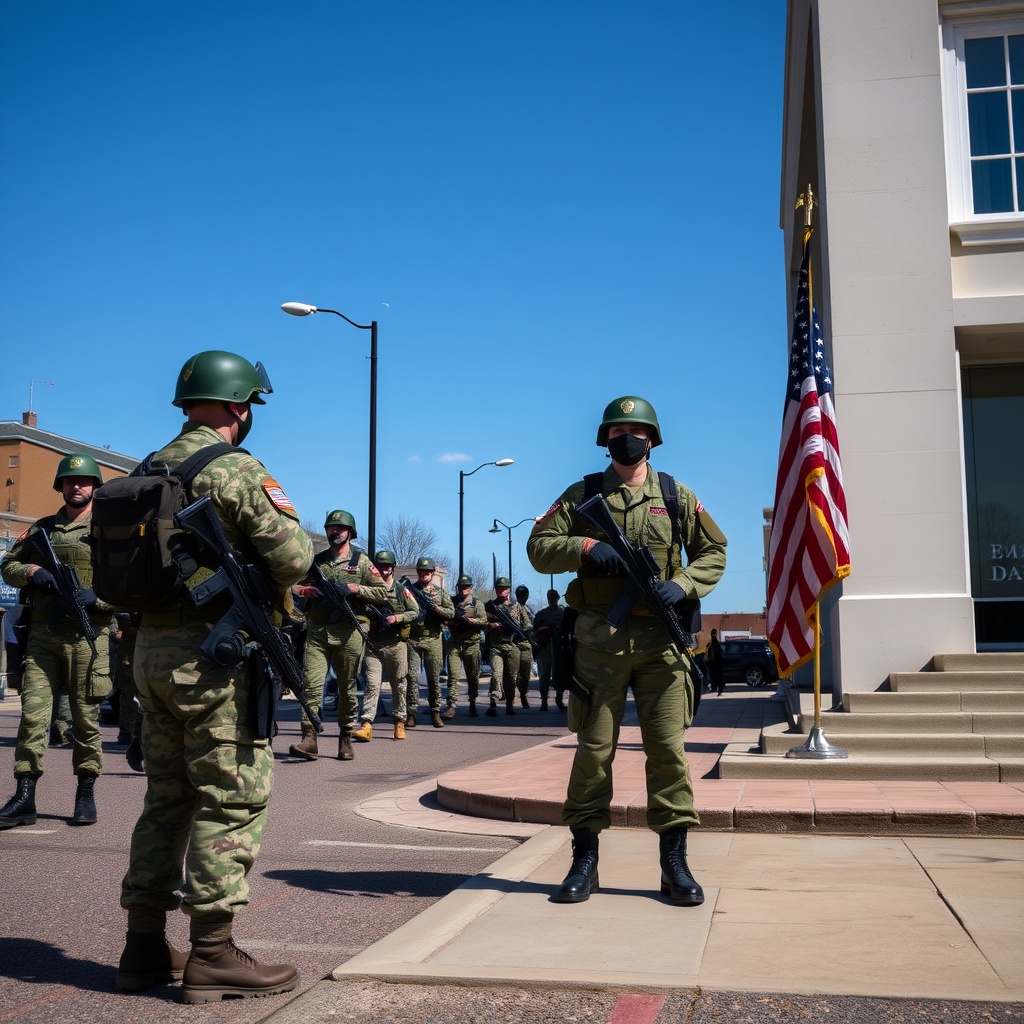
The deployment of National Guard troops to Portland is part of a broader effort by the Trump administration to crack down on protests and demonstrations across the United States. The administration has argued that the protests are a threat to public safety and national security, and that the deployment of National Guard troops is necessary to maintain order and protect federal property. However, critics argue that the deployment of National Guard troops is an overreach of federal authority and an attempt to intimidate and suppress the protests.
Legal Challenges
The Trump administration's efforts to deploy National Guard troops to Portland have been met with legal challenges. In August 2020, a federal judge issued a temporary restraining order blocking the deployment of National Guard troops to the city. The order was issued in response to a lawsuit filed by the city of Portland and the state of Oregon, which argued that the deployment of National Guard troops would violate the rights of protesters and create a risk of violence.
The lawsuit argued that the deployment of National Guard troops would be a violation of the First Amendment rights of protesters, who have the right to assemble and express their opinions. The lawsuit also argued that the deployment of National Guard troops would create a risk of violence, as the troops would be armed and would be authorized to use force to disperse the crowds.
The Trump administration has appealed the court's decision, arguing that the deployment of National Guard troops is necessary to maintain order and protect federal property. The administration has also argued that the court's decision is an overreach of judicial authority and an attempt to interfere with the executive branch's ability to enforce the law.
Potential Implications
The Trump administration's latest move to dissolve the remaining order blocking the deployment of National Guard troops to Portland has significant implications for the city and the country as a whole. If the administration is successful in its efforts, it could lead to a significant escalation of the situation in Portland, with the potential for violence and conflict between protesters and National Guard troops.
The deployment of National Guard troops to Portland could also have implications for the broader protest movement across the United States. If the administration is successful in its efforts to deploy National Guard troops to Portland, it could embolden other cities and states to take similar action, leading to a nationwide crackdown on protests and demonstrations.
Furthermore, the Trump administration's efforts to deploy National Guard troops to Portland raise significant concerns about the role of the military in domestic law enforcement. The Posse Comitatus Act, which was enacted in 1878, prohibits the use of the military for domestic law enforcement purposes, except in cases where it is specifically authorized by Congress. The deployment of National Guard troops to Portland raises questions about whether the administration is violating this law and whether the military is being used to intimidate and suppress protests.
According to a report by the American Civil Liberties Union (ACLU), the deployment of National Guard troops to Portland could lead to a significant erosion of civil liberties and an increase in police brutality. The report notes that the use of military force to suppress protests is a tactic that is often used by authoritarian regimes, and that it is not consistent with the values of democracy and freedom.
In addition, the deployment of National Guard troops to Portland could have significant economic implications for the city. A report by the Portland Business Alliance notes that the protests and demonstrations have already had a significant impact on the city's economy, with many businesses closing or reducing their hours of operation. The deployment of National Guard troops could exacerbate this situation, leading to a further decline in economic activity and a loss of revenue for the city.
Case Studies
There are several case studies that illustrate the potential implications of the Trump administration's efforts to deploy National Guard troops to Portland. For example, in 1970, the National Guard was deployed to Kent State University in Ohio to suppress anti-war protests. The deployment of the National Guard led to a significant escalation of the situation, with the troops firing on the protesters and killing four students.
Another example is the deployment of the National Guard to Los Angeles in 1992, following the acquittal of the police officers who beat Rodney King. The deployment of the National Guard led to a significant escalation of the situation, with the troops using force to disperse the crowds and imposing a curfew on the city.
These case studies illustrate the potential risks and consequences of deploying National Guard troops to Portland. They highlight the need for caution and restraint in the use of military force for domestic law enforcement purposes and the importance of respecting the rights of protesters and upholding the principles of democracy and freedom.
Statistics
According to a report by the National Institute of Justice, the deployment of National Guard troops to Portland could lead to a significant increase in the use of force by law enforcement. The report notes that the use of military force to suppress protests is often associated with an increase in police brutality and a decline in public trust in law enforcement.
A survey conducted by the Pew Research Center found that 64% of Americans oppose the deployment of National Guard troops to Portland, while 31% support it. The survey also found that 74% of Americans believe that the protests in Portland are a legitimate form of expression, while 21% believe that they are a threat to public safety.
These statistics highlight the complexity and divisiveness of the issue, with significant public opposition to the deployment of National Guard troops to Portland. They also highlight the need for a nuanced and thoughtful approach to the situation, one that balances the need to maintain order and protect public safety with the need to respect the rights of protesters and uphold the principles of democracy and freedom.
Conclusion
In conclusion, the Trump administration's efforts to deploy National Guard troops to Portland, Oregon, are a complex and contentious issue. The administration's latest move to dissolve the remaining order blocking the deployment of National Guard troops to the city has significant implications for the city and the country as a whole. While the administration argues that the deployment of National Guard troops is necessary to maintain order and protect federal property, critics argue that it is an overreach of federal authority and an attempt to intimidate and suppress the protests.
The potential implications of the Trump administration's efforts to deploy National Guard troops to Portland are far-reaching and significant. They raise concerns about the role of the military in domestic law enforcement, the erosion of civil liberties, and the potential for violence and conflict between protesters and National Guard troops.
As the situation in Portland continues to unfold, it is essential to approach the issue with caution and restraint. The use of military force to suppress protests is a tactic that is often used by authoritarian regimes, and it is not consistent with the values of democracy and freedom. The Trump administration must consider the potential consequences of its actions and work to find a peaceful and democratic solution to the situation in Portland. Ultimately, the deployment of National Guard troops to Portland is a decision that must be made with careful consideration and a commitment to upholding the principles of democracy and freedom.

Leave a comment