
Introduction
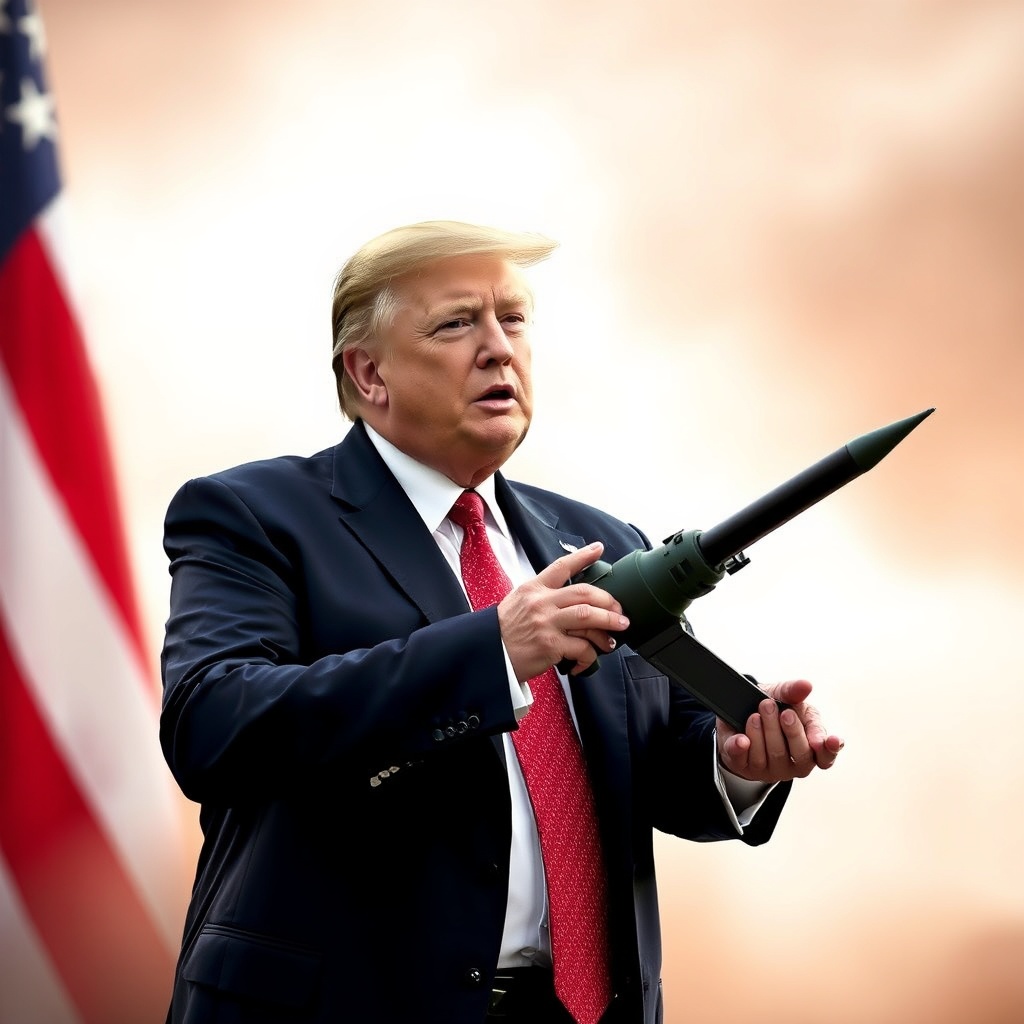
On Tuesday night, US President Donald Trump addressed the nation, making a startling claim about Iran's military capabilities. According to Trump, Iran is "working to build missiles that will soon reach the United States." This statement has sparked widespread concern and debate, with many questioning the accuracy of the President's assertion. However, sources close to US intelligence have come forward to contradict Trump's claim, stating that there is no evidence to support the idea that Iran is developing missiles capable of reaching the US. In this article, we will delve into the details of Trump's claim, examine the current state of Iran's missile program, and explore the implications of this controversy.
The Current State of Iran's Missile Program
Iran has been actively developing its missile program for decades, with a focus on short- and medium-range ballistic missiles. These missiles are designed to target neighboring countries and US military bases in the region, rather than intercontinental targets. According to a report by the International Institute for Strategic Studies (IISS), Iran's current missile arsenal includes the Shahab-3, a medium-range ballistic missile with a range of approximately 1,200 miles (1,900 km). While this range is significant, it is still far short of the distance required to reach the US mainland.
Iran has also been working on developing more advanced missile systems, including the Simorgh space launch vehicle, which has been tested several times in recent years. However, experts believe that this program is still in its early stages, and it will likely take several years, if not decades, for Iran to develop a reliable intercontinental ballistic missile (ICBM) capability. Furthermore, the development of such a capability would require significant advances in areas such as propulsion, guidance, and materials science.
Contradictions from US Intelligence
Sources close to US intelligence have contradicted Trump's claim, stating that there is no evidence to support the idea that Iran is developing missiles capable of reaching the US. According to a report by CNN, US intelligence officials have said that Iran's missile program is focused on regional security concerns, rather than developing ICBMs. This assessment is consistent with the views of many independent experts, who believe that Iran's military strategy is focused on deterring regional threats, rather than pursuing long-range missile capabilities.
It is worth noting that the US intelligence community has a reputation for providing accurate and unbiased assessments of foreign military capabilities. The community's conclusions are based on a wide range of sources, including satellite imagery, human intelligence, and signals intelligence. While there may be some uncertainty and debate within the intelligence community, the overwhelming consensus is that Iran is not currently developing missiles capable of reaching the US.
Implications of the Controversy
The controversy surrounding Trump's claim has significant implications for US foreign policy and national security. If the President's assertion is taken at face value, it could lead to a significant escalation of tensions between the US and Iran, potentially even sparking a military conflict. However, if the claim is exaggerated or unfounded, it could undermine the credibility of the US intelligence community and damage the country's relationships with its allies.
Furthermore, the controversy highlights the importance of accurate and unbiased intelligence in informing US foreign policy decisions. The intelligence community plays a critical role in providing policymakers with timely and accurate information about foreign military capabilities and intentions. If this information is distorted or manipulated for political purposes, it can have serious consequences for national security and global stability.
Case Studies and Examples
There are several case studies and examples that illustrate the importance of accurate intelligence in informing US foreign policy decisions. One notable example is the 2002 National Intelligence Estimate (NIE) on Iraq's weapons of mass destruction program. The NIE concluded that Iraq was actively pursuing nuclear, chemical, and biological weapons, which was later found to be incorrect. This intelligence failure contributed to the US decision to invade Iraq, which had significant consequences for regional stability and US national security.
In contrast, the US intelligence community's assessment of Iran's nuclear program has been consistently accurate and unbiased. In 2015, the community concluded that Iran was not pursuing a nuclear weapons program, which was later confirmed by the International Atomic Energy Agency (IAEA). This assessment played a critical role in informing the US decision to negotiate the Joint Comprehensive Plan of Action (JCPOA), also known as the Iran nuclear deal.
Statistics and Data
There are several statistics and data points that illustrate the current state of Iran's missile program and the controversy surrounding Trump's claim. According to a report by the Congressional Research Service, Iran has conducted over 20 ballistic missile tests since 2015, with a success rate of approximately 50%. While this is a significant number, it is still far short of the frequency and success rate of other major missile powers, such as the US, Russia, and China.
Furthermore, data from the IISS suggests that Iran's military spending has increased significantly in recent years, with a focus on developing its missile and air defense capabilities. However, this spending is still far short of the levels of other major military powers, and it is unclear whether Iran has the resources and expertise to develop a reliable ICBM capability.
Conclusion
In conclusion, the controversy surrounding Trump's claim that Iran is developing missiles capable of reaching the US is a complex and multifaceted issue. While the President's assertion has sparked widespread concern and debate, sources close to US intelligence have contradicted the claim, stating that there is no evidence to support the idea that Iran is developing ICBMs. The current state of Iran's missile program, combined with the implications of the controversy and the importance of accurate intelligence, highlight the need for a nuanced and informed approach to US foreign policy and national security.
As the US and Iran continue to navigate a complex and challenging geopolitical landscape, it is essential that policymakers have access to accurate and unbiased intelligence about foreign military capabilities and intentions. The US intelligence community plays a critical role in providing this information, and it is essential that their assessments are taken seriously and used to inform US foreign policy decisions. By doing so, the US can avoid unnecessary conflicts, build stronger relationships with its allies, and promote regional stability and global security.

Leave a comment