
Introduction
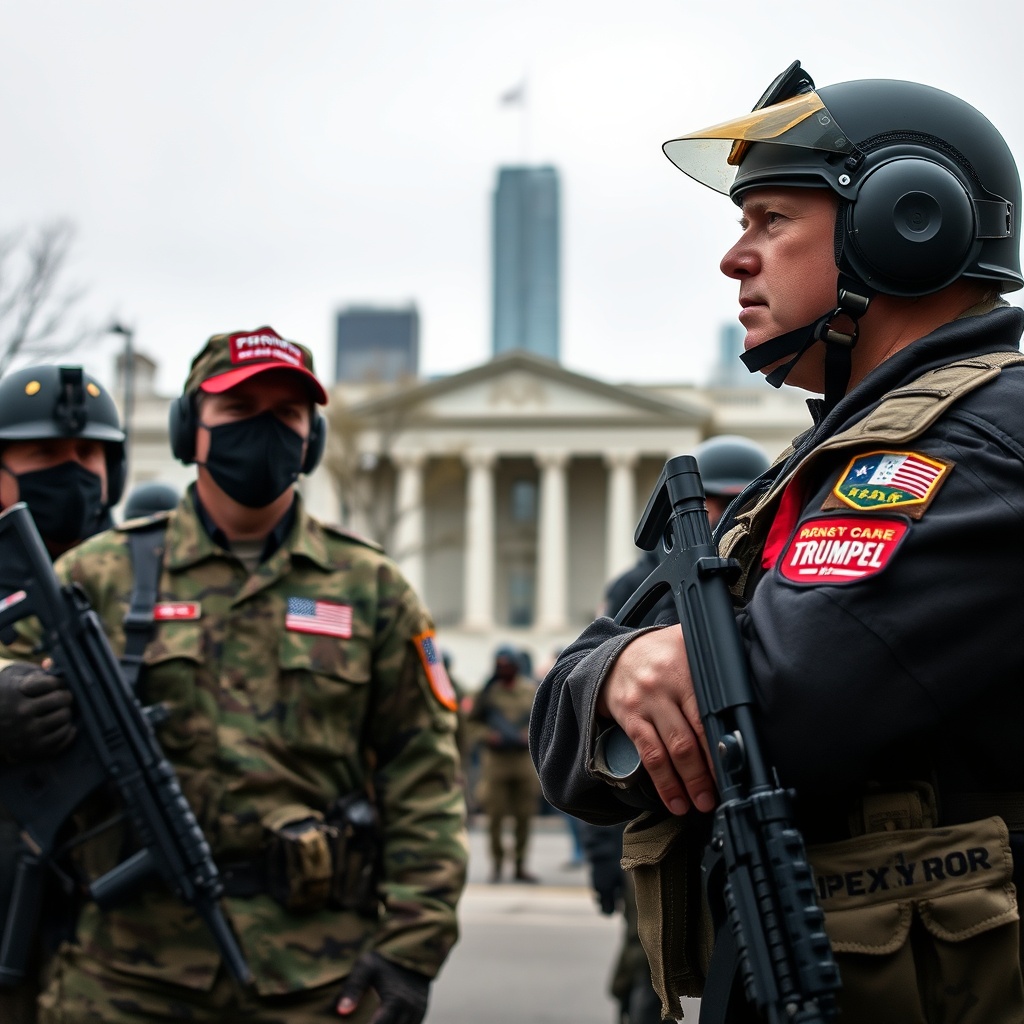
In a surprising turn of events, former President Donald Trump announced that he would be dropping his push to deploy National Guard troops in several major cities across the United States, including Chicago, Los Angeles, and Portland. This decision comes after weeks of speculation and controversy surrounding the potential deployment of troops to these cities. The move has been met with a mix of relief and skepticism, with many wondering what prompted the change of heart and what implications this decision may have for the future of law enforcement and national security in the United States. In this article, we will explore the background and context of Trump's decision, examine the potential reasons behind it, and discuss the potential consequences and implications of this move.
Background and Context
The idea of deploying National Guard troops to cities like Chicago, Los Angeles, and Portland was first floated by Trump in response to concerns about rising crime rates and civil unrest in these areas. The President had argued that the deployment of troops was necessary to maintain law and order, and to protect citizens from violence and crime. However, the plan was met with widespread criticism and opposition from local leaders, law enforcement officials, and civil rights groups, who argued that the deployment of troops would be an overreach of federal authority and could potentially escalate tensions and lead to further violence.
Despite the opposition, Trump had continued to push for the deployment of troops, citing the need to address the "crime wave" and "lawlessness" in these cities. However, in a sudden reversal, the President announced that he would be dropping the plan, at least for the time being. The decision has been seen as a significant climbdown for Trump, who had previously been adamant that the deployment of troops was necessary to address the perceived crisis in these cities.
Reasons Behind the Decision
So, what prompted Trump's change of heart? There are several possible reasons behind the decision to drop the push for National Guard troops in Chicago and other cities. One possible reason is the intense opposition and criticism that the plan faced from local leaders and law enforcement officials. Many of these leaders argued that the deployment of troops would be unnecessary and could potentially escalate tensions, and it is possible that Trump began to realize that the plan was not as popular or practical as he had initially thought.
Another possible reason behind the decision is the potential legal and constitutional implications of deploying troops to these cities. The use of National Guard troops for law enforcement purposes is governed by a complex web of federal and state laws, and there were concerns that the deployment of troops could potentially violate the Posse Comitatus Act, which prohibits the use of federal troops for law enforcement purposes. It is possible that Trump's advisors and lawyers cautioned him about the potential risks and liabilities associated with deploying troops, and that this played a role in the decision to drop the plan.
Implications and Consequences
The decision to drop the push for National Guard troops in Chicago and other cities has significant implications and consequences for the future of law enforcement and national security in the United States. On the one hand, the decision may be seen as a victory for local leaders and civil rights groups, who argued that the deployment of troops would be an overreach of federal authority and could potentially escalate tensions. The decision may also be seen as a recognition of the importance of community-led policing and the need for federal authorities to work in partnership with local law enforcement agencies to address crime and public safety issues.
On the other hand, the decision may also be seen as a missed opportunity to address the underlying issues of crime and violence in these cities. Trump's plan may have been flawed and controversial, but it highlighted the need for a more comprehensive and coordinated approach to addressing crime and public safety issues in urban areas. The decision to drop the plan may mean that these issues will continue to be addressed in a piecemeal and inadequate way, with federal authorities and local law enforcement agencies working in isolation rather than in partnership.
In terms of statistics, it is worth noting that the cities of Chicago, Los Angeles, and Portland have all experienced significant challenges related to crime and public safety in recent years. According to data from the FBI, Chicago experienced a 12% increase in violent crime in 2020, while Los Angeles saw a 10% increase. Portland, meanwhile, has struggled with a surge in gang-related violence and property crime. These statistics highlight the need for a more comprehensive and coordinated approach to addressing crime and public safety issues in these cities, and the decision to drop the push for National Guard troops may be seen as a missed opportunity to address these issues in a more meaningful way.
Conclusion
In conclusion, the decision by Trump to drop the push for National Guard troops in Chicago and other cities is a significant development that has implications for the future of law enforcement and national security in the United States. While the decision may be seen as a victory for local leaders and civil rights groups, it also highlights the need for a more comprehensive and coordinated approach to addressing crime and public safety issues in urban areas. As the United States continues to grapple with the challenges of crime and violence, it is clear that a more nuanced and multifaceted approach will be needed, one that takes into account the complex social and economic factors that contribute to these issues.
In the future, it will be important for federal authorities and local law enforcement agencies to work in partnership to address crime and public safety issues, rather than relying on heavy-handed or militarized approaches. This may involve investing in community-led policing initiatives, providing support for social and economic development programs, and working to address the underlying issues of poverty, inequality, and social injustice that contribute to crime and violence.
Ultimately, the decision to drop the push for National Guard troops in Chicago and other cities is a reminder that the issues of crime and public safety are complex and multifaceted, and that there is no easy or simple solution. However, by working together and taking a more comprehensive and coordinated approach, it is possible to build safer, more just, and more equitable communities for all. As the United States moves forward, it will be important to prioritize a more nuanced and multifaceted approach to addressing crime and public safety issues, one that takes into account the complex social and economic factors that contribute to these issues, and that works to build stronger, more resilient communities for all.

Leave a comment