
Introduction
The Middle East has long been a hub of geopolitical tensions, with various nations vying for power and influence in the region. In recent years, the relationship between the United States and Iran has been particularly strained, with both countries engaging in a war of words and proxy conflicts. In a move aimed at bolstering U.S. military presence in the region, President Trump has ordered the deployment of a second aircraft carrier, the USS Gerald R. Ford, to the Gulf. This decision comes amid escalating threats from Iran, which has been accused of sponsoring terrorism and destabilizing the region. In this article, we will explore the implications of this deployment, the history of U.S.-Iran relations, and the potential consequences of this move.
Historical Context of U.S.-Iran Relations
The relationship between the United States and Iran has been complex and often contentious. In 1979, the Islamic Revolution led to the overthrow of the U.S.-backed Shah, and the establishment of an Islamic republic. Since then, the two countries have had limited diplomatic relations, with the U.S. imposing economic sanctions on Iran and Iran accusing the U.S. of interfering in its internal affairs. The situation has been further complicated by Iran's nuclear program, which the U.S. and its allies believe is aimed at developing nuclear weapons. In 2015, the U.S. and other world powers signed the Joint Comprehensive Plan of Action (JCPOA), which lifted some sanctions on Iran in exchange for limits on its nuclear program. However, in 2018, President Trump withdrew the U.S. from the JCPOA, citing concerns about Iran's ballistic missile program and its support for terrorism.
The withdrawal from the JCPOA marked a significant escalation in tensions between the two countries. Iran responded by increasing its uranium enrichment activities, which led to a series of confrontations between the U.S. and Iran in the Strait of Hormuz. In June 2019, Iran shot down a U.S. drone, which the U.S. claimed was in international airspace. The incident brought the two countries to the brink of war, with President Trump ordering a military strike against Iran, only to call it off at the last minute. Since then, the situation has remained volatile, with both countries engaging in a series of proxy conflicts and cyberattacks.
The Deployment of the USS Gerald R. Ford
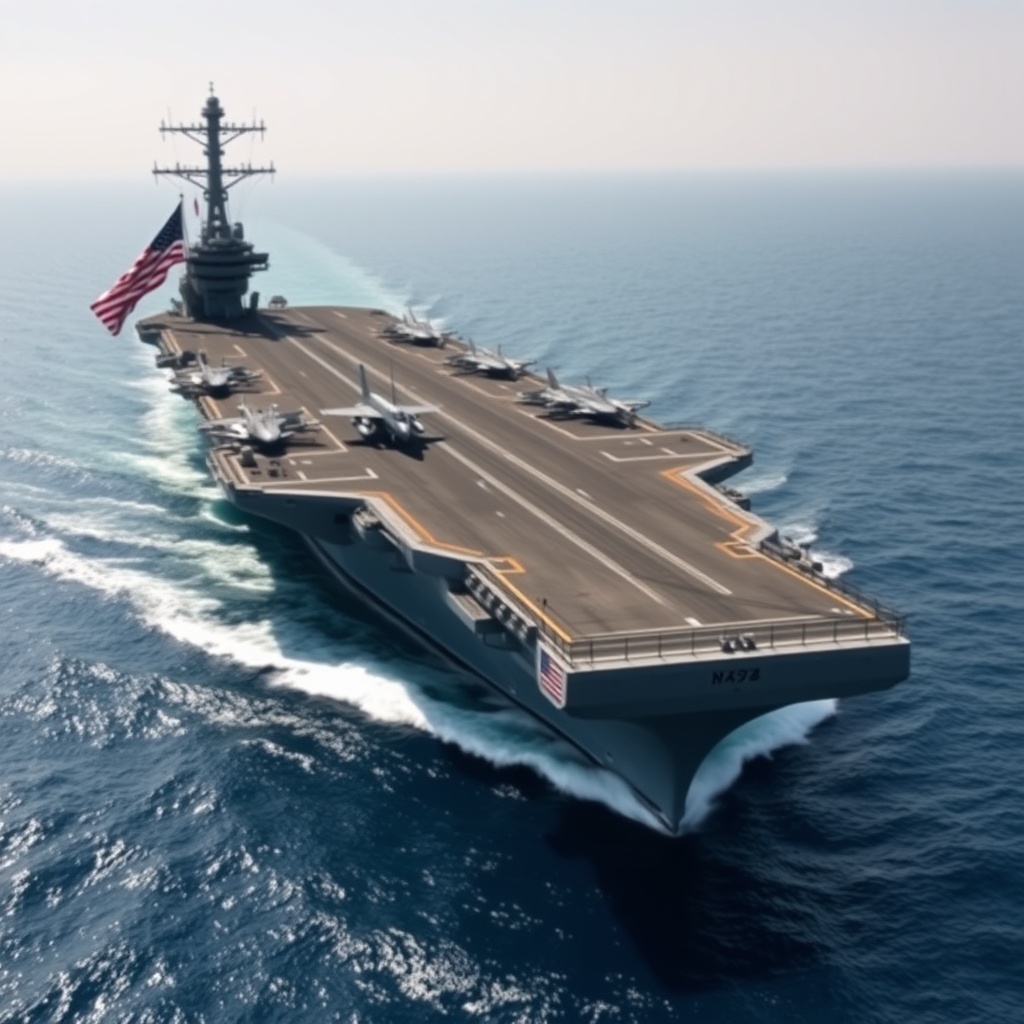
The deployment of the USS Gerald R. Ford is a significant move, aimed at bolstering U.S. military presence in the region. The USS Gerald R. Ford is a state-of-the-art aircraft carrier, equipped with advanced technology and a crew of over 5,000 personnel. The carrier is part of a larger strike group, which includes destroyers, cruisers, and submarines. The deployment of the USS Gerald R. Ford is intended to demonstrate U.S. commitment to its allies in the region, including Saudi Arabia and the United Arab Emirates, which have been targeted by Iranian-sponsored attacks.
The deployment of the USS Gerald R. Ford is also a response to Iran's increasing aggression in the region. In recent months, Iran has been accused of sponsoring attacks on oil tankers and pipelines, as well as launching ballistic missiles at Saudi Arabia. The U.S. has also accused Iran of providing support to terrorist groups, including Hezbollah and Hamas. By deploying the USS Gerald R. Ford, the U.S. is sending a clear message to Iran that it will not tolerate its aggressive behavior.
Implications of the Deployment
The deployment of the USS Gerald R. Ford has significant implications for the region. On the one hand, it demonstrates U.S. commitment to its allies and its willingness to defend them against Iranian aggression. On the other hand, it also increases the risk of confrontation between the U.S. and Iran. The presence of a second aircraft carrier in the region will likely be seen as a provocation by Iran, which may respond with further aggression.
The deployment of the USS Gerald R. Ford also has implications for the global economy. The Strait of Hormuz, which connects the Persian Gulf to the Arabian Sea, is a critical waterway for international trade. Any disruption to shipping in the region could have significant consequences for the global economy, including higher oil prices and supply chain disruptions.
Potential Consequences of the Deployment
The deployment of the USS Gerald R. Ford is a high-stakes move, with significant potential consequences. One possible outcome is a confrontation between the U.S. and Iran, which could lead to a wider conflict in the region. This could have devastating consequences, including the loss of life, destruction of infrastructure, and disruption to global trade.
Another possible outcome is a diplomatic solution, in which the U.S. and Iran engage in negotiations to resolve their differences. This could involve a return to the JCPOA, or the negotiation of a new agreement that addresses the concerns of both countries. However, this outcome is unlikely, given the deep-seated mistrust between the two countries.
A third possible outcome is a escalation of proxy conflicts in the region. The U.S. and Iran have already been engaged in a series of proxy conflicts, including in Yemen and Syria. The deployment of the USS Gerald R. Ford could lead to an escalation of these conflicts, as Iran seeks to demonstrate its capabilities and the U.S. seeks to defend its allies.
Conclusion
The deployment of the USS Gerald R. Ford to the Gulf is a significant move, aimed at bolstering U.S. military presence in the region. The move comes amid escalating threats from Iran, which has been accused of sponsoring terrorism and destabilizing the region. The implications of this deployment are significant, with potential consequences including a confrontation between the U.S. and Iran, a diplomatic solution, or an escalation of proxy conflicts.
As the situation in the Middle East continues to evolve, it is clear that the deployment of the USS Gerald R. Ford is a high-stakes move. The U.S. and Iran are engaged in a complex game of cat and mouse, with each side seeking to outmaneuver the other. The outcome of this game is far from certain, but one thing is clear: the deployment of the USS Gerald R. Ford marks a significant escalation in tensions between the U.S. and Iran, and has the potential to shape the course of history in the region.
In the coming months and years, it will be important to watch the situation in the Middle East closely, as the U.S. and Iran navigate a complex web of alliances, proxy conflicts, and diplomatic maneuvering. The deployment of the USS Gerald R. Ford is just one piece of a larger puzzle, and its implications will be felt for years to come. As the world waits with bated breath to see what will happen next, one thing is clear: the Middle East is a region of immense importance, and the actions of the U.S. and Iran will have far-reaching consequences for the entire world.

Leave a comment