
Introduction
The recent US airstrikes in Nigeria have sparked a wave of reactions from various quarters, with some Trump supporters hailing the move as an "amazing Christmas present." The airstrikes, which targeted Islamic State (IS) targets in the country, have been seen as a demonstration of President Trump's resolve to combat terrorism. However, the celebrations have also been marred by concerns over the potential consequences of such actions, including the risk of civilian casualties and the impact on regional stability. In this article, we will delve into the details of the US airstrikes in Nigeria, the reactions from Trump supporters, and the broader implications of such actions.
Background to the US Airstrikes in Nigeria
The US airstrikes in Nigeria are part of a broader campaign by the US military to combat IS and other terrorist groups in the region. Nigeria has been grappling with a long-running insurgency by the Islamist group Boko Haram, which has been responsible for numerous attacks on civilians and security forces. In recent years, IS has also established a presence in the country, with the group's West Africa province (ISWAP) carrying out attacks on military and civilian targets. The US has been providing military assistance to Nigeria, including training and equipment, to help the country combat the terrorist threat.
The recent airstrikes are seen as a significant escalation of US involvement in the conflict, with the US military targeting IS positions and personnel in the country. The airstrikes have been carried out using drones and other aircraft, with the US military working closely with Nigerian security forces to identify and target terrorist positions. The US has also been providing intelligence and logistical support to Nigerian forces, helping them to track and disrupt terrorist operations.
Reactions from Trump Supporters
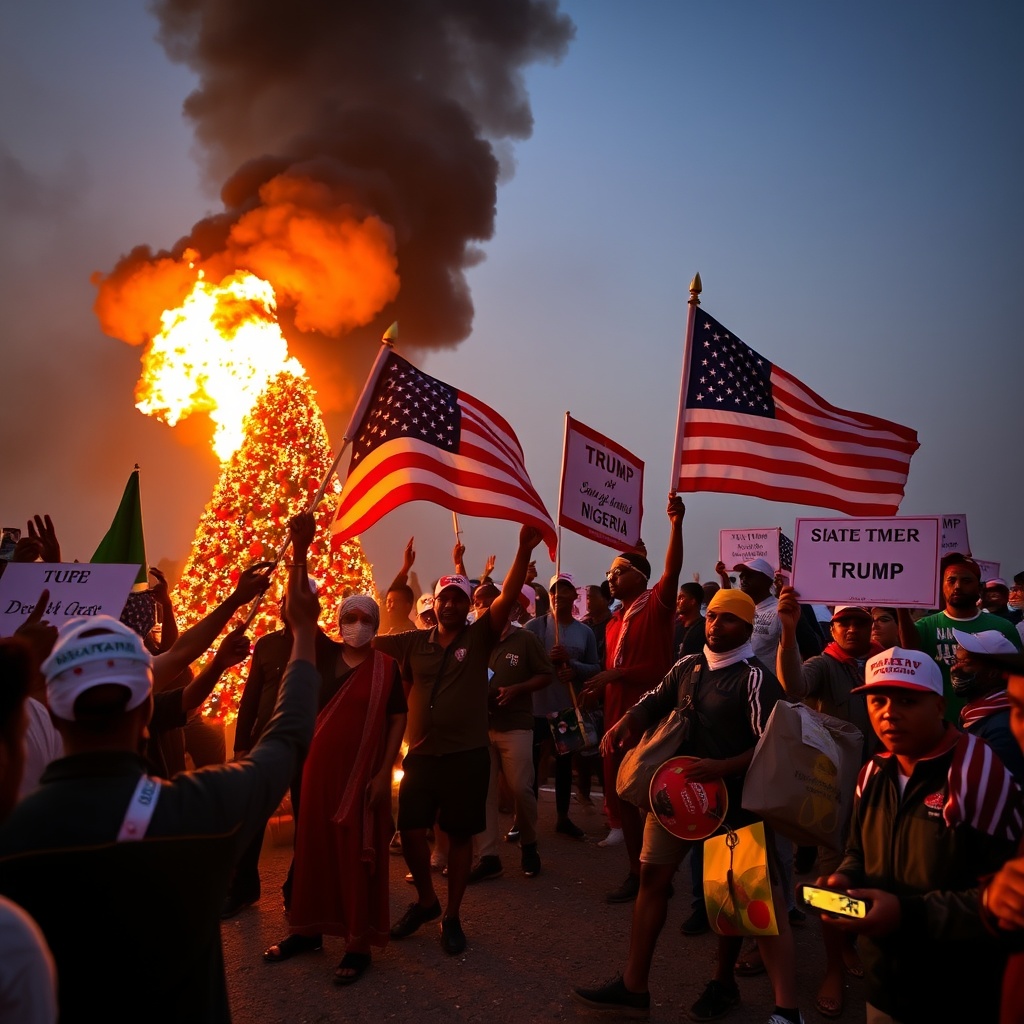
The US airstrikes in Nigeria have been widely celebrated by Trump supporters, with many taking to social media to praise the president's resolve and leadership. Some have even celebrated the "mass killing" of IS militants, with one supporter tweeting that the airstrikes were an "amazing Christmas present" from the president. Others have praised the president's willingness to take bold action against terrorist groups, with one supporter stating that "Trump is the only president who has the guts to take on these terrorists."
The reactions from Trump supporters reflect a broader narrative that has emerged during the Trump presidency, with many of his supporters seeing him as a strong and decisive leader who is willing to take tough action to protect American interests. The president's willingness to use military force against terrorist groups has been a key part of this narrative, with many supporters seeing it as a demonstration of his commitment to keeping America safe.
However, the celebrations have also been marred by concerns over the potential consequences of such actions. Some have warned that the airstrikes could lead to civilian casualties and destabilize the region, with one critic stating that "the US is playing with fire in Nigeria." Others have questioned the legality of the airstrikes, with one human rights group arguing that the US may have violated international law by carrying out the strikes without the consent of the Nigerian government.
Implications of the US Airstrikes in Nigeria
The US airstrikes in Nigeria have significant implications for the country and the broader region. On the one hand, the airstrikes could help to disrupt IS operations in the country and reduce the threat posed by the group. The US has been working closely with Nigerian security forces to target terrorist positions and personnel, and the airstrikes could help to build momentum in the fight against IS.
On the other hand, the airstrikes also carry significant risks, including the risk of civilian casualties and the potential for destabilization in the region. Nigeria is a complex and volatile country, with a long history of ethnic and sectarian tensions. The US airstrikes could exacerbate these tensions, particularly if they are seen as targeting specific groups or communities.
Furthermore, the US airstrikes in Nigeria also raise questions about the role of the US in the region. The US has been increasingly involved in military operations in Africa, with the US military carrying out airstrikes and other operations in countries such as Somalia and Libya. The US has also been working to build partnerships with African countries, including Nigeria, to combat terrorist groups and promote regional stability.
However, the US involvement in the region has also been criticized, with some arguing that it is part of a broader pattern of US militarism and interventionism. Others have warned that the US is ignoring the root causes of terrorism in the region, including poverty, inequality, and poor governance. The US airstrikes in Nigeria may be seen as a short-term solution to the problem of terrorism, but they do not address the underlying issues that are driving the conflict.
Case Study: The Impact of US Airstrikes on Civilian Populations
The impact of US airstrikes on civilian populations is a critical concern in the context of the US airstrikes in Nigeria. In recent years, there have been numerous reports of civilian casualties resulting from US airstrikes in countries such as Afghanistan, Iraq, and Syria. The US has also been criticized for its lack of transparency and accountability in reporting civilian casualties, with many cases going unreported or unpunished.
In Nigeria, the risk of civilian casualties is particularly high, given the complex and volatile nature of the conflict. The US has been working to minimize the risk of civilian casualties, including by using precision-guided munitions and working closely with Nigerian security forces to identify and target terrorist positions. However, the risk of civilian casualties remains, and the US must take steps to ensure that it is doing everything possible to protect civilians and minimize harm.
One example of the impact of US airstrikes on civilian populations is the case of the Kunduz hospital bombing in Afghanistan. In 2015, a US airstrike hit a hospital in Kunduz, killing at least 42 people, including patients, doctors, and nurses. The attack was widely condemned, with many criticizing the US for its lack of transparency and accountability in reporting civilian casualties.
The Kunduz hospital bombing highlights the need for the US to take a more nuanced and careful approach to airstrikes, particularly in complex and volatile environments. The US must work to minimize the risk of civilian casualties, including by using precision-guided munitions and working closely with local security forces to identify and target terrorist positions. The US must also be more transparent and accountable in reporting civilian casualties, including by acknowledging and investigating cases of civilian harm.
Conclusion
The US airstrikes in Nigeria have sparked a wave of reactions, with some Trump supporters hailing the move as an "amazing Christmas present." However, the celebrations have also been marred by concerns over the potential consequences of such actions, including the risk of civilian casualties and the impact on regional stability. As the US continues to engage in military operations in Africa, it is critical that the country takes a nuanced and careful approach, working to minimize the risk of civilian casualties and promote regional stability.
The US airstrikes in Nigeria also highlight the need for a broader discussion about the role of the US in the region. The US has been increasingly involved in military operations in Africa, but the country must also work to address the root causes of terrorism, including poverty, inequality, and poor governance. The US must also be more transparent and accountable in reporting civilian casualties, including by acknowledging and investigating cases of civilian harm.
Ultimately, the US airstrikes in Nigeria are a reminder of the complex and challenging nature of counterterrorism operations. The US must work to balance its military actions with a broader strategy that addresses the root causes of terrorism and promotes regional stability. By taking a nuanced and careful approach, the US can help to promote peace and security in the region, while also protecting American interests and values.

Leave a comment