
Introduction
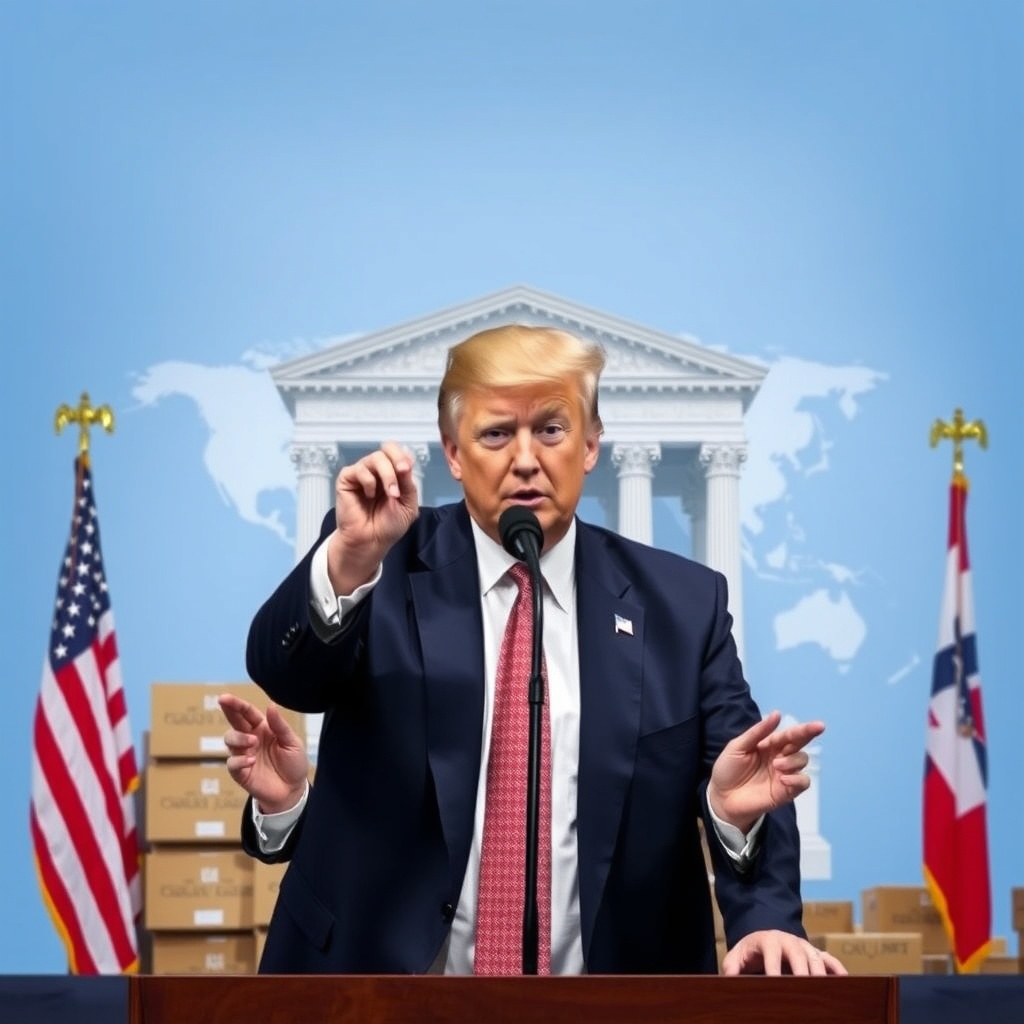
The trade policies of the United States have been a subject of intense debate and controversy under the presidency of Donald Trump. One of the most significant and contentious aspects of these policies has been the imposition of tariffs on imported goods. Recently, the Supreme Court ruled that the sweeping duties imposed by Trump are illegal, prompting the former president to vow to impose a 10% "global tariff" using an alternative law. This article will delve into the implications of Trump's tariff policies, the legal challenges they have faced, and the potential consequences of a global tariff.
Background on Trump's Tariff Policies
Trump's trade policies have been characterized by a protectionist approach, with the aim of reducing the US trade deficit and promoting domestic industries. One of the key tools used to achieve this goal has been the imposition of tariffs on imported goods. Tariffs are taxes levied on goods imported into a country, and they can be used to protect domestic industries by making imported goods more expensive. Trump has imposed tariffs on a wide range of goods, including steel, aluminum, and goods from China.
The tariffs imposed by Trump have been controversial, with many arguing that they have hurt American consumers and businesses. The tariffs have led to higher prices for imported goods, which can reduce demand and harm industries that rely on these goods. For example, the tariffs on steel and aluminum have led to higher costs for the construction and manufacturing industries, which can lead to higher prices for consumers.
The Supreme Court Ruling
The Supreme Court's ruling that Trump's sweeping duties are illegal is a significant setback for the former president's trade policies. The ruling is based on the idea that the president does not have the authority to unilaterally impose tariffs without the approval of Congress. The Constitution gives Congress the power to regulate commerce with foreign nations, and the Supreme Court has ruled that this power cannot be delegated to the president.
The ruling is likely to have significant implications for Trump's trade policies, as it limits his ability to impose tariffs without the approval of Congress. This could lead to a more nuanced and bipartisan approach to trade policy, as Congress will have a greater role in shaping the country's trade agenda. However, it is also possible that Trump could use alternative laws to impose tariffs, as he has vowed to do.
The Potential Consequences of a Global Tariff
The imposition of a 10% global tariff would have significant consequences for the global economy. A global tariff would apply to all goods imported into the US, regardless of their country of origin. This would lead to higher prices for imported goods, which could reduce demand and harm industries that rely on these goods.
The consequences of a global tariff would be far-reaching, with potential impacts on trade, economic growth, and inflation. A study by the Tax Foundation found that a 10% tariff on all imported goods would lead to a reduction in GDP of 1.3%, a reduction in employment of 1.1%, and an increase in consumer prices of 2.5%. The study also found that the tariff would lead to a significant increase in trade tensions, with potential retaliatory measures from other countries.
Examples and Case Studies
The imposition of tariffs by Trump has already had significant consequences for various industries and countries. For example, the tariffs on Chinese goods have led to a significant decline in US imports from China, with a corresponding increase in imports from other countries such as Vietnam and Mexico. However, the tariffs have also led to higher prices for consumers, with a study by the National Retail Federation finding that the tariffs have led to a 2.5% increase in prices for consumer goods.
Another example is the impact of the tariffs on the US agriculture industry. The tariffs imposed by China on US agricultural products, such as soybeans and corn, have led to a significant decline in US exports to China. This has had a devastating impact on US farmers, with many facing significant losses and financial difficulties.
Statistics and Data
The data on the impact of Trump's tariffs is clear. According to a study by the Peterson Institute for International Economics, the tariffs imposed by Trump have led to a reduction in US trade of 2.5%, with a corresponding increase in prices of 1.4%. The study also found that the tariffs have led to a significant increase in trade tensions, with potential retaliatory measures from other countries.
In terms of the potential consequences of a global tariff, the data is also clear. A study by the World Trade Organization found that a 10% tariff on all imported goods would lead to a reduction in global trade of 3.5%, with a corresponding increase in prices of 2.2%. The study also found that the tariff would lead to a significant increase in trade tensions, with potential retaliatory measures from other countries.
Conclusion
In conclusion, the imposition of tariffs by Trump has been a highly controversial and complex issue, with significant implications for the global economy. The Supreme Court's ruling that Trump's sweeping duties are illegal is a significant setback for the former president's trade policies, and it is likely to lead to a more nuanced and bipartisan approach to trade policy. However, the potential consequences of a global tariff are far-reaching, with potential impacts on trade, economic growth, and inflation.
As the global economy continues to evolve and grow, it is essential to have a trade policy that is fair, equitable, and beneficial to all countries. The imposition of tariffs can be a useful tool in achieving this goal, but it must be done in a way that is transparent, predictable, and respectful of the rules-based international trading system. The US and other countries must work together to promote free and fair trade, and to reduce the risks of trade tensions and conflicts.
The future of global trade is uncertain, but one thing is clear: the imposition of tariffs will continue to be a significant issue in the years to come. As the global economy continues to grow and evolve, it is essential to have a trade policy that is adaptable, flexible, and responsive to the needs of all countries. The US and other countries must work together to promote a rules-based international trading system, and to reduce the risks of trade tensions and conflicts. Only through cooperation and collaboration can we achieve a more prosperous and equitable global economy.

Leave a comment