
Introduction
On October 17, 2025, President Trump made a surprising move by filing an emergency appeal to the Supreme Court, requesting approval to deploy the National Guard to Chicago. This decision has sparked intense debate and raised questions about the role of the National Guard in addressing immigration issues and the limits of presidential power. In this article, we will delve into the context behind President Trump's request, the potential implications of deploying the National Guard to Chicago, and the broader implications for the country.
Background and Context
The request to deploy the National Guard to Chicago is part of President Trump's broader efforts to address immigration issues in the United States. According to the President, the deployment is necessary to support local law enforcement and address what he describes as a crisis at the border. However, critics argue that the move is an overreach of presidential power and an attempt to militarize the response to immigration.
Chicago has been at the center of the immigration debate in recent years, with the city declaring itself a sanctuary city in 2017. This means that local law enforcement does not cooperate with federal immigration authorities to detain or deport undocumented immigrants. President Trump has long been critical of sanctuary cities, arguing that they undermine national security and facilitate crime.
The use of the National Guard to address immigration issues is not new. In 2018, President Trump deployed the National Guard to the southern border to support border patrol agents. However, the deployment of the National Guard to a major city like Chicago would be unprecedented and raises concerns about the potential for militarization and human rights abuses.
Potential Implications of Deploying the National Guard to Chicago
The deployment of the National Guard to Chicago would have significant implications for the city and the country as a whole. Some of the potential implications include:
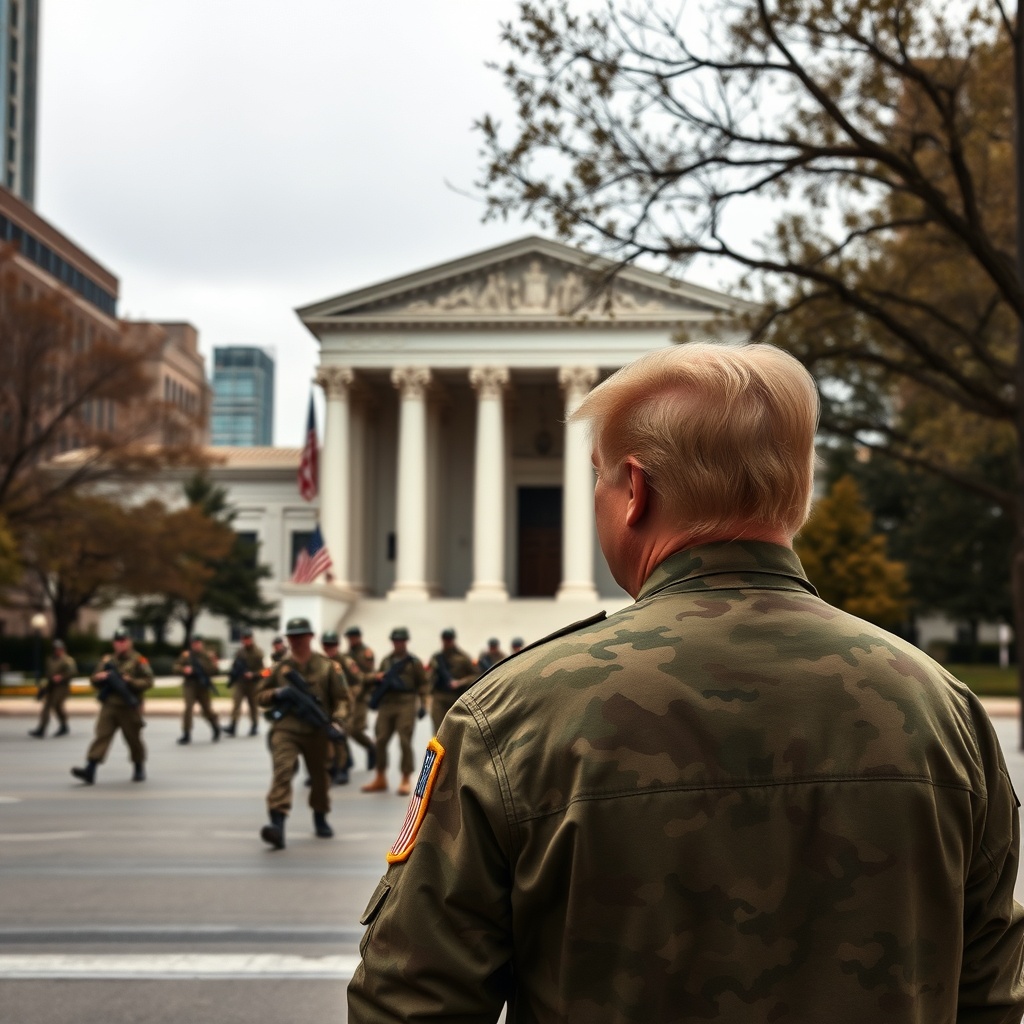
- Militarization of Law Enforcement: The deployment of the National Guard would likely lead to a militarization of law enforcement in Chicago, with armed troops patrolling the streets and potentially engaging with civilians. This could lead to a breakdown in trust between law enforcement and the community, particularly in communities of color.
- Human Rights Abuses: The use of the National Guard to enforce immigration laws raises concerns about human rights abuses, including the potential for racial profiling, arbitrary detention, and violence against civilians.
- Economic Impact: The deployment of the National Guard would likely have a significant economic impact on Chicago, with the potential for disruption to businesses, transportation, and tourism.
- Constitutional Implications: The deployment of the National Guard to Chicago raises significant constitutional implications, including the potential for an overreach of presidential power and a violation of the Posse Comitatus Act, which prohibits the use of the military for domestic law enforcement.
According to a report by the American Civil Liberties Union (ACLU), the deployment of the National Guard to the southern border in 2018 resulted in a significant increase in human rights abuses, including the detention of asylum seekers and the use of force against civilians. The report also found that the deployment had a disproportionate impact on communities of color, with African American and Latino communities being more likely to be targeted by immigration enforcement.
The Role of the Supreme Court
The Supreme Court will play a crucial role in determining the outcome of President Trump's request to deploy the National Guard to Chicago. The Court will need to consider whether the President has the authority to deploy the National Guard for domestic law enforcement purposes and whether such a deployment would be constitutional.
The Supreme Court has previously ruled on the use of the military for domestic law enforcement purposes, including in the case of Youngstown Sheet & Tube Co. v. Sawyer (1952), which established that the President does not have the authority to seize private property without congressional authorization. However, the Court has also recognized the President's authority to deploy the military in certain circumstances, such as in response to a national emergency.
In recent years, the Supreme Court has been increasingly divided on issues related to immigration and national security, with conservative justices generally supporting the President's authority to take bold action and liberal justices expressing concerns about the potential for human rights abuses and constitutional violations.
According to a survey by the Pew Research Center, 64% of Americans believe that the President should not have the authority to deploy the National Guard for domestic law enforcement purposes without congressional approval. The survey also found that 55% of Americans believe that the deployment of the National Guard to Chicago would be an overreach of presidential power.
Conclusion
The request by President Trump to deploy the National Guard to Chicago is a complex and contentious issue that raises significant concerns about the role of the military in domestic law enforcement, human rights abuses, and the limits of presidential power. As the Supreme Court considers the President's request, it will need to carefully weigh the competing interests and consider the potential implications for the city of Chicago, the state of Illinois, and the country as a whole.
Ultimately, the decision to deploy the National Guard to Chicago will have far-reaching implications for the future of immigration policy and the role of the military in domestic law enforcement. It will also raise important questions about the balance of power between the executive branch and the judiciary, and the ability of the courts to check the President's authority.
As the nation waits for the Supreme Court's decision, it is clear that the issue of immigration and national security will continue to be a major point of contention in American politics. The deployment of the National Guard to Chicago would be a significant escalation of the President's efforts to address immigration issues, and would likely have major implications for the city, the state, and the country. Whether the Supreme Court will approve the President's request remains to be seen, but one thing is certain: the outcome will have a profound impact on the future of American democracy.

Leave a comment