
Introduction
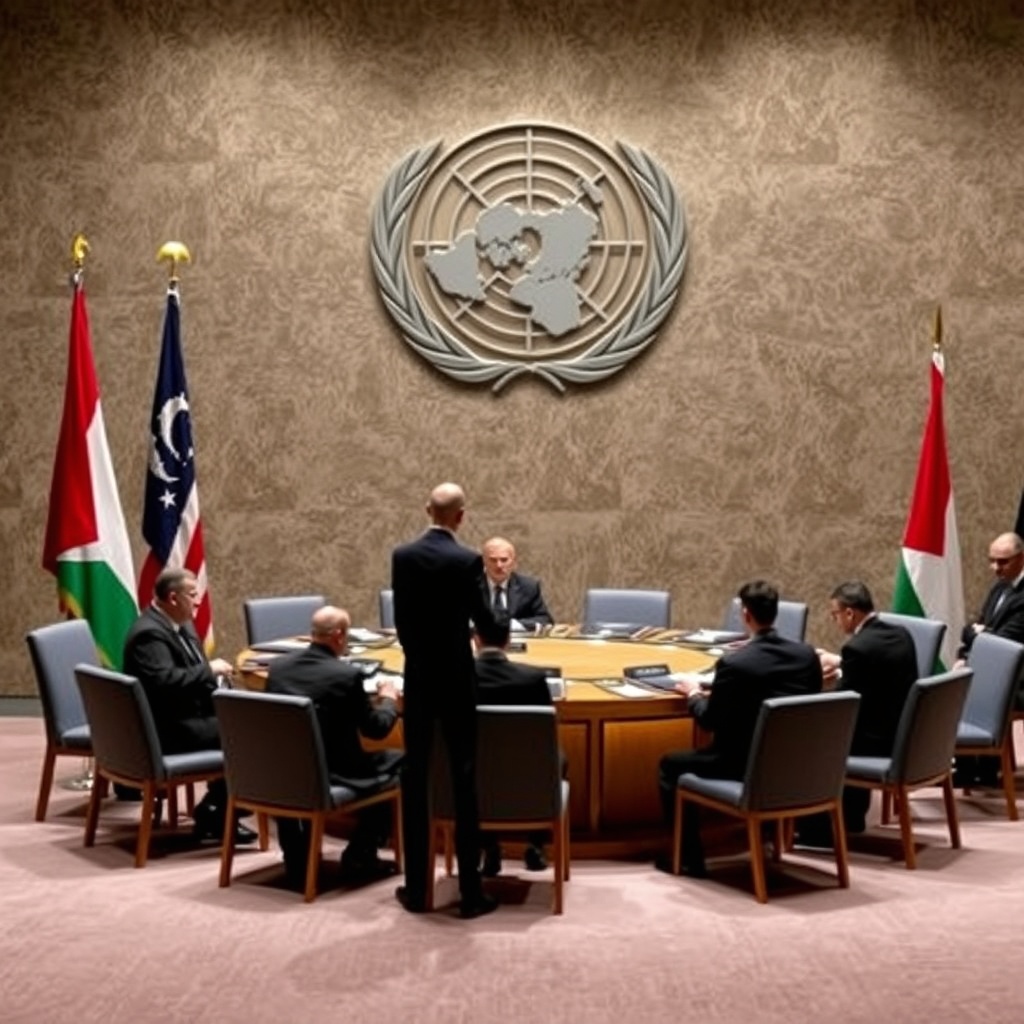
The United Nations Security Council has made a historic decision to back a plan proposed by former US President Donald Trump for the Gaza Strip, which includes the deployment of international troops. This move has sent shockwaves around the world, with many hailing it as a significant step towards achieving peace in the region. In this article, we will delve into the details of the plan, its implications, and the potential consequences of the UN Security Council's decision.
Background and Context
The Gaza Strip has been a contentious issue for decades, with the Israeli-Palestinian conflict being a major point of concern. The region has witnessed numerous wars, sieges, and humanitarian crises, resulting in immense suffering for the civilian population. The Trump plan, which was unveiled in 2020, aims to bring about a comprehensive solution to the conflict, including the establishment of a Palestinian state and the deployment of international troops to ensure security and stability.
The plan has been met with mixed reactions from the international community, with some countries welcoming it as a positive step towards peace, while others have expressed concerns about its viability and potential consequences. The UN Security Council's decision to back the plan is significant, as it marks a rare instance of consensus among the council's members on a highly contentious issue.
Key Provisions of the Plan
The Trump plan for Gaza includes several key provisions, which are aimed at addressing the underlying issues that have contributed to the conflict. Some of the main provisions include:
- Deployment of international troops: The plan calls for the deployment of international troops to the Gaza Strip, with the aim of ensuring security and stability in the region. The troops would be responsible for maintaining law and order, protecting civilians, and preventing the smuggling of arms and other contraband.
- Establishment of a Palestinian state: The plan proposes the establishment of a Palestinian state, which would have its capital in East Jerusalem. The state would have sovereignty over its territory, with the exception of certain areas that would be under Israeli control.
- Economic development: The plan includes provisions for economic development in the Gaza Strip, including the creation of jobs, investment in infrastructure, and the promotion of trade and commerce.
- Humanitarian assistance: The plan calls for the provision of humanitarian assistance to the people of Gaza, including food, shelter, and medical care.
Implications and Consequences
The UN Security Council's decision to back the Trump plan for Gaza has significant implications and consequences, both for the region and the international community. Some of the potential consequences include:
- Improved security: The deployment of international troops could lead to improved security in the region, reducing the risk of violence and instability.
- Economic benefits: The plan's provisions for economic development could lead to the creation of jobs and investment in infrastructure, improving the living standards of the people of Gaza.
- Increased cooperation: The plan could lead to increased cooperation between Israel and the Palestinian Authority, paving the way for a comprehensive peace agreement.
- Challenges and risks: However, the plan also poses significant challenges and risks, including the potential for resistance from militant groups, the risk of escalation, and the difficulty of implementing the plan's provisions.
Case Studies and Examples
There are several case studies and examples that illustrate the potential benefits and challenges of the Trump plan for Gaza. For instance:
- The Israeli withdrawal from Gaza: In 2005, Israel withdrew its troops and settlers from the Gaza Strip, leading to a significant reduction in violence and instability in the region. However, the withdrawal also created a power vacuum, which was filled by militant groups such as Hamas.
- The international intervention in Libya: In 2011, the international community intervened in Libya to protect civilians from the regime of Muammar Gaddafi. The intervention led to the overthrow of Gaddafi, but it also created a power vacuum, which has contributed to the country's ongoing instability.
- The economic development of the West Bank: The West Bank has experienced significant economic development in recent years, with the creation of jobs and investment in infrastructure. However, the development has been uneven, with some areas experiencing significant growth while others remain impoverished.
Statistics and Data
There are several statistics and data that illustrate the challenges and opportunities facing the Gaza Strip. For instance:
- Unemployment rate: The unemployment rate in Gaza is over 50%, with many young people struggling to find work.
- Poverty rate: The poverty rate in Gaza is over 70%, with many families struggling to access basic necessities such as food, shelter, and healthcare.
- Humanitarian assistance: The Gaza Strip receives significant humanitarian assistance from the international community, with the United Nations Relief and Works Agency (UNRWA) providing aid to over 1 million refugees.
- Economic growth: The Gaza Strip has experienced significant economic growth in recent years, with the GDP growing by over 10% in 2020.
Conclusion
The UN Security Council's decision to back the Trump plan for Gaza is a significant development, with the potential to bring about peace and stability to the region. However, the plan also poses significant challenges and risks, and its implementation will require careful consideration and cooperation from all parties involved. As the international community moves forward with the plan, it is essential to learn from past experiences and to prioritize the needs and concerns of the people of Gaza. With careful planning, coordination, and commitment, it is possible to create a brighter future for the people of Gaza and to bring about a comprehensive and lasting peace in the region.

Leave a comment