
Introduction
The United States has been increasing its military presence in the Middle East, particularly near Iran, in recent years. This build-up of warships and fighter jets has been closely monitored by global news agencies and verified through satellite imagery. The USS Abraham Lincoln, a US aircraft carrier, has been tracked near Iran, sparking concerns about the escalating tensions between the two countries. In this article, we will delve into the details of the US military build-up near Iran, the reasons behind it, and the potential implications for the region.
US Military Build-up Near Iran
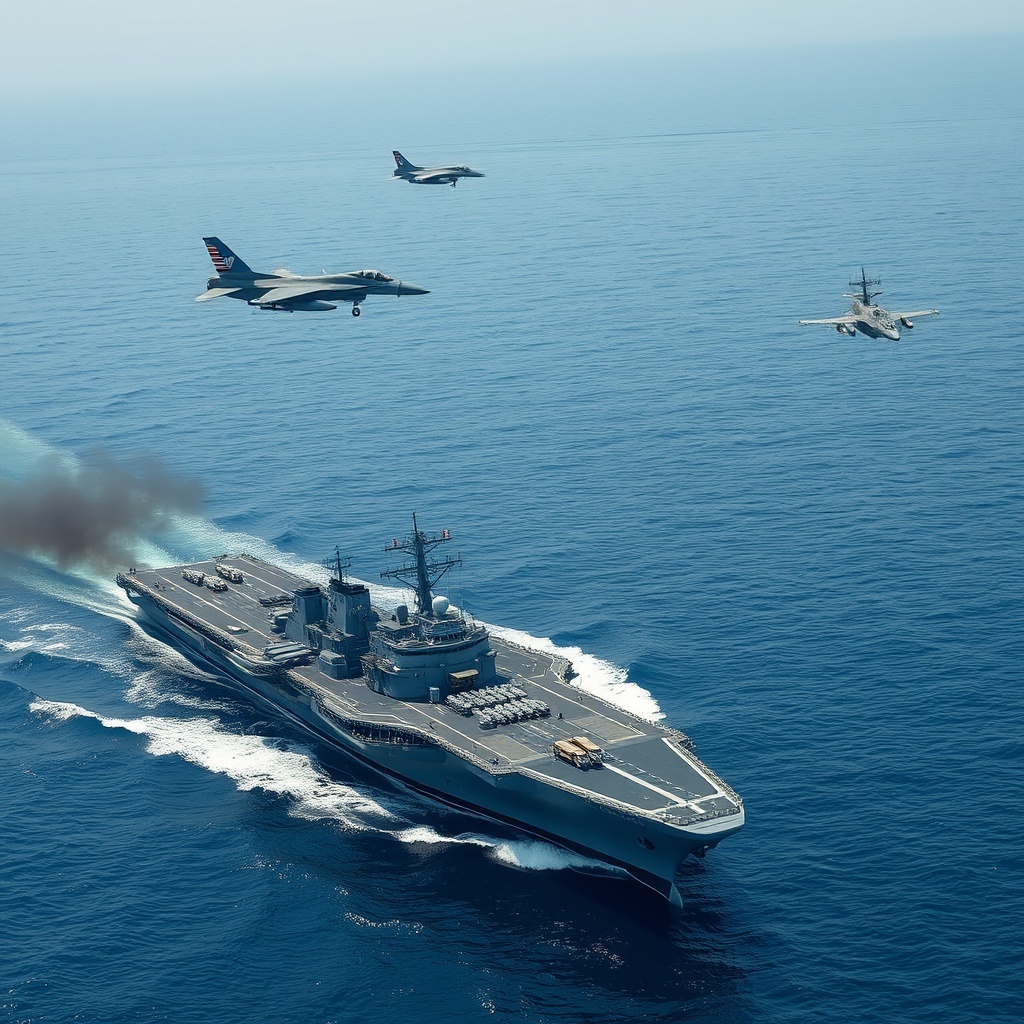
The US has been gradually increasing its military presence in the Middle East, with a focus on the Persian Gulf and the Arabian Sea. The USS Abraham Lincoln, one of the US Navy's most advanced aircraft carriers, has been deployed to the region, along with several other warships and submarines. The carrier is equipped with state-of-the-art fighter jets, including F-35s and F/A-18s, which are capable of conducting air-to-air and air-to-ground missions.
According to satellite imagery analyzed by BBC Verify, the USS Abraham Lincoln was located near the Strait of Hormuz, a critical waterway that connects the Persian Gulf to the Arabian Sea. The strait is a vital shipping lane, with a significant portion of the world's oil exports passing through it. The US military build-up in the region is seen as a response to Iran's increasing military activity, including the deployment of missiles and drones.
The US has also been conducting regular military exercises in the region, including joint operations with its allies, such as the United Arab Emirates and Saudi Arabia. These exercises are designed to demonstrate the US military's capability to respond to potential threats from Iran and to reassure its allies of its commitment to regional security.
Reasons Behind the US Military Build-up
The US military build-up near Iran is driven by several factors, including concerns about Iran's nuclear program, its support for militant groups in the region, and its increasing military activity. The US has been critical of Iran's nuclear program, which it believes is aimed at developing nuclear weapons. The US has imposed strict sanctions on Iran, which have had a significant impact on the country's economy.
Iran's support for militant groups, such as Hezbollah in Lebanon and the Houthis in Yemen, is also a major concern for the US. These groups have been involved in numerous conflicts in the region, including attacks on US and Israeli targets. The US sees Iran's support for these groups as a threat to regional stability and has been working to counter their influence.
The US military build-up near Iran is also a response to the country's increasing military activity, including the deployment of missiles and drones. Iran has been developing its military capabilities in recent years, including the production of advanced missiles and drones. The US sees these developments as a threat to regional security and has been working to counter them.
Potential Implications for the Region
The US military build-up near Iran has significant implications for the region. The presence of US warships and fighter jets in the Persian Gulf and the Arabian Sea is seen as a deterrent to Iran's military activity. However, it also increases the risk of a military conflict between the US and Iran, which could have devastating consequences for the region.
A conflict between the US and Iran would likely involve other countries in the region, including Saudi Arabia, the United Arab Emirates, and Israel. The conflict could also draw in other global powers, including China and Russia, which have significant interests in the region.
The economic implications of a conflict between the US and Iran would also be significant. The Strait of Hormuz is a critical shipping lane, and a conflict in the region could disrupt oil exports, leading to a significant increase in global oil prices. This could have a major impact on the global economy, particularly for countries that are heavily dependent on oil imports.
Case Studies and Examples
There have been several instances of military conflicts between the US and Iran in recent years. In June 2019, Iran shot down a US drone, which it claimed had entered its airspace. The US responded by launching a cyberattack on Iran's military computer systems.
In January 2020, the US launched a drone strike that killed top Iranian military commander Qasem Soleimani. The strike was seen as a major escalation of tensions between the US and Iran, and it led to a significant increase in military activity in the region.
The US has also been involved in several military exercises in the region, including the annual "International Maritime Exercise" (IMX). The exercise, which is hosted by the US Navy, brings together naval forces from several countries, including the US, Saudi Arabia, and the United Arab Emirates. The exercise is designed to demonstrate the military capabilities of the participating countries and to promote regional security.
Statistics and Data
According to data from the US Department of Defense, the US has increased its military presence in the Middle East by over 50% in the past year. The number of US troops in the region has increased from around 50,000 to over 80,000.
The US has also increased its military spending in the region, with a significant portion of its budget allocated to the US Central Command (CENTCOM). In 2020, the US spent over $100 billion on military operations in the Middle East, which is a significant increase from the previous year.
The economic implications of a conflict between the US and Iran would also be significant. According to a report by the International Monetary Fund (IMF), a conflict in the region could lead to a significant increase in global oil prices, which could have a major impact on the global economy.
Conclusion
The US build-up of warships and fighter jets near Iran is a significant development that has major implications for the region. The US military presence in the Middle East is designed to deter Iran's military activity and to reassure its allies of its commitment to regional security. However, it also increases the risk of a military conflict between the US and Iran, which could have devastating consequences for the region.
As tensions between the US and Iran continue to escalate, it is essential to monitor the situation closely and to work towards a diplomatic solution. The US and Iran must engage in dialogue to resolve their differences and to find a way to reduce tensions in the region. The international community must also play a role in promoting regional security and stability, and in preventing a conflict that could have far-reaching consequences for the global economy and security.

Leave a comment