
Introduction
The U.S. military has been actively engaged in counter-narcotics operations in the Eastern Pacific, and a recent strike on an alleged drug boat has resulted in the deaths of three people. According to reports from U.S. Southern Command, the incident occurred on Saturday and is the latest in a series of operations aimed at disrupting the flow of illicit drugs into the United States. This article will examine the context and implications of this strike, as well as the broader efforts of the U.S. military to combat drug trafficking in the region.
Background on U.S. Counter-Narcotics Operations
The U.S. military has been involved in counter-narcotics operations in the Eastern Pacific for several decades, with a focus on disrupting the supply chains of major drug cartels. The region is a key transit point for cocaine and other illicit substances, with many shipments originating in South America and destined for markets in the United States and other countries. The U.S. Southern Command, which is responsible for U.S. military operations in the region, has reported significant successes in recent years, including the seizure of large quantities of narcotics and the disruption of major trafficking networks.
However, the problem of drug trafficking in the region remains significant, with many cartels and other organizations continuing to operate with relative impunity. The U.S. military has responded by increasing its presence in the region and expanding its cooperation with local law enforcement and military agencies. This includes the use of advanced surveillance technologies, such as drones and satellites, to track and monitor suspected drug traffickers.
The Recent Strike and Its Implications
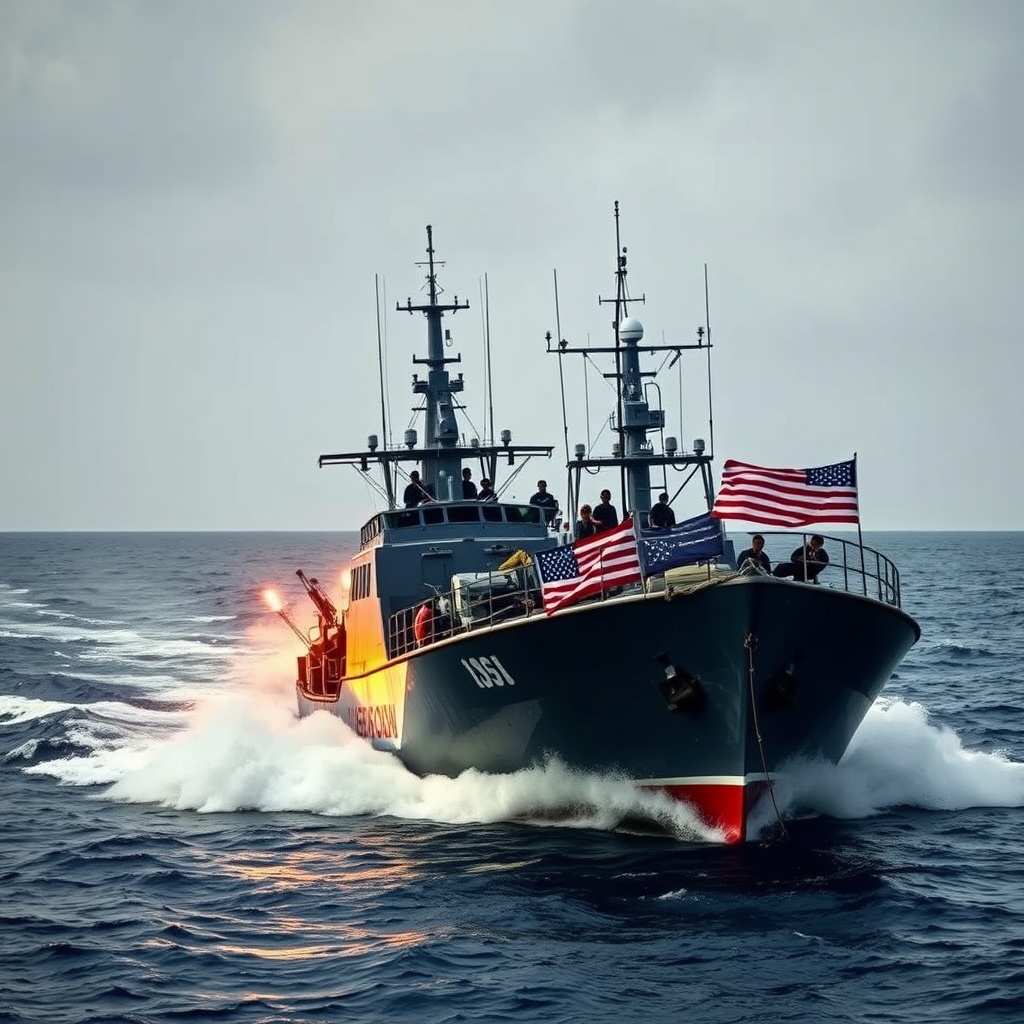
The recent strike on the alleged drug boat is a significant development in the U.S. military's counter-narcotics efforts in the region. According to reports, the boat was intercepted by U.S. naval forces and found to be carrying a large quantity of narcotics. After the crew refused to comply with orders to stop and be boarded, the U.S. military launched a strike on the vessel, resulting in the deaths of three people on board.
The incident highlights the challenges and risks associated with counter-narcotics operations in the region. The use of force against suspected drug traffickers can be controversial, particularly when it results in the loss of life. However, the U.S. military has argued that such operations are necessary to protect national security and prevent the flow of illicit substances into the United States.
The strike also underscores the importance of international cooperation in combating drug trafficking. The U.S. military has reported that it is working closely with local law enforcement and military agencies in the region to share intelligence and coordinate operations. This cooperation is critical to disrupting the complex networks of drug cartels and other organizations involved in the trade.
The Broader Context of Drug Trafficking in the Region
The recent strike on the alleged drug boat is part of a larger story about the flow of illicit substances into the United States. According to the U.S. Drug Enforcement Administration (DEA), the majority of cocaine and other illicit substances entering the country originate in South America, with major cartels and other organizations operating in countries such as Colombia, Peru, and Bolivia.
The DEA has reported that the flow of illicit substances into the United States is a significant problem, with major consequences for public health and national security. The agency has estimated that the annual cost of drug abuse in the United States is over $500 billion, with thousands of people dying each year from overdoses and other drug-related causes.
The U.S. military's counter-narcotics operations in the Eastern Pacific are an important part of the broader effort to combat drug trafficking and reduce the flow of illicit substances into the United States. However, the problem is complex and multifaceted, requiring a comprehensive approach that includes not only military action but also diplomacy, law enforcement, and public health initiatives.
Case Studies and Statistics
Several case studies and statistics illustrate the scope and complexity of the problem of drug trafficking in the region. For example, in 2020, the U.S. Coast Guard reported that it had seized over 200,000 pounds of cocaine and other illicit substances in the Eastern Pacific, with a total value of over $2.5 billion.
Another example is the case of the Sinaloa cartel, one of the largest and most notorious drug cartels operating in the region. According to reports, the cartel is responsible for smuggling large quantities of cocaine and other illicit substances into the United States, with estimates suggesting that it generates over $3 billion in annual revenue.
In terms of statistics, the DEA has reported that the majority of cocaine and other illicit substances entering the United States originate in South America, with over 80% of all cocaine seizures in the country coming from Colombia, Peru, and Bolivia. The agency has also estimated that the annual cost of drug abuse in the United States is over $500 billion, with thousands of people dying each year from overdoses and other drug-related causes.
Conclusion
The recent strike on the alleged drug boat in the Eastern Pacific is a significant development in the U.S. military's counter-narcotics efforts in the region. The incident highlights the challenges and risks associated with counter-narcotics operations, as well as the importance of international cooperation and a comprehensive approach to combating drug trafficking.
As the U.S. military continues to operate in the region, it is likely that we will see more incidents like this in the future. However, it is also important to recognize the broader context of drug trafficking in the region and the need for a multifaceted approach that includes not only military action but also diplomacy, law enforcement, and public health initiatives.
Ultimately, the goal of the U.S. military's counter-narcotics operations in the Eastern Pacific is to reduce the flow of illicit substances into the United States and protect national security. While the recent strike on the alleged drug boat is a significant development, it is only one part of a larger story about the complex and multifaceted problem of drug trafficking in the region. As we look to the future, it is clear that a comprehensive and sustained effort will be required to address this problem and ensure the safety and security of the American people.

Leave a comment