
Introduction
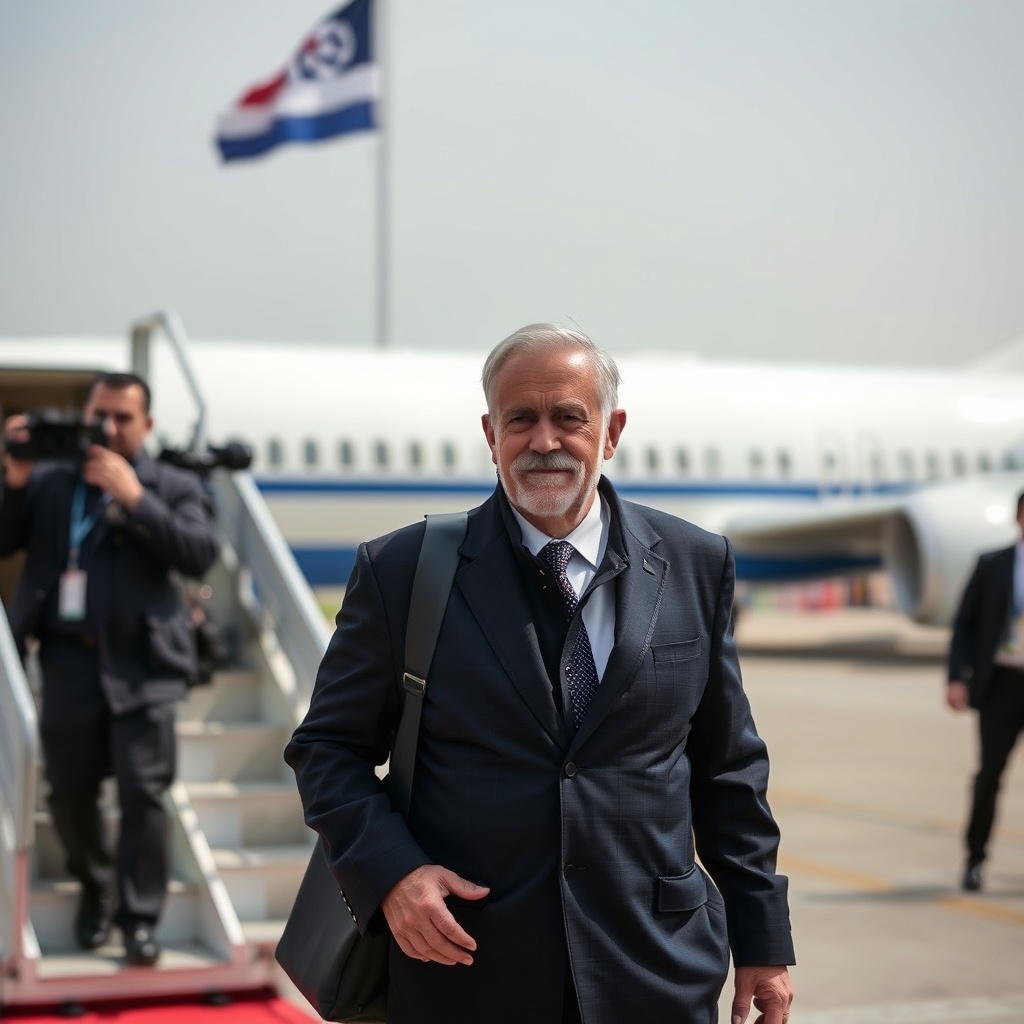
The Middle East has long been a region of complex geopolitical dynamics, with the Israeli-Palestinian conflict being one of the most enduring and contentious issues. Recent events have seen a flare-up of violence between Israel and Hamas, threatening to derail a fragile ceasefire that had been in place for 12 days. In an effort to strengthen this ceasefire and promote stability in the region, US Vice-President Vance has arrived in Israel. This visit is a significant development in the ongoing efforts by the international community to broker a lasting peace between the two sides. This article will explore the context of the current situation, the role of the US in promoting peace, and the challenges that lie ahead for all parties involved.
Background to the Conflict
The Israeli-Palestinian conflict is rooted in a long and complex history of territorial disputes, political ideologies, and religious beliefs. The creation of the State of Israel in 1948 led to the displacement of hundreds of thousands of Palestinians, an event known as the Nakba or "catastrophe" in Arabic, which has been a source of ongoing tension and conflict. Over the years, this has manifested in numerous wars, intifadas, and periods of relative calm punctuated by outbreaks of violence. The most recent flare-up between Israel and Hamas, the Islamist group that controls the Gaza Strip, is just the latest chapter in this ongoing saga.
Hamas, which is considered a terrorist organization by Israel and several Western countries, has been a key player in the conflict, often engaging in rocket attacks against Israeli cities and towns. Israel, in turn, has responded with military operations aimed at dismantling Hamas's military capabilities and deterring future attacks. The Gaza Strip, with its dense population and limited resources, has borne the brunt of this violence, leading to significant humanitarian challenges, including poverty, unemployment, and a lack of access to basic services like healthcare and education.
The Role of the US in Promoting Peace
The United States has historically played a significant role in attempts to broker peace between Israel and the Palestinians. Successive US administrations have sought to balance their strategic alliance with Israel, a key partner in the region, with the need to promote a fair and lasting resolution to the conflict that addresses the legitimate aspirations of both sides. This has involved various initiatives, from the Oslo Accords of the 1990s to the more recent efforts under the Trump and Biden administrations.
Vice-President Vance's visit to Israel is part of this broader effort. The US aims to strengthen the current ceasefire, which is crucial for preventing further escalation and creating an environment conducive to negotiations. The visit also underscores the US commitment to Israel's security, a cornerstone of US policy in the region, while also emphasizing the need for a two-state solution that recognizes the rights and dignity of the Palestinian people.
The challenge for the US, and indeed the international community, is navigating the complex web of interests and ideologies that underpin the conflict. This includes dealing with the issue of settlements, which are considered illegal under international law and a major obstacle to peace; addressing the humanitarian crisis in Gaza; and finding a solution to the question of Jerusalem, which is claimed by both sides as their capital.
Challenges Ahead
Despite the efforts of the US and other international actors, significant challenges lie ahead. One of the primary obstacles is the deep-seated mistrust between Israelis and Palestinians, fueled by decades of violence and failed peace initiatives. This mistrust is compounded by the political divisions within both Israel and the Palestinian territories, which can make it difficult to achieve consensus on key issues.
Furthermore, the rise of extremist groups on both sides, who oppose any form of compromise, poses a significant threat to peace efforts. For Israel, the concern is groups like Hamas, which rejects Israel's right to exist and has been responsible for numerous terrorist attacks. For the Palestinians, there are concerns about Israeli settler violence and the influence of right-wing political parties that oppose a two-state solution.
In addition to these political challenges, there are also significant economic and social issues that need to be addressed. The Gaza Strip, in particular, faces a severe humanitarian crisis, with high levels of poverty, unemployment, and shortages of basic necessities like food, water, and electricity. Addressing these issues is crucial not only for the well-being of the Palestinian population but also for reducing the tensions that contribute to violence.
Conclusion
The arrival of US Vice-President Vance in Israel marks an important moment in the ongoing efforts to strengthen the Gaza ceasefire and promote a lasting peace between Israelis and Palestinians. The challenges ahead are significant, from navigating the complex political landscape to addressing the deep-seated humanitarian crises in the region. However, the alternative to peace—a continuation of the cycle of violence and retaliation—is unacceptable for all parties involved.
As the international community looks to the future, it is clear that a comprehensive and negotiated settlement is the only viable path forward. This will require patience, persistence, and a commitment to the principles of justice, equality, and human dignity. The US, along with other international actors, has a critical role to play in this process, supporting dialogue, fostering economic development, and promoting the conditions for a peaceful and stable Middle East.
Ultimately, the success of these efforts will depend on the willingness of both Israelis and Palestinians to compromise and work towards a shared vision of peace and prosperity. This vision, while distant, is not impossible. History has shown us that even in the darkest of times, there is always the potential for transformation and renewal. As Vice-President Vance's visit underscores, the time for such transformation is now, and the world waits with hope for a future where Israelis and Palestinians can live in peace, side by side.

Leave a comment