
Introduction
The recent escalation of tensions between the United States and Venezuela has led to a significant increase in military presence in the region. In response to President Trump's threat of a blockade, the Venezuelan Navy has begun escorting vessels carrying oil byproducts from the country's east coast. This move is a clear demonstration of Venezuela's determination to protect its sovereignty and economic interests. In this article, we will delve into the details of the situation, exploring the historical context, the current state of affairs, and the potential implications of this development.
Historical Context: US-Venezuela Relations
The relationship between the United States and Venezuela has been strained for many years, with the two countries having fundamentally different political and economic systems. Venezuela, a socialist state, has been a thorn in the side of the US, which has historically sought to promote democracy and free market economies in the region. The situation has been further complicated by Venezuela's vast oil reserves, which have made it a key player in the global energy market.
In recent years, the US has imposed significant economic sanctions on Venezuela, citing human rights abuses and corruption. These sanctions have had a devastating impact on the Venezuelan economy, leading to widespread poverty, inflation, and shortages of basic goods. Despite this, the Venezuelan government has refused to back down, accusing the US of attempting to topple its democratically elected government.
The Blockade Threat and Venezuela's Response
The recent threat of a blockade by President Trump has raised the stakes in the region. A blockade would effectively cut off Venezuela's access to the global market, preventing it from exporting oil and importing essential goods. This would have a catastrophic impact on the Venezuelan economy, potentially leading to widespread famine and unrest.
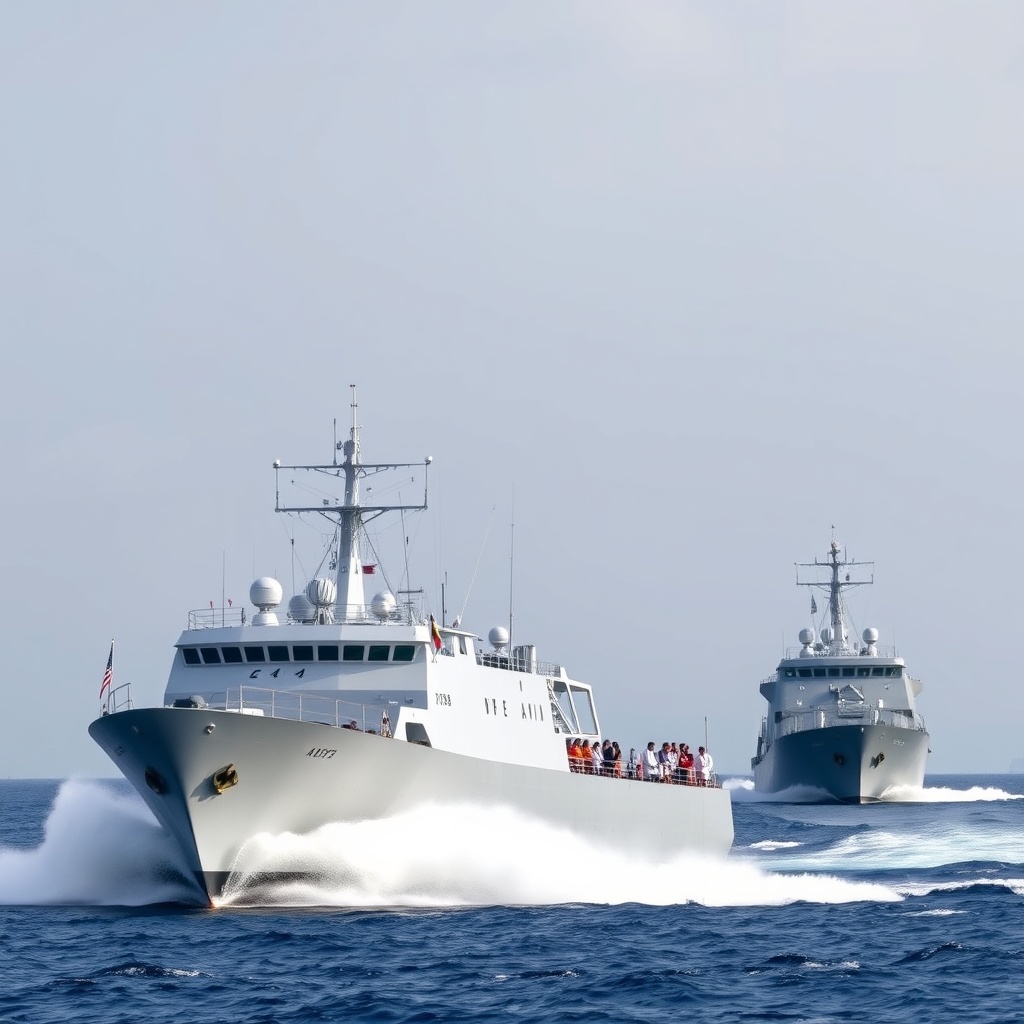
In response to this threat, the Venezuelan Navy has begun escorting vessels carrying oil byproducts from the country's east coast. This move is a clear demonstration of Venezuela's determination to protect its sovereignty and economic interests. The Venezuelan government has stated that it will do everything in its power to ensure the safe passage of its vessels, and has accused the US of attempting to strangle its economy.
The Venezuelan Navy's decision to escort vessels is not without precedent. In recent years, the navy has played an increasingly important role in protecting the country's maritime interests. This has included intercepting foreign vessels that have entered Venezuelan waters without permission, as well as providing security for oil tankers and other commercial vessels.
Potential Implications and Global Response
The potential implications of this development are significant. A blockade of Venezuela would not only have a devastating impact on the country's economy, but also on the global energy market. Venezuela is a significant oil producer, and a disruption to its exports could lead to higher prices and shortages of oil worldwide.
The international community has been quick to respond to the situation, with many countries condemning the US threat of a blockade. The European Union, China, and Russia have all expressed concerns about the potential impact of a blockade, and have called for a peaceful resolution to the crisis.
The Organization of American States (OAS) has also weighed in on the issue, stating that a blockade would be a violation of international law. The OAS has called for dialogue and cooperation between the US and Venezuela, and has offered to facilitate talks between the two countries.
In addition to the diplomatic efforts, there are also concerns about the potential for military conflict in the region. The Venezuelan military has been on high alert since the threat of a blockade was made, and there have been reports of increased military activity in the region. The US has also been accused of conducting military exercises in the area, which has raised tensions and increased the risk of miscalculation.
Case Studies and Statistics
To understand the potential impact of a blockade on Venezuela, it is useful to look at some case studies and statistics. For example, in 2019, the US imposed sanctions on Venezuela's state-owned oil company, PDVSA. The sanctions had a devastating impact on the company, leading to a significant decline in oil production and exports.
According to data from the US Energy Information Administration (EIA), Venezuela's oil production declined from 1.9 million barrels per day in 2017 to just 600,000 barrels per day in 2020. This decline has had a significant impact on the Venezuelan economy, leading to widespread poverty and shortages of basic goods.
In terms of the potential impact on the global energy market, it is worth noting that Venezuela is a significant oil producer. According to data from the International Energy Agency (IEA), Venezuela has the largest oil reserves in the world, with an estimated 302 billion barrels of oil. A disruption to Venezuela's oil exports could therefore have a significant impact on the global energy market, leading to higher prices and shortages of oil.
Conclusion
In conclusion, the recent escalation of tensions between the US and Venezuela has significant implications for the region and the world. The Venezuelan Navy's decision to escort vessels carrying oil byproducts is a clear demonstration of the country's determination to protect its sovereignty and economic interests. The potential implications of a blockade are significant, and could have a devastating impact on the Venezuelan economy and the global energy market.
As the situation continues to unfold, it is essential that the international community comes together to find a peaceful resolution to the crisis. This will require dialogue and cooperation between the US and Venezuela, as well as a commitment to respecting international law and the sovereignty of nations. The world is watching, and it is imperative that we work together to prevent a catastrophic conflict in the region.

Leave a comment