
Introduction
The United States and Iran have been engaged in a tense standoff for years, with the situation escalating significantly over the past month. As President Trump considers his options for addressing the situation, the U.S. has undertaken a substantial military buildup in the region. This move has raised concerns about the potential for conflict and has sparked a heated debate about the best course of action for the U.S. government. In this article, we will examine the current situation, the options available to President Trump, and the potential consequences of each possible course of action.
The Current Situation
The U.S. and Iran have a long and complex history, with tensions between the two countries dating back to the 1979 Iranian Revolution. In recent years, the situation has become increasingly volatile, with the U.S. withdrawing from the Joint Comprehensive Plan of Action (JCPOA), also known as the Iran nuclear deal, in 2018. This move was followed by the imposition of severe economic sanctions on Iran, which have had a devastating impact on the country's economy.
In response to these sanctions, Iran has taken a number of steps to increase its military capabilities and to challenge U.S. interests in the region. These moves have included the development of ballistic missiles, the support of militant groups in countries such as Iraq and Yemen, and the harassment of U.S. and allied ships in the Persian Gulf.
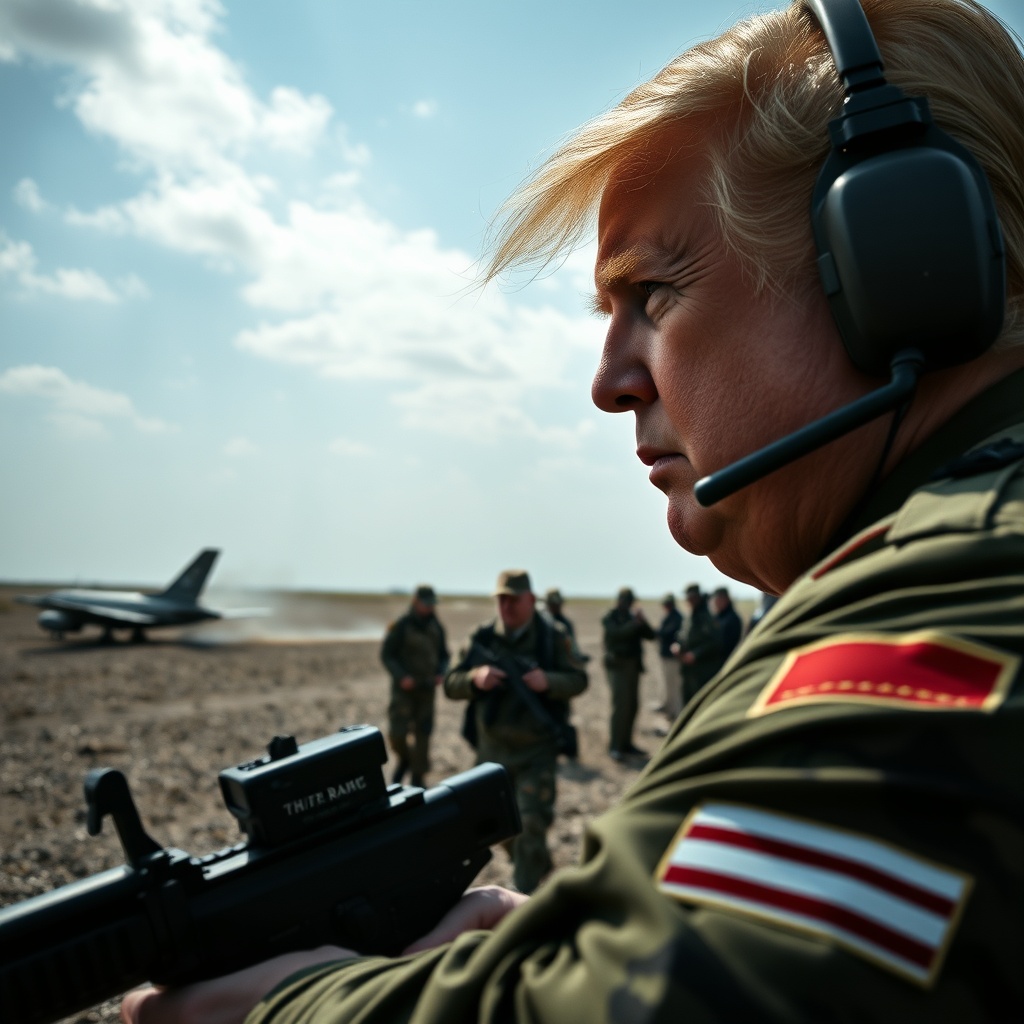
Over the past month, the situation has escalated significantly, with the U.S. undertaking a substantial military buildup in the region. This buildup has included the deployment of additional troops, ships, and aircraft to the Middle East, as well as the movement of U.S. forces into position for a potential strike against Iranian targets.
According to a report by the Congressional Research Service, the U.S. has deployed over 10,000 additional troops to the Middle East since May 2025, with the majority of these troops being stationed in countries such as Saudi Arabia, the United Arab Emirates, and Qatar. The report also notes that the U.S. has increased its military presence in the region through the deployment of additional ships and aircraft, including B-52 bombers and F-35 fighter jets.
Options for President Trump
As President Trump considers his options for addressing the situation with Iran, he has a number of different courses of action available to him. These options range from diplomatic efforts to resolve the situation peacefully, to military action against Iranian targets.
One possible option for President Trump is to pursue diplomatic efforts to resolve the situation peacefully. This could involve engaging in negotiations with Iranian leaders, either directly or through intermediaries, in an effort to find a mutually acceptable solution to the current impasse. According to a report by the Brookings Institution, diplomatic efforts could focus on issues such as the lifting of economic sanctions, the reduction of military tensions, and the establishment of a new framework for cooperation between the U.S. and Iran.
Another possible option for President Trump is to take military action against Iranian targets. This could involve a range of different actions, from limited strikes against specific targets, to a more comprehensive campaign against Iranian military capabilities. According to a report by the Center for Strategic and International Studies, military action could be used to disrupt Iranian military capabilities, to destroy Iranian nuclear facilities, or to support opposition groups within Iran.
However, military action against Iran is a high-risk strategy that could have significant and far-reaching consequences. These consequences could include the escalation of the conflict, the destabilization of the region, and the potential for significant loss of life and damage to infrastructure.
Potential Consequences
The potential consequences of each possible course of action for President Trump are significant and far-reaching. If the President chooses to pursue diplomatic efforts to resolve the situation peacefully, the consequences could include the reduction of tensions between the U.S. and Iran, the improvement of relations between the two countries, and the potential for increased cooperation on issues such as counter-terrorism and regional security.
On the other hand, if the President chooses to take military action against Iranian targets, the consequences could be severe and long-lasting. These consequences could include the escalation of the conflict, the destabilization of the region, and the potential for significant loss of life and damage to infrastructure.
According to a report by the Rand Corporation, a military conflict between the U.S. and Iran could have significant economic consequences, including the disruption of oil supplies, the increase in oil prices, and the potential for a global recession. The report also notes that a military conflict could have significant humanitarian consequences, including the potential for significant loss of life, the displacement of people, and the destruction of infrastructure.
Case Studies
There are several case studies that can provide insight into the potential consequences of each possible course of action for President Trump. One example is the U.S. invasion of Iraq in 2003, which was intended to remove Saddam Hussein from power and to establish a democratic government in the country.
However, the invasion had significant and far-reaching consequences, including the destabilization of the region, the escalation of sectarian violence, and the rise of extremist groups such as al-Qaeda and ISIS. According to a report by the Special Inspector General for Iraq Reconstruction, the invasion also had significant economic consequences, including the destruction of infrastructure, the disruption of oil supplies, and the potential for a global recession.
Another example is the U.S. withdrawal from the JCPOA in 2018, which was intended to pressure Iran into renegotiating the agreement and to reduce its nuclear capabilities. However, the withdrawal had significant and far-reaching consequences, including the escalation of tensions between the U.S. and Iran, the increase in Iranian nuclear activities, and the potential for a nuclear arms race in the region.
Statistics and Data
There are several statistics and data points that can provide insight into the situation with Iran and the potential consequences of each possible course of action for President Trump. According to a report by the International Atomic Energy Agency (IAEA), Iran has increased its uranium enrichment activities in recent months, with the country's stockpile of low-enriched uranium growing from 102 kg in May 2025 to over 1,200 kg in January 2026.
The IAEA report also notes that Iran has taken several other steps to increase its nuclear capabilities, including the development of advanced centrifuges and the construction of new nuclear facilities. According to a report by the Institute for Science and International Security, these steps could potentially allow Iran to produce a nuclear weapon in a matter of months, rather than years.
In terms of the potential economic consequences of a military conflict between the U.S. and Iran, there are several statistics and data points that can provide insight. According to a report by the Congressional Budget Office, the cost of a military conflict with Iran could be significant, with estimates ranging from $100 billion to over $1 trillion.
The report also notes that a military conflict could have significant effects on the global economy, including the disruption of oil supplies, the increase in oil prices, and the potential for a global recession. According to a report by the International Monetary Fund, a military conflict could also have significant humanitarian consequences, including the potential for significant loss of life, the displacement of people, and the destruction of infrastructure.
Conclusion
In conclusion, the situation with Iran is complex and volatile, with the potential for significant and far-reaching consequences. As President Trump considers his options for addressing the situation, he must carefully weigh the potential benefits and drawbacks of each possible course of action.
While diplomatic efforts to resolve the situation peacefully may be the most desirable option, they are also the most challenging and uncertain. Military action against Iranian targets is a high-risk strategy that could have significant and far-reaching consequences, including the escalation of the conflict, the destabilization of the region, and the potential for significant loss of life and damage to infrastructure.
Ultimately, the best course of action for President Trump will depend on a careful consideration of the potential consequences of each possible option, as well as a thorough analysis of the available data and statistics. By taking a thoughtful and informed approach to the situation, the President can make a decision that is in the best interests of the United States and the global community.
As the situation continues to evolve, it is essential to remain vigilant and to continue to monitor developments closely. The U.S. and Iran are at a critical juncture, and the decisions made in the coming days and weeks will have significant and far-reaching consequences. By staying informed and engaged, we can work towards a peaceful and stable resolution to the situation, and avoid the devastating consequences of a military conflict.

Leave a comment